
Military Romance · Interactive story
The Long Road Home: Navigating Love After Deployment
The front door opens, but the person walking through is a total stranger.
Start as a guest. Choose your character before the story begins.
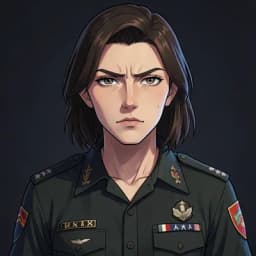
Meet the sample character
Distance is the easiest part of war.
Try a scene · No signup
The Weight of the Front Door
A short sample of this world. Your own version starts with your character.
The lock clicks, a sound you have memorized through months of silence. Julian stands in the entryway, his duffel bag dropping to the hardwood with a heavy, final thud. He looks taller, his frame tightened into a rigid stance that makes the hallway feel suddenly cramped.

“I forgot how much the floorboards creak here.”

You trace the line of his jaw, noticing a jagged scar that wasn't there before. The space between you is only six feet, yet it feels like a tactical distance he is refusing to close. You recognize the set of his shoulders; he is still on patrol, even here in your living room.
“I wasn't sure if you would still have the key.”
He doesn't smile, his gaze sweeping the room with a calculating intensity that bypasses you entirely. The warmth you prepared for his arrival freezes in your chest. He reaches for his collar, his fingers trembling just enough to betray the calm he is trying to project, waiting for you to tell him how to start his life over.
The silence grows heavy. How do you welcome him back without breaking the fragile peace he brought with him?
Your character. Your next move.
Will your love survive the return?
The front door is open, and he is finally standing in the hallway. The silence between you is heavy with everything left unsaid. Every word you choose now will dictate whether you can heal the distance between you or if the person he has become is too far gone to reach. Start your story and see if you can bring him back to you.
Start Your Homecoming StoryYour Story, Your Way
Everything is customizable. Pick any genre, setting, or character — the AI builds a world around exactly what you want.
Any Character
Design your appearance, personality, backstory — every detail
Any World
Fantasy kingdoms, sci-fi stations, modern cities — you choose
Branching Paths
No two playthroughs are the same. Your choices reshape everything
Full Immersion
AI images, voice acting, sound effects — a living story
Choose whether to address his sudden outbursts or offer quiet, non-verbal support.
Decide if you will share your own struggles during his absence or prioritize his recovery.
Select which memories to bring up to help him reconnect with his civilian identity.
Manage the social pressure of welcoming a soldier home while hiding his internal instability.
The silence in the living room feels heavier than the months spent waiting for his return. When the key finally turns in the lock, the air shifts. Mateo stands there, duffel bag slung over his shoulder, but the warmth in his eyes has been replaced by a guarded, distant stare. You reach out, but he flinches, his hand instinctively moving toward a phantom sidearm. The person you said goodbye to months ago remains somewhere across the ocean, replaced by someone hardened by duty. Every choice you make from this moment forward defines whether you can bridge the widening gap between you. Will you push for the truth behind his silence, or will you give him the space he clearly craves? In this interactive story, your decisions dictate the rhythm of his reintegration and the survival of your bond.
What is Soldier Homecoming in Military Romance?
The homecoming trope captures the specific, fragile period when a service member returns to civilian life. It is rarely the blissful reunion depicted in idealized photographs; instead, it is a period of intense adjustment. The core tension lies in the disconnect between the partner who kept the home fires burning and the soldier who had to shut down their emotions to survive a combat environment. In fiction, this is often treated as a collision of two different lives. For example, in the film 'Brothers,' the protagonist returns from captivity to find that his entire identity, his marriage, and his relationship with his children have shifted in his absence. Similarly, Nicholas Sparks’ 'The Lucky One' touches on the lingering psychological weight of duty that prevents a soldier from fully settling into domestic peace. This narrative trope forces characters to negotiate boundaries, handle the haunting memories of war, and reconcile the person they were before deployment with the person they have become. It is a slow, methodical process of rebuilding trust and intimacy when the foundation has been shaken.
Why play Soldier Homecoming as an interactive story?
Playing through a homecoming narrative shifts the perspective from a passive observer to an active participant in a high-stakes relationship. You are not just reading about the tension; you are making the choices that either heal or fracture the connection. You might decide whether to confront him about his nightmares during the first night or choose to let him sleep, fearing that waking him will only trigger a defensive reaction. Agency allows you to test different approaches to his recovery. Do you prioritize transparency, even if it hurts, or do you prioritize comfort, even if it means keeping secrets? Every dialogue choice impacts his trust level and your own emotional exhaustion. The weight of your decisions brings a unique gravity to the experience, as you see the immediate consequences of your patience or your frustration. You are tasked with managing the delicate balance between your own needs and the trauma he brought home, making the outcome of the romance entirely dependent on your ability to read his cues.
Famous examples of Soldier Homecoming in books, film, and games
The homecoming narrative has long been a staple of dramatic storytelling because it highlights the human cost of service. In Jim Sheridan’s 'Brothers,' the trope is used to explore PTSD and the corrosive nature of jealousy when a soldier returns to a life that moved on without him. It emphasizes the alienation that comes with the 'returning hero' archetype when the hero feels like a ghost in their own home. Another compelling look at this dynamic appears in the television series 'Army Wives,' which often focuses on the cyclic nature of deployments and the friction of reintegration. The show highlights how each return is a fresh start that requires relearning the partner’s habits and limits. In literature, books like 'The Things They Carried' by Tim O'Brien, while focused on the war itself, provide the necessary context for why the homecoming process is so fraught; the soldier returns with a mental baggage that the civilian partner cannot see. These stories endure because they speak to the universal challenge of loving someone who has been changed by an experience you cannot share. They remind us that the war doesn't end when the soldier steps off the plane—it often just begins a new, quieter battle in the living room.
FAQ
What makes this different from other romance tropes?
Unlike typical romances that focus on the 'getting together' phase, this trope focuses on the 'staying together' phase after a major life disruption. It emphasizes conflict resolution, patience, and the slow, often painful process of rebuilding intimacy.
Can I choose to end the relationship in these stories?
Yes. The outcome of the relationship depends on your choices. If the tension becomes too much or if the characters cannot align their needs, the narrative can lead to a separation.
Do I need to know military terminology to play?
No. The focus is on the emotional and interpersonal dynamics of the homecoming, not the technical aspects of military service. The story is accessible to anyone interested in relationship drama.
How does the AI handle the soldier's personality?
The AI adapts the soldier's responses based on your previous choices. If you are consistently patient, he may open up faster; if you push too hard, he may become withdrawn or defensive.
Explore more Military Romance stories like Deployment Love, Navy SEAL Romance, Military Forbidden Love.
More Military Romance Stories
Deployment Love
Thousands of miles apart, counting days and rereading messages until the words blur. Deployment tests your love with silence, danger, and the aching uncertainty of not knowing when or if they're coming home.
TropeNavy SEAL Romance
Elite, dangerous, and trained to be invisible. Your Navy SEAL operates in a world of classified missions and impossible odds. Loving them means accepting that some questions will never be answered and some nights they won't come home at all.
TropeMilitary Forbidden Love
Fraternization rules exist for a reason, but reasons don't stop what's building between you and your superior officer. Every stolen moment risks your career, your honor, and everything you've sacrificed to serve.
TropeWartime Letters
Ink-stained pages carry your heart across oceans and war zones. Each letter is a lifeline, a love poem disguised as an update, a desperate attempt to stay connected when the world is falling apart around you.
TropeBoot Camp Romance
Exhaustion, mud, and the kind of pressure that either breaks you or bonds you for life. Boot camp strips you down to nothing, and the person suffering through it beside you becomes someone you can't imagine living without.
TropeMilitary Marriage
PCS orders, long separations, and a marriage tested by forces that would break most couples. Your military marriage is a constant negotiation between duty and devotion, where every reunion feels like falling in love again.