
Military Romance · Interactive story
Waiting for the Homecoming: A Military Romance
The silence is a weight, but your words are the only bridge across the ocean.
Start as a guest. Choose your character before the story begins.
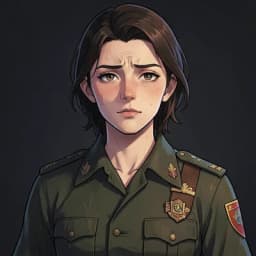
Meet the sample character
The quiet ache of waiting for a signal.
Try a scene · No signup
Static Between Oceans
A short sample of this world. Your own version starts with your character.
The kitchen is suffocatingly quiet, save for the rhythmic hum of the refrigerator. You stare at the satellite phone sitting on the granite island, its screen dark and unyielding. Every minute spent waiting for the chime feels like a physical weight pressing against your ribs. Outside, the crickets are deafening, a stark contrast to the hollow vacuum of the house.

“I am sorry, Maya. We didn't have a window until now. Are you still awake?”

Your breath hitches. His voice is jagged with static, distorted by thousands of miles of distance and a failing connection. You trace the edge of the granite, your fingers white-knuckled. You want to tell him about the leaky roof or the way the neighbor's dog barks at nothing, but the words die in your throat, choked by the fear that this might be the last time you hear him sound like himself.
“I haven't slept in three days. Does it ever get quieter where you are, or is it always this loud?”
The line crackles, a sharp burst of white noise that makes you flinch. Through the phone, you hear the distant, rhythmic thrum of rotors, a sound that signifies he is moving again. Silas goes silent, his breathing shallow, and you realize the calm of this midnight conversation has just shattered. He has seconds before he must cut the feed, and you have to decide what to say before the silence returns.
The rotors are growing louder in the background. What do you say before the connection severs?
Your character. Your next move.
The radio silence is deafening. Will you hold the line?
Three months have passed, and the letters are becoming shorter. You have a choice: send a heartfelt confession that could change everything, or keep your secrets to protect them from the pain of home. Your words are the only thing keeping this bond together. Step into the role and see if your relationship survives the distance.
Start Your StoryYour Story, Your Way
Everything is customizable. Pick any genre, setting, or character — the AI builds a world around exactly what you want.
Any Character
Design your appearance, personality, backstory — every detail
Any World
Fantasy kingdoms, sci-fi stations, modern cities — you choose
Branching Paths
No two playthroughs are the same. Your choices reshape everything
Full Immersion
AI images, voice acting, sound effects — a living story
Choose whether to send an honest, messy update or a curated, comforting letter.
Decide how to handle the silence when a scheduled call misses the mark.
Select which memories to share to keep the intimacy alive during long absences.
Navigate the emotional fallout of local surprises that your partner cannot witness.
The screen glows in the dark of your bedroom, showing a text message that arrived three days late. Static, a delayed connection, and the persistent hum of anxiety define your current life. You are holding onto a thread of communication while your partner serves thousands of miles away, lost in the dust and the grind of a foreign landscape. Every choice you make—whether to reveal the small, crumbling details of your day or shield them from the stress of home—alters the fragile equilibrium of your relationship. In this interactive story, your decisions determine if the bond strengthens under the pressure of distance or if the absence creates a chasm neither of you can cross. You are not just observing a romance; you are holding the pen, writing the letters that might be the only thing keeping someone tethered to home. Every decision carries the weight of sacrifice, and the clock is always ticking toward a homecoming that feels both inevitable and impossible.
What is Deployment Love in Military Romance?
Deployment Love is a narrative trope that centers on the emotional strain of long-distance relationships where one partner is active-duty military. Unlike standard romance, the primary antagonist is not a rival or a misunderstanding, but time and geography. The trope explores how silence, censored communication, and the constant threat of danger test the foundations of trust. It is the art of building a life together while living entirely separate existences. A quintessential example is Nicholas Sparks' 'Dear John,' which highlights how physical distance forces characters to evolve in ways that threaten their original promises. In the television series 'Army Wives,' the trope is used to examine the communal aspect of waiting, showing how the support of others becomes vital when a partner is away. The trope thrives on the contrast between the mundane reality of the home front—bills, broken appliances, loneliness—and the high-stakes, life-or-death environment of the deployment site. It is a study in patience, where the most significant events occur in the quiet moments between letters or rare, crackling satellite calls.
Why play Deployment Love as an interactive story?
Playing a deployment-themed story shifts the focus from passive reading to active decision-making. You face the dilemmas that define this life: do you vent your frustrations about a failing car, knowing they cannot help, or do you keep the peace? Do you choose to be vulnerable about your fears, or do you maintain a brave face to protect their morale? Each choice creates ripples, affecting the tone of future messages and the emotional state of your partner. Agency adds a layer of anxiety that mirrors the real experience of waiting. You aren't just reading about a character waiting for a phone call; you are deciding whether to stay awake for it or prioritize your own sleep. You determine how much of your truth you share, knowing that a single wrong word can cause a rift that takes months to heal. The tension comes from the lack of control, and your choices are the only way to exert influence over an uncertain future.
Famous examples of Deployment Love in books, film, and games
The Deployment Love trope has been a staple of fiction because it captures the universal fear of losing touch with those we love. In the 2009 film 'Brothers,' the focus shifts to the psychological aftermath of deployment, showing how the return home is just as difficult as the departure. The film masterfully depicts the erosion of trust when a partner is forced to adapt to a reality the other cannot comprehend. In contrast, the manga and anime 'Full Metal Panic!' utilizes the trope by placing a high-school student in the position of needing protection from a soldier who does not understand civilian social cues. Here, the trope is used for both comedy and tension, as the soldier’s military training conflicts with the delicate nature of a developing romance. Another example is the video game 'Firewatch,' which, while not strictly military, captures the essence of a long-distance connection maintained through a radio and the intense, singular focus on a voice in the dark. These stories endure because they highlight the human need for connection despite the physical barriers erected by duty. They remind us that love is often a matter of endurance, requiring active effort even when the object of that love is physically absent.
FAQ
How does distance change the way I make choices?
Distance forces you to weigh the impact of your words carefully. Because you lack face-to-face interaction, you have to rely on tone, timing, and transparency. Your choices reflect how you manage your own loneliness versus your partner's need for stability.
Can I control the outcome of the deployment?
You can influence the emotional health of the relationship, but the deployment itself is a fixed element of the narrative. The challenge is not in changing the mission, but in how you and your partner change throughout the process.
Is this genre just about waiting for a phone call?
It is about the life that happens while you wait. You will deal with financial stress, social isolation, and the internal growth that occurs when you are forced to be independent. The phone call is just the catalyst for the emotions you experience.
What makes these stories different from standard romance?
Standard romance often relies on proximity and shared experiences. Deployment Love relies on memory, anticipation, and the struggle to maintain intimacy through text and audio. The stakes are higher because the characters are physically vulnerable.
Explore more Military Romance stories like Soldier Homecoming, Navy SEAL Romance, Military Forbidden Love.
More Military Romance Stories
Soldier Homecoming
The deployment is over and they're finally walking through the door. But the person who left isn't the same person who came back. Navigate the joy, the awkwardness, and the slow work of rebuilding a love that distance nearly destroyed.
TropeNavy SEAL Romance
Elite, dangerous, and trained to be invisible. Your Navy SEAL operates in a world of classified missions and impossible odds. Loving them means accepting that some questions will never be answered and some nights they won't come home at all.
TropeMilitary Forbidden Love
Fraternization rules exist for a reason, but reasons don't stop what's building between you and your superior officer. Every stolen moment risks your career, your honor, and everything you've sacrificed to serve.
TropeWartime Letters
Ink-stained pages carry your heart across oceans and war zones. Each letter is a lifeline, a love poem disguised as an update, a desperate attempt to stay connected when the world is falling apart around you.
TropeBoot Camp Romance
Exhaustion, mud, and the kind of pressure that either breaks you or bonds you for life. Boot camp strips you down to nothing, and the person suffering through it beside you becomes someone you can't imagine living without.
TropeMilitary Marriage
PCS orders, long separations, and a marriage tested by forces that would break most couples. Your military marriage is a constant negotiation between duty and devotion, where every reunion feels like falling in love again.