
Gothic · Interactive story
The Keeper’s Ghost: A Gothic Lighthouse Mystery
The beacon cuts through the gale, but the silence inside is far more deafening.
Start as a guest. Choose your character before the story begins.

Meet the sample character
The wick burns low, but the shadow remains.
Try a scene · No signup
The Phosphorescent Vigil
A short sample of this world. Your own version starts with your character.
Your boots scrape against rusted iron as you ascend the spiral staircase of Blackwood Rock. The smell of ozone and rotting kelp is suffocating, thick enough to coat the back of your throat. Above, the lantern room groans, the gears grinding with a metallic shriek that suggests something far older than brass is trapped within the mechanism.

“Keep your eyes on the stairs, stranger; the light doesn't care for those who look too closely at the lens.”
You pause, your hand hovering over the cold, damp stone of the wall. Morwenna stands in the shadows of the landing, her apron stained with a dark, oily substance that smells faintly of copper. The beacon light sweeps across her face, momentarily revealing eyes that appear entirely absent of color.
“I only came to inventory the logs, not to be lectured by a ghost in a keeper’s apron.”
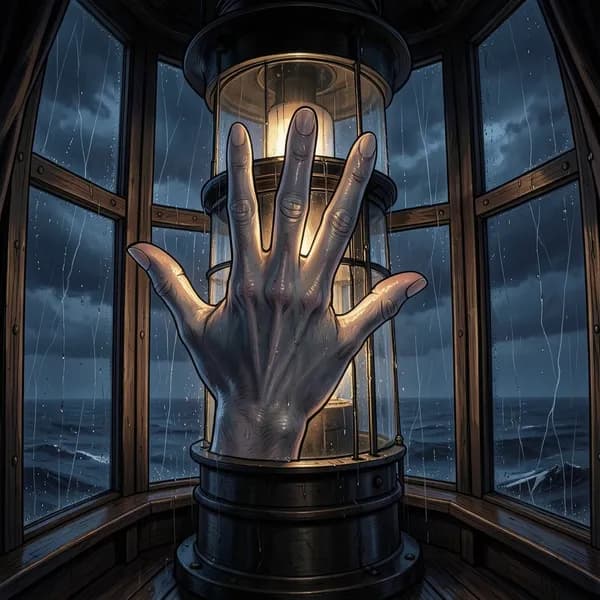
As you turn to climb higher, the lantern above abruptly stops its rhythmic rotation. Silence crashes down, heavier than the storm outside. You look up to see a massive, translucent hand pressed against the glass from the exterior—a hand far too large to belong to any man, its fingers slowly unfurling against the gale.
The light has failed, and something is scaling the outer wall. How will you confront the impossible?
Your character. Your next move.
The tide is rising. Will you keep the light?
The lantern is flickering, and the logs suggest you aren't the only one in the tower tonight. Your choices will decide if the beacon stays lit or if you disappear into the salt-crusted dark. Step into the storm and face the secrets of the rocks.
Start Your Gothic StoryYour Story, Your Way
Everything is customizable. Pick any genre, setting, or character — the AI builds a world around exactly what you want.
Any Character
Design your appearance, personality, backstory — every detail
Any World
Fantasy kingdoms, sci-fi stations, modern cities — you choose
Branching Paths
No two playthroughs are the same. Your choices reshape everything
Full Immersion
AI images, voice acting, sound effects — a living story
Decide whether to trust the erratic, cryptic signals broadcasting over the rusted radio console.
Navigate the narrow, winding stairs while the structure groans against the relentless winter gale.
Choose between preserving the beacon or searching the keeper’s quarters for his final confession.
Manage dwindling resources while the shadows in the lantern room begin to take shape.
Salt spray stings your eyes as you climb the slick, jagged rocks toward the tower. The iron door stands slightly ajar, moaning against the unrelenting wind. Inside, the air is thick with the scent of ozone, damp wool, and something metallic—like old copper. The light at the top continues its rhythmic sweep, casting long, frantic shadows across the spiral staircase, yet the keeper’s quarters are cold and abandoned. Your arrival was not accidental, and the logbook on the desk lies open to a page smeared with ink and salt. Every step you take echoes through the hollow stone, and the decisions you make regarding the tower’s maintenance—or your own sanity—will dictate whether you see the sunrise or become another ghost in the fog. You are alone, save for the whispers carried by the storm, and the ocean is hungry for another soul to claim.
What is Lighthouse on the Rocks in Gothic?
The Lighthouse on the Rocks is a classic gothic setting that leverages the terror of extreme isolation. It is a place where the boundary between the physical world and the supernatural wears thin, battered by the relentless pressure of the sea. In literature and film, this setting—seen in works like Robert Eggers’ *The Lighthouse* or the eerie maritime isolation in William Hope Hodgson’s *The Whistling Room*—serves as a pressure cooker. The structure itself is a character; it groans, leaks, and flickers, acting as the only barrier between the protagonist and the abyss. Unlike a haunted manor, a lighthouse offers no exit. You are trapped on a pillar of rock surrounded by miles of freezing, dark water. The gothic element arises from the weight of history: the ships that have wrecked on the jagged teeth of the coast, the previous keepers who lost their minds to the monotony, and the secrets buried in the logbooks left behind. It is a setting defined by binary choices—light or dark, land or sea, sanity or collapse.
Why play Lighthouse on the Rocks as an interactive story?
Playing through this setting forces you to manage the crushing psychological weight of the coast. You are not just observing a horror story; you are managing the logistics of survival while your perception of reality frays. You will face dilemmas that test your priorities: do you conserve the limited fuel to keep the light burning, or do you use it to warm yourself as the temperature drops? Do you trust the frantic, nonsensical warnings scribbled in the previous keeper's journal, or do you dismiss them as the ramblings of a madman? The tension comes from the limited environment—every room, from the cramped oil storage to the lantern gallery, offers different clues about the tower's history. Your choices determine if you maintain the facade of duty or succumb to the isolation. You might find yourself arguing with the radio, trying to convince a distant operator that you are not alone, only to realize the voice on the other end belongs to someone who died years ago.
What makes Lighthouse on the Rocks work: the worldbuilding
The efficacy of a lighthouse setting relies on sensory deprivation and the claustrophobia of wide-open spaces. You are surrounded by the infinite horizon, yet pinned to a tiny, unstable point of stone. This contrast is the hallmark of effective gothic storytelling. To make this setting work, a writer must lean into the mechanical nature of the tower. The sensory details—the grinding of the lens gears, the taste of salt, the rhythmic ‘thrum’ of the light—should become the metronome of the story. References like the lighthouse sequence in *Shutter Island* or the maritime dread found in the game *Return of the Obra Dinn* highlight how the environment itself can tell a story of failure and decay. The conflict is naturally internal; without the distraction of society, the protagonist’s past sins and buried regrets inevitably surface. The lighthouse keeper archetype is essential here—a person who has retreated from the world, only to find that the world’s darkness followed them to the edge of the map. By focusing on the interplay between the light (a symbol of safety) and the rocks (a symbol of destruction), the story creates a persistent state of anxiety. The environment is not just a backdrop; it is a trap that demands to be understood, forcing the player to piece together the tragic history of the coast before the storm—or the madness—consumes them entirely.
FAQ
What makes the lighthouse setting different from a haunted house?
A haunted house allows for movement and escape routes, but a lighthouse is a vertical trap. The limited geography forces a more intense psychological experience where you cannot run away from the source of the dread.
How do my choices impact the story?
Every decision, from how you maintain the light to how you interpret the journals you find, changes your relationship with the environment. Your choices can lead to madness, discovery of the truth, or a desperate attempt to escape the island.
Is this story setting appropriate for fans of Lovecraftian horror?
Yes. The combination of maritime isolation, ancient secrets, and the descent into madness makes this setting a perfect fit for cosmic or Lovecraftian themes.
Can I play as a skeptical investigator or a new keeper?
The narrative allows you to define your character’s background. Whether you arrive as a professional replacement or a curious outsider, the environment reacts to your specific motivations and skills.
Explore more Gothic stories like Ancestral Curse, Dark Family Secret, Doppelganger.
More Gothic Stories
Ancestral Curse
Your bloodline carries a curse that has destroyed every generation before you. Now it is your turn to either break the cycle or succumb to the same dark fate that consumed your ancestors.
TropeDark Family Secret
Something terrible happened in this family and everyone is determined to keep it buried. You unravel layers of deception that reveal a truth more horrifying than the silence that hid it.
TropeDoppelganger
Someone who looks exactly like you has appeared, and they are living a life that mirrors yours in disturbing ways. The closer you get to the truth, the less certain you are which one of you is real.
TropeMadwoman in the Attic
Strange sounds drift from the upper floors and the servants will not meet your eyes. Someone is locked away above you, and the secret of who they are threatens to destroy everything.
TropeDecaying Estate
The manor crumbles around you, its walls rotting like the family that built it. Every sagging beam and peeling wall reflects the moral decay of those who dwell within.
TropeSupernatural Portrait
A painting watches you from the wall with eyes that seem to follow. The portrait holds a supernatural connection to its subject, and its changes reveal truths that should remain hidden.