
Gothic · Interactive story
Echoes in the Desecrated Nave
The saints have turned their backs, but the shadows remain wide awake.
Start as a guest. Choose your character before the story begins.

Meet the sample character
Some prayers are better left unanswered.
Try a scene · No signup
The Penitent’s Echo
A short sample of this world. Your own version starts with your character.
You push the rotted oak doors open, the wood groaning in protest. Inside, the Cathedral of Saint Jude is a tomb for the divine. Dust motes dance in the fractured light of shattered glass, and the smell of stagnant rainwater clings to your coat. You came here seeking the ledger, but the oppressive silence feels heavier than any history you have ever studied.
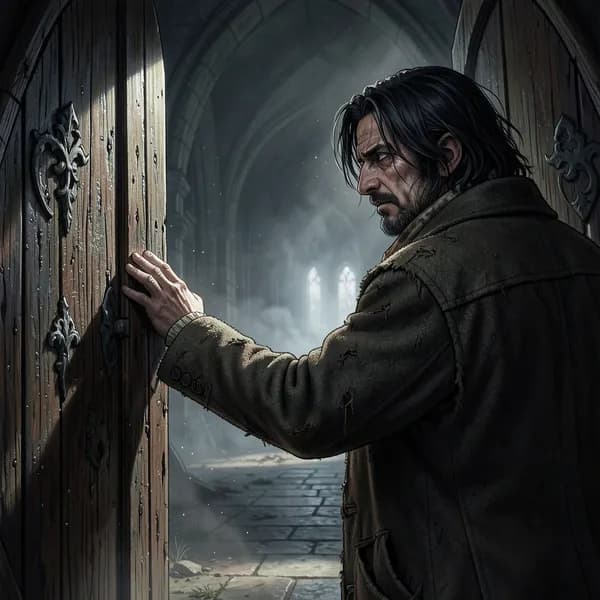
“You were never meant to return to these ruins, Cyprian; the stones here have long memories.”

You touch the cold iron of the crucifix hidden in your pocket. The temperature plummets, your breath blooming in the dim light like a ghost. The shadows stretching across the pews pulse with a rhythmic, sickly cadence, as if the cathedral itself is breathing in sync with your racing heart.
“I did not come for your absolution, Beatrice. I came for the truth buried beneath these stones.”
A low, grating sound erupts from beneath the floorboards—the sound of grinding bone. A pale, translucent hand bursts through the cracked tiles near your boots, gripping your ankle with a pressure that feels like iron. The shadows in the nave converge, forming a towering, faceless shape that blocks the exit.
The hand tightens, burning like dry ice against your skin. How do you respond to the manifestations?
Your character. Your next move.
Will you survive the silence of the nave?
The doors have locked behind you, and the incense is turning to ash. You are standing before the high altar, and you hear movement in the choir loft. Do you light your lantern to face it, or hide in the shadows of the confessional? Your choice begins here.
Begin your gothic storyYour Story, Your Way
Everything is customizable. Pick any genre, setting, or character — the AI builds a world around exactly what you want.
Any Character
Design your appearance, personality, backstory — every detail
Any World
Fantasy kingdoms, sci-fi stations, modern cities — you choose
Branching Paths
No two playthroughs are the same. Your choices reshape everything
Full Immersion
AI images, voice acting, sound effects — a living story
Decide whether to investigate the whispering crypts or ascend the crumbling bell tower.
Choose to honor ancient burial rites or plunder the altar for forgotten artifacts.
Manage your waning sanity as the architecture shifts in response to your presence.
Confront spectral remnants of the clergy to uncover the true nature of the curse.
Frost clings to the fractured stained glass, casting jagged shards of moonlight across the rot-softened pews. You stand in the center of the nave, where the air tastes of incense and centuries of stale dust. Every footstep rings against the flagstones, a sharp intrusion into a silence that feels deliberate, almost predatory. High above, the vaulted ceiling disappears into a suffocating gloom, and the stone statues of martyrs seem to track your movement with sightless, cracked eyes. You are not alone here; something older than the mortar has claimed this sanctuary. Your next decision could be the one that reveals the truth behind the altar or leaves your bones to mingle with the dust of those who came before. In this interactive story, the path forward is yours to carve, provided you can stomach what hides in the dark.
What is an Abandoned Cathedral in Gothic storytelling?
The abandoned cathedral serves as the ultimate intersection of the sacred and the grotesque. It represents a physical manifestation of lost faith and moral decay, where the architecture itself feels like a tomb. Unlike a standard ruined manor, a cathedral brings the added weight of religious history and divine implication. When a place meant to host holiness becomes a vessel for the profane, the tension shifts from mere fear to existential dread. Victor Hugo utilized this setting brilliantly in The Hunchback of Notre-Dame, where the cathedral acts as a living character, shielding and crushing those within its walls. Similarly, the decaying sanctuaries in FromSoftware’s Bloodborne transform the gothic church into a claustrophobic trap, where the architecture forces the player to confront the rotting remains of the old order. In these stories, the setting is never static; it reacts to your presence, with shadows that lengthen in defiance of light and acoustics that amplify the sound of your own heartbeat.
Why play an Abandoned Cathedral interactive story?
Playing through an abandoned cathedral requires more than just courage; it demands a keen eye for detail and a willingness to confront the consequences of your curiosity. You will find yourself weighing the risks of prying open a sealed confessional against the danger of alerting the entities that linger in the rafters. The agency afforded by this format means you are not merely a spectator observing the ruin; you are the one deciding whether to desecrate a relic for power, perform a desperate rite to stave off the darkness, or attempt to flee before the heavy doors lock permanently. Your choices dictate the atmosphere. Choosing to light a torch might reveal a hidden passage, but it also draws the attention of whatever has been watching from the choir loft. Every interaction tests your resolve and determines whether you leave the cathedral with your mind intact or become another cautionary tale whispered by the wind through the eaves.
The architecture of dread: building the ruined sanctuary
The strength of a cathedral setting lies in its verticality and its oppressive geometry. Writers use these spaces to manipulate how characters feel about their own insignificance. Guillermo del Toro’s Crimson Peak demonstrates this perfectly; the house is a character, and the ruined, gothic elements provide a sense of inevitable doom. To build a compelling narrative in such a space, you must focus on sensory dissonance. The smell of cold stone should clash with the metallic scent of fresh blood. The sound of a distant, dissonant organ note should be the only thing breaking the silence. Conflicts here are rarely physical in the traditional sense. They are spiritual and psychological. You are fighting against the weight of history and the lingering impressions of those who died praying. Character types that thrive here include the disgraced scholar, the desperate pilgrim, or the cynical grave robber. Each archetype interacts with the space differently—a scholar might look for clues in the Latin inscriptions on the floor, while a grave robber focuses on the hidden compartments beneath the altar. By utilizing the verticality of the space—ascending to the heights of the bell tower or descending into the lightless catacombs—the story creates a natural progression of stakes. The higher you go, the more you see of the desolation; the deeper you go, the more you understand the nature of the evil that took root. The most effective gothic narratives treat the cathedral as a hungry entity, one that is slowly digesting the memories and the souls of those who dare to enter its nave.
FAQ
What makes an abandoned cathedral different from a haunted house?
A haunted house is personal and domestic, whereas a cathedral is public and divine. The dread in a cathedral comes from the perversion of the sacred. You are not just dealing with ghosts; you are dealing with the echo of prayers, the failure of institutions, and the feeling that something holy has been corrupted.
Can I influence the outcome of the story?
Yes. Every choice you make—from which path you take through the nave to how you react to the spectral occurrences—alters the narrative. Your decisions can lead to salvation, madness, or a permanent place among the ruins.
Is this setting suitable for a long-form story?
Absolutely. The depth of a cathedral, with its crypts, bell towers, cloisters, and sacristies, provides enough variation to sustain a complex, multi-layered story without ever feeling repetitive.
What kind of threats will I face?
Threats are both psychological and supernatural. You might face the crushing weight of isolation, the manipulation of your own memories by spectral presences, or physical entities that guard the desecrated relics of the past.
Explore more Gothic stories like Ancestral Curse, Dark Family Secret, Doppelganger.
More Gothic Stories
Ancestral Curse
Your bloodline carries a curse that has destroyed every generation before you. Now it is your turn to either break the cycle or succumb to the same dark fate that consumed your ancestors.
TropeDark Family Secret
Something terrible happened in this family and everyone is determined to keep it buried. You unravel layers of deception that reveal a truth more horrifying than the silence that hid it.
TropeDoppelganger
Someone who looks exactly like you has appeared, and they are living a life that mirrors yours in disturbing ways. The closer you get to the truth, the less certain you are which one of you is real.
TropeMadwoman in the Attic
Strange sounds drift from the upper floors and the servants will not meet your eyes. Someone is locked away above you, and the secret of who they are threatens to destroy everything.
TropeDecaying Estate
The manor crumbles around you, its walls rotting like the family that built it. Every sagging beam and peeling wall reflects the moral decay of those who dwell within.
TropeSupernatural Portrait
A painting watches you from the wall with eyes that seem to follow. The portrait holds a supernatural connection to its subject, and its changes reveal truths that should remain hidden.