
Fantasy · Interactive story
Claim the Head of the Gorgon
Your blade is cold, the cave is silent, and she is listening for your breath.
Start as a guest. Choose your character before the story begins.
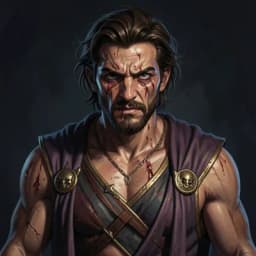
Meet the sample character
Stone waits for those who blink.
Try a scene · No signup
Shadow of the Gorgon's Gaze
A short sample of this world. Your own version starts with your character.
You stand in the center of the subterranean hall, your boots crunching on brittle, calcified remnants of those who failed before you. The polished bronze of your shield is the only thing keeping your vision from meeting her eyes directly. Somewhere ahead, the rhythmic scraping of serpentine tails against the floor pulses like a dying heartbeat.

“Keep your gaze fixed on the reflection, mortal; one flicker of curiosity will turn your blood to marble.”

The air thickens with a sour, musk-heavy odor. You feel the temperature drop, the vibration of the ground signaling that the Gorgon is coiled and ready to strike. Her sisters are silent, waiting for your first mistake. Your knuckles ache from gripping the hilt of your harpe sword, its edge cold and hungry against your palm.
“I did not cross the sea to stand still. I will draw her out, even if it costs me my soul.”
A sudden hiss erupts from the darkness, followed by the sound of shifting stone. The reflection in your shield ripples, showing a flash of writhing, living hair. You have seconds before she lunges. Do you strike blindly into the gloom, attempt to bait her into the light, or hold your ground and pray the gods see fit to guide your hand?
How do you confront the creature hidden in the dark?
Your character. Your next move.
Will you return home a legend or a statue?
The Gorgon’s lair is dark, and the sea monster is rising from the depths. You have the shield, the blade, and the blessing of the gods, but those will not save you if your resolve falters. Every decision you make carries the weight of your legacy. Do not let your story end in stone. Take up your weapons and define your fate now.
Begin the Perseus QuestYour Story, Your Way
Everything is customizable. Pick any genre, setting, or character — the AI builds a world around exactly what you want.
Any Character
Design your appearance, personality, backstory — every detail
Any World
Fantasy kingdoms, sci-fi stations, modern cities — you choose
Branching Paths
No two playthroughs are the same. Your choices reshape everything
Full Immersion
AI images, voice acting, sound effects — a living story
Decide whether to accept the winged sandals or chart your own path across the Aegean.
Master the reflection in your shield to defeat Medusa without looking into her eyes.
Choose how to approach the Kraken-like monster threatening the coast of Joppa.
Balance your loyalty to the gods with the preservation of your own mortal soul.
The reflection in your polished bronze shield reveals not your own face, but the writhing shadows of snakes. You stand at the threshold of the Gorgon’s lair, the scent of petrified stone thick in the air. Hermes’ winged sandals feel heavy on your feet, a constant reminder that you are merely a pawn of the Olympians until you prove otherwise. One wrong step means your flesh turns to cold, unmoving granite, forever a monument to your own failure. This is where your narrative begins, and every decision you make—from how you approach the monster to how you manage the gifts of the gods—determines if your name is sung by poets or buried in the dust. You are the one holding the blade, and the path you carve through these ancient myths belongs entirely to you.
What is Perseus in Fantasy?
Perseus is the archetypal hero of Greek mythology, a slayer of monsters and a son of Zeus. Born to Danaë and the king of the gods, his life is defined by impossible tasks and divine intervention. He is most famous for his quest to retrieve the head of Medusa, a creature whose gaze turns living beings into stone. Unlike later, more complex literary figures, Perseus represents the raw, foundational struggle of the mortal trying to earn favor among the capricious immortals. He appears across various media, from the classic 1981 film 'Clash of the Titans' to the modern 'Percy Jackson' series by Rick Riordan, where his legacy is reimagined for a contemporary audience. Whether he is navigating the gray area of divine commands or literally staring down a nightmare, the core of Perseus remains the same: a man equipped with celestial tools facing threats that would shatter the minds of ordinary soldiers. Understanding Perseus means understanding the cost of heroism when the gods are your patrons and your enemies are the stuff of nightmares.
Why play Perseus as an interactive story?
Playing as Perseus forces you to balance the burden of divine favor against your own survival. You are not just observing a myth; you are calculating the risk of using Athena’s shield versus the cost of relying on your own strength. When Andromeda is chained to the rocks, you must decide whether to rush in headlong or scout the sea monster’s patterns first. Each encounter tests your judgment. Do you prioritize glory, or do you prioritize the safety of the people you have sworn to protect? The weight of your choices shifts the narrative, forcing you to confront the consequences of your actions in a world where gods interfere at their own whim. The tension comes from knowing that while the gods provide the weapons, they do not guarantee your success.
The literary legacy of Perseus
Perseus originates from the works of Hesiod and Apollodorus, serving as one of the oldest recorded figures of Greek heroism. His narrative arc—the exile, the quest, the return—formed the blueprint for the classical hero's journey. Throughout centuries, he has been adapted repeatedly, most notably in Ovid’s 'Metamorphoses,' which added a layer of tragic irony to the Gorgon’s curse. In recent decades, his story has been filtered through the lens of high-fantasy cinema, such as the 2010 'Clash of the Titans' remake, which emphasized the spectacle of his battles over the more meditative aspects of his divine lineage. The enduring power of Perseus lies in his specific relationship to power. He is not born with the strength of Heracles or the strategic mind of Odysseus; he is a man who succeeds because he is willing to use the tools provided to him while navigating the moral ambiguity of his divine heritage. In a modern context, his story offers a compelling look at the intersection of fate and personal agency. When we revisit the myth, we are not just looking at a statue; we are looking at a man standing on the edge of the world, holding a mirror to the impossible.
FAQ
How does combat work against mythical creatures?
Combat combines your inventory—like the Cap of Invisibility or Hermes' sandals—with your tactical decisions. You must choose when to strike and when to defend, keeping in mind that Medusa’s gaze is a constant, environmental threat rather than just a stat-based attack.
Can I change the outcome of the classic myth?
Yes. While the foundations of the Perseus legend remain, your choices influence how you resolve conflicts. You might find a way to save those who perished in the original tales or forge alliances that were never intended by the gods.
Do I need to know Greek mythology to play?
Not at all. The story provides the context necessary to understand your goals and the threats you face. You learn the lore through your interactions with the world and the divine entities you encounter.
Is the tone of this story dark?
The world is grounded and dangerous. Mortality is a real concern, and the gods are often indifferent to human suffering. The atmosphere reflects the weight of ancient bronze and the cold, unyielding nature of the monsters you hunt.
Explore more Fantasy stories like The Chosen One, Found Family, Hidden Heir.
More Fantasy Stories
The Chosen One
A prophecy names you as the one who will save or doom the world. But destiny is not fixed in this AI-driven story where your choices define what being chosen truly means.
TropeFound Family
Blood means nothing compared to the bonds you forge on the road. Assemble a band of misfits and build unbreakable loyalty through shared trials.
TropeHidden Heir
A secret bloodline, a stolen throne, and a truth that changes everything. Discover your royal heritage and decide whether to claim your birthright or reject it.
TropeDark Lord Rising
An ancient evil stirs and the world trembles. Stand against the darkness or consider its seductive offer of power in this epic fantasy interactive story.
TropeFae Bargain
The fae never lie, but their truths are sharper than any blade. Strike a deal with ancient, cunning beings and navigate consequences that twist every wish.
TropeMagical Academy
Enroll in a school of sorcery where every lesson could be your last. Master arcane arts, uncover ancient secrets, and forge alliances that shape the magical world.