
Fae Fiction · Interactive story
The Mortal Blade: Serving the Fae Courts
Your blood is ephemeral, but your steel is the only thing keeping the Seelie alive.
Start as a guest. Choose your character before the story begins.
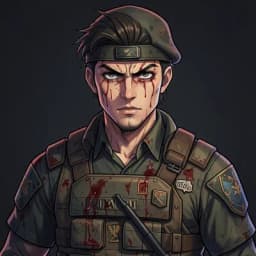
Meet the sample character
Try a scene · No signup
Iron and Gilded Lies
A short sample of this world. Your own version starts with your character.
You kneel on marble floors cold enough to frost your marrow. The scent of ozone hangs heavy, masking the rot of centuries trapped behind the silver tapestries. Lord Vesper watches you, his eyes shifting from starlight to abyssal black. You are his weapon, a mortal hand to carry his spite into the forbidden sectors of the Unseen Court.

“Your pulse is thrumming like a trapped moth against your ribs, Silas. Tell me—does the steel feel heavier than your own conscience?”

You grip the hilt of the blade he gifted you. It bites into your palm, drawing blood that shines with an unnaturally iridescent hue. Every kill you perform for him steals a memory, a color, or a flicker of your childhood. You realize, with sudden clarity, that his war will eventually consume your identity until you are nothing but an echo.
“I am not your shadow, Vesper. If I strike, it is for my own freedom, not your petty grudge.”
Vesper laughs, a sound like glass shattering in a silent room. He leans close, his breath smelling of ancient frost and winter wind. He holds a small, silver locket—the only remaining proof of your family’s existence—dangling it inches above the roaring hearth. The fire turns a violent shade of violet, waiting to consume the metal and your history along with it.
The fire hungers for your past. How do you respond to the threat hanging over your last memory of home?
Your character. Your next move.
Will you serve the crown or take it?
The High King is waiting for your answer. Your human life is fleeting, but the power he offers could change history. Will you stay the loyal blade, or will you find the cracks in his armor? Every choice you make in the court is recorded. The story begins the moment you sign the contract.
Accept the BargainYour Story, Your Way
Everything is customizable. Pick any genre, setting, or character — the AI builds a world around exactly what you want.
Any Character
Design your appearance, personality, backstory — every detail
Any World
Fantasy kingdoms, sci-fi stations, modern cities — you choose
Branching Paths
No two playthroughs are the same. Your choices reshape everything
Full Immersion
AI images, voice acting, sound effects — a living story
Decide whether to honor a blood-oath that forces you to betray your own family.
Manage your remaining years as you burn your life force to fuel fae magic.
Navigate complex dialogue trees where a single misspoken word can trigger a curse.
Choose to align with rival courts to undermine your current master’s influence.
The smell of ozone and crushed violets marks the arrival of the High King’s envoy. He does not ask for your allegiance; he offers a blood-bound contract that grants you the strength of a hundred men and a lifespan that flickers like a dying candle. Outside your window, the mortal world continues its mundane rotation, but you are already standing in the shadow of the Unseelie throne. You have accepted the bargain. Now, every decision you make dictates whether you remain a favored tool of the court or become another discarded relic in the history of the fair folk. In this interactive story, your choices determine the fate of kingdoms that view humanity as nothing more than livestock or entertainment. The air is thick with glamour, and the promises made in the dark carry the weight of iron chains. Will you fight for a monarch who views you as a disposable asset, or will you find a way to break your oath before your humanity drains away entirely?
What is Human Champion of Fae in Fae Fiction?
The Human Champion of Fae trope centers on the tension between mortal fragility and immortal power. In these narratives, a human character enters the service of a fae lord or lady, often due to a debt, a curse, or a desperate need to protect their own kind. The fae provide their champion with supernatural enhancements—superhuman speed, sensory acuity, or magical weaponry—but these gifts always come with a price. The 'champion' role is rarely a position of honor; it is a role of utility. Because the fae are bound by strict rules of etiquette and ancient oaths, they cannot always engage in direct conflict with one another. They use humans as proxies, sending them into dangerous situations where the fae themselves are restricted. Take, for example, the relationship between Jude Duarte and Prince Cardan in Holly Black’s 'The Cruel Prince.' Jude occupies this space, wielding human grit against faerie malice. Similarly, in Julie Kagawa’s 'The Iron King,' Meghan Chase must navigate the treacherous politics of the Nevernever while serving as a pawn in a larger celestial war. This trope functions by placing the protagonist in a world where logic is shifting, beauty is a trap, and the only currency is one’s word. The human champion is an outsider looking in, forced to play a game where the rules change every time they start to understand them.
Why play Human Champion of Fae as an interactive story?
Playing as a human champion forces you to confront the reality of living on borrowed time. When you possess the power of a demigod but retain the heart of a human, every tactical choice carries a personal cost. You aren't just fighting monsters; you are negotiating with entities who treat the truth like a suggestion. Agency is your primary weapon. You will face moments where the fae monarch demands a task that violates your conscience, such as reclaiming a stolen relic from a village you once called home. Do you prioritize your oath to the crown, or do you risk the monarch’s wrath to save your own kin? The tension lies in the fact that your human lifespan is a fraction of theirs; you are literally burning your life away to satisfy their whims. You might choose to hoard your granted powers to eventually stage a coup, or you might become so intoxicated by the glamour that you lose sight of your original mission. The game tracks your reputation, your remaining vitality, and the precarious favor of the court. Each interaction is a calculation—a choice between survival, morality, and the intoxicating rush of true power.
Famous examples of Human Champion of Fae in books, film, and games
The Human Champion trope resonates because it reflects the human desire to overcome insurmountable odds. In 'The Cruel Prince' by Holly Black, Jude Duarte is the quintessential mortal champion. She is not chosen for her bloodline, but for her audacity. By navigating the brutal social hierarchy of Elfhame, she proves that a human armed with a sharp mind and a blade is a match for any immortal. Her story highlights the physical disadvantage of being human in a world of magic, forcing the reader to appreciate how she uses the fae's own arrogance against them. Another distinct example is seen in the 'Dragon Age' series, particularly through the character of a mortal caught in the crossfire of ancient elven entities. While the context shifts, the core conflict remains: a human navigating a world of ancient, cold-blooded magic where they are viewed as a temporary nuisance. These stories endure because they place the protagonist in a position of extreme vulnerability. Whether it is through the lens of a warrior or a political operative, the human champion serves as a bridge for the audience. We see ourselves in these characters—people fighting to define their own destiny in a world designed to crush them. The appeal lies in the defiance; the human champion refuses to be a pawn, even when the gods themselves are pulling the strings. By placing this dynamic into an interactive format, the narrative shifts from observation to participation, making the weight of the crown feel heavier than ever.
FAQ
What makes the human champion trope different from a standard fantasy warrior?
A standard fantasy warrior usually gains power through training or destiny. A human champion of the fae gains power through a bargain, meaning their strength is conditional and revocable. The conflict is less about physical skill and more about maintaining autonomy while serving an entity that views you as an object.
Can I choose to defy my fae master in this story?
Yes. Defiance is a core mechanic. However, the fae are bound by oaths, and breaking your side of the bargain can have catastrophic consequences for your character, ranging from physical curses to the loss of the supernatural abilities granted to you.
Do I have to play as a warrior character?
The role of the champion is flexible. While you may be tasked with combat, you can approach your duties as a diplomat, a spy, or a strategist. Your specific talents and how you choose to leverage them will shape how the fae courts perceive you.
Is this story suitable for those who enjoy dark fantasy?
Absolutely. The fae depicted here are not the whimsical creatures of fairy tales. They are ancient, cold, and dangerous. The story leans into the darker, more treacherous aspects of folklore where words are weapons and beauty is a lethal trap.
Explore more Fae Fiction stories like Fae Bargain, Stolen by the Fae, Changeling Discovery.
More Fae Fiction Stories
Fae Bargain
The fae never lie, but their truths are razor-edged and their deals always cost more than you expect. You enter a bargain with a creature of ancient cunning and discover that every word you spoke was a binding contract.
TropeStolen by the Fae
You vanish from the mortal world without warning, spirited away to a realm of impossible beauty and casual cruelty. The fae who took you consider you a treasured pet — and escaping their attention is harder than escaping their kingdom.
TropeChangeling Discovery
You always felt different, and now you know why — you're not human. Left in a mortal cradle as a replacement for a stolen child, your fae nature is awakening and both worlds want to claim you.
TropeFae Court Politics
Alliances shift with the seasons and a single word spoken out of turn can start a war. You navigate the treacherous politics of the fae courts where power, beauty, and deception are interchangeable currencies.
TropeIron Weakness
Cold iron burns fae flesh and shatters fae magic. You carry a weapon that makes you deadly to the most powerful beings in existence — but wielding iron in the fae realm marks you as an enemy of everything that lives there.
TropeFae Wild Hunt
The thunder of hooves shakes the sky as the Wild Hunt rides across the world, claiming everything in its path. You must either outrun the hunt, join it, or face the Huntsman whose horn turns brave souls into hounds.