
Fae Fiction · Interactive story
The Cold Iron Edge: Surviving the Fae Courts
A sliver of cold metal against an empire of immortal malice. How will you strike?
Start as a guest. Choose your character before the story begins.
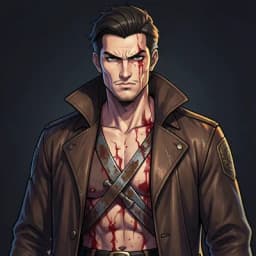
Meet the sample character
Promises made in the court of light are written in blood.
Try a scene · No signup
The Weight of Cold Iron
A short sample of this world. Your own version starts with your character.
The scent of nectar and rot clings to the silk curtains. You stand at the edge of the dais, the iron shiv in your sleeve biting into your forearm. Every pulse of your heart pushes the cold metal against your skin, a dull ache that reminds you that you are the only mortal here who can kill a god. The Summer Prince watches you from across the room, his eyes like polished obsidian.

“You smell of common earth and rusted scrap, little mouse; do you truly think your presence is unnoticed?”

The room falls into a sudden, vacuum-sealed silence. The surrounding courtiers turn, their movements fluid and predatory. You feel the iron burning your skin, a searing heat that contrasts the frigid, magical atmosphere of the court. If you draw it now, the magic of the hall will shatter, but you will be trapped in the ruins with a prince who thrives on violence.
“I am here for the debt your court owes my father, and I am finished playing the part of the guest.”
Oryn smiles, and the floor beneath your feet begins to turn into quicksand of molten gold. He raises a hand, and the guards move to block the exits, their fingers morphing into razor-sharp claws. You have one chance to strike or survive. Do you burn the room to the ground, or do you offer him a deal he cannot ignore?
The prince is closing the distance, his hand glowing with a lethal, shimmering light. How do you force his hand?
Your character. Your next move.
Will you survive the court's judgment?
The Fae are watching, and they know you are hiding something. Draw your iron, make your choice, and see if you have the resolve to challenge the masters of the Nevernever. Your story begins the moment you decide to strike.
Sharpen your bladeYour Story, Your Way
Everything is customizable. Pick any genre, setting, or character — the AI builds a world around exactly what you want.
Any Character
Design your appearance, personality, backstory — every detail
Any World
Fantasy kingdoms, sci-fi stations, modern cities — you choose
Branching Paths
No two playthroughs are the same. Your choices reshape everything
Full Immersion
AI images, voice acting, sound effects — a living story
Choose to conceal your iron to survive social traps or reveal it to force a standoff.
Decide how to use your blade during high-stakes negotiations with capricious Fae lords.
Manage the consequences of your reputation as a known iron-bearer in a hostile realm.
Decipher cryptic warnings from allies who fear the very weapon you carry.
The banquet hall smells of crushed violets and ozone. Maren shifts her weight, feeling the heavy, biting chill of the iron dagger hidden against her thigh. Around her, the Fae dance in a blur of iridescent silk and cruel laughter, their eyes reflecting a hunger that has lasted centuries. They do not know what she carries. To them, she is a mortal plaything, a curiosity to be toyed with until she breaks. But the metal against her skin is an anathema to their very nature; it is a scream in their silent, magical harmony. Every choice Maren makes tonight—whether to bow, to drink the nectar they offer, or to draw her weapon—will dictate whether she leaves this hall alive. In this story, your decisions determine if that iron blade remains a secret weapon or becomes the catalyst for an all-out war with the fair folk.
What is Iron Weakness in Fae Fiction?
Iron weakness is a staple of folklore and modern fantasy, representing the fundamental incompatibility between the natural, chaotic magic of the Fae and the processed, industrial strength of iron. In many narratives, iron is not merely a material; it is a poison that sears Fae flesh, disrupts their glamour, and renders their spells inert. This trope functions as a great equalizer. It allows a mortal protagonist, often physically outmatched by immortal beings, to hold a position of genuine power. Consider Julie Kagawa’s 'The Iron King,' where the protagonist discovers that iron is the only thing that can stand against the shifting, deceptive nature of the Nevernever. Because iron represents the transition from ancient, wild mystery to the structured, rigid reality of the mortal world, it serves as a physical manifestation of the boundary between the two realms. When a character carries iron into a Fae stronghold, they are bringing the weight of the mortal world into a place that defies its laws. It is a constant, simmering threat that dictates the tension of every interaction, turning every handshake or touch into a potential trap.
Why play Iron Weakness as an interactive story?
Playing through a narrative governed by iron weakness forces you to treat your environment as a tactical map. You are not just observing a character; you are managing the risk of your own survival. Every encounter in the Fae courts becomes a calculation: do you risk exposure by brandishing your iron to intimidate a courtier, or do you keep it concealed to gather intelligence, knowing that your enemies are constantly probing for your weaknesses? You might be forced to choose between saving an ally and maintaining your cover, or perhaps you will decide to forge a weapon from raw iron in the heat of a crisis. Agency adds a layer of dread to the trope; you feel the weight of the blade in your hand and the eyes of the Fae upon you, wondering if they can smell the metal on your breath. Your choices define your reputation—are you a diplomat navigating the politics of the Seelie Court, or a saboteur aiming to shatter their illusions once and for all?
Famous examples of Iron Weakness in books, film, and games
The concept of iron as a bane to the Fae is deeply rooted in Celtic folklore, but it has evolved significantly in modern storytelling. In Susanna Clarke’s 'Jonathan Strange & Mr Norrell,' the distinction between the world of men and the world of the Fae is starkly defined by the Fae's inability to endure the presence of iron, which serves as a constant reminder of the mortal reality they despise. This creates a fascinating power dynamic where the Fae are forced to operate through proxies or illusions because they cannot directly interact with the most basic elements of our world. Similarly, in Holly Black’s 'The Cruel Prince,' the protagonist Jude Duarte uses her knowledge of Fae biology—specifically their aversion to iron—to hold her own against enemies who are faster, stronger, and immortal. She does not need magic to win; she needs a cold, hard piece of metal and the nerve to use it. In video games like 'The Witcher' series, silver is used for monsters, but the underlying principle remains: specific materials act as keys to defeating beings that are otherwise untouchable. These stories endure because they highlight the triumph of human ingenuity and resilience against overwhelming, supernatural odds. They remind us that even the most terrifying power has a limit, and sometimes, that limit is as simple as a piece of forged iron.
FAQ
Why does iron hurt the Fae in these stories?
In most folklore and fantasy, iron is viewed as a material that represents order, industry, and the mortal realm. Because the Fae are creatures of wild, primal magic and illusion, the presence of refined iron disrupts their connection to their own power, causing them physical pain or preventing them from using their glamours.
Can I hide my iron weapon to avoid detection?
Yes. The experience allows you to decide how, when, and if you reveal your iron. Keeping it hidden may help you blend into the court, but it leaves you vulnerable to magical traps that your iron could have otherwise shattered.
Is this game suitable for fans of dark fantasy?
Absolutely. The tone focuses on the sharp, dangerous nature of the Fae courts where choices carry heavy consequences and survival is never guaranteed. If you enjoy stories where political maneuvering and physical danger collide, this fits that mold.
Do I need to know specific lore to start playing?
No prior knowledge of Fae lore is required. The story introduces the rules of the world through your interactions, allowing you to learn the threats and social expectations of the Fae courts as you play.
Explore more Fae Fiction stories like Fae Bargain, Stolen by the Fae, Changeling Discovery.
More Fae Fiction Stories
Fae Bargain
The fae never lie, but their truths are razor-edged and their deals always cost more than you expect. You enter a bargain with a creature of ancient cunning and discover that every word you spoke was a binding contract.
TropeStolen by the Fae
You vanish from the mortal world without warning, spirited away to a realm of impossible beauty and casual cruelty. The fae who took you consider you a treasured pet — and escaping their attention is harder than escaping their kingdom.
TropeChangeling Discovery
You always felt different, and now you know why — you're not human. Left in a mortal cradle as a replacement for a stolen child, your fae nature is awakening and both worlds want to claim you.
TropeFae Court Politics
Alliances shift with the seasons and a single word spoken out of turn can start a war. You navigate the treacherous politics of the fae courts where power, beauty, and deception are interchangeable currencies.
TropeFae Wild Hunt
The thunder of hooves shakes the sky as the Wild Hunt rides across the world, claiming everything in its path. You must either outrun the hunt, join it, or face the Huntsman whose horn turns brave souls into hounds.
TropeTithe to Hell
Every seven years, the fae must pay a tithe of souls to the infernal realms — and you've been chosen as this year's offering. The clock ticks toward midnight as you search for a way to break free or find a willing substitute.