
Fae Fiction · Interactive story
The Fae Market: Where Everything Has a Price
Starlight for a secret, a heartbeat for a crown. What will you trade?
Start as a guest. Choose your character before the story begins.
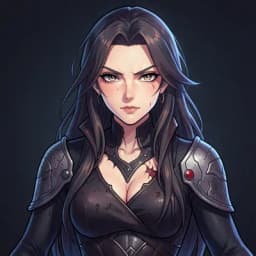
Meet the sample character
Try a scene · No signup
The Merchant of Stolen Breaths
A short sample of this world. Your own version starts with your character.
You stand before the Gilded Stall, where the air tastes of iron and crushed lavender. The merchant, a creature with fingers like spindly glass rods, taps a jar containing a frantic, glowing spark—a childhood memory of rain on a tin roof. You need that memory to anchor your fading sanity, but the price inscribed on the silk ribbon is not coin. It is a binding vow of silence.

“Silence is a heavy garment, little bird. Can your tongue truly bear the weight of such a hollow existence?”

The market hums with the static of stolen secrets. Around you, shadowy figures with hollow chests haggle for patches of moonlight, their voices thin and reedy. The merchant leans forward, the glass rods of his fingers clicking rhythmically against the counter. Your chest tightens as the memory in the jar flickers, dimming as if it senses your hesitation.
“I will trade my voice for a decade, provided that memory reveals the name of the man who burned my father’s house.”
He smiles, his teeth like jagged slivers of obsidian. He slides a quill carved from a raven’s talon across the velvet counter, the inkwell already bubbling with a dark, viscous liquid. If you sign, the memory is yours, but the first word you speak after will be your last for ten years. If you refuse, the stall will shift, and the memory will vanish into the void of the market forever.
Do you sign the contract, attempt to seize the jar by force, or demand a different price?
Your character. Your next move.
The market is open. What will you sacrifice?
The stalls are shifting, and the merchants are watching you. You need a way to reach the High King’s court, and the only path lies through the bazaar. Will you trade your voice for a map, or will you find another way to cheat the fae? Step into the market and face the consequences of your ambition.
Start your bargain nowYour Story, Your Way
Everything is customizable. Pick any genre, setting, or character — the AI builds a world around exactly what you want.
Any Character
Design your appearance, personality, backstory — every detail
Any World
Fantasy kingdoms, sci-fi stations, modern cities — you choose
Branching Paths
No two playthroughs are the same. Your choices reshape everything
Full Immersion
AI images, voice acting, sound effects — a living story
Negotiate a bargain with a merchant who demands your most precious childhood memory.
Choose whether to consume enchanted fruit that grants power but slowly erodes your willpower.
Decide which secret to reveal to gain entry to the restricted inner stalls.
Attempt to trick a fae vendor using only your wit and a limited set of items.
The air tastes like ozone and rotting wildflowers. You stand at the threshold of the market, a sprawling labyrinth of stalls stitched together from shadows and stolen promises. A merchant with eyes like polished obsidian beckons you closer, holding a glass vial containing the last laugh of a fallen king. Your coin purse is empty, but your history is long. In this place, you decide what to offer. A choice made here ripples through the hidden courts, potentially turning a simple trade into a binding oath that could define your entire existence. You are not merely a visitor; you are a participant in a game where the currency is your own essence, and the vendors are waiting for you to stumble.
What is Fae Market in Fae Fiction?
The Fae Market, rooted in the classic lore of the 'Goblin Market,' is a liminal space existing between the human world and the wild, untamed courts of the fair folk. It is a place of impossible commerce where items of metaphysical value—a lover’s first memory, the scent of a summer that never was, or the ability to see through lies—are sold for prices that defy standard economics. In Christina Rossetti’s poem 'Goblin Market,' the danger of the bazaar is a psychological trap; in Neil Gaiman’s 'Stardust,' it is a place of wonder and peril. Regardless of the iteration, the market functions on one immutable rule: you cannot leave without giving something back. Unlike traditional fantasy shops, the Fae Market does not accept gold. It demands pieces of your identity, your future, or your physical vitality. It is a setting defined by its predatory atmosphere, where the beauty of the wares is intentionally designed to blind the unwary to the predatory nature of the merchant. Whether you are seeking a cure for a magical ailment or a weapon to slay a rival, the market provides, but it always takes more than you intended to surrender.
Why play Fae Market as an interactive story?
Playing through a Fae Market scenario forces you to confront the weight of your own choices. In a typical game, you might buy an item and move on, but here, every transaction is a potential trap. You will face merchants who speak in riddles and offer items that seem like boons but act as anchors. The tension arises from the necessity of trade against the permanence of the cost. Do you trade your ability to dream to gain passage into the Summer Court? Do you promise your firstborn’s name for a blade that can cut through iron? Every decision feels like a gamble where the house—the fae—is rigged to win. You must decide when to bluff, when to haggle with your own blood, and when to run before the market stalls vanish into the mist, taking your soul with them. The narrative reacts to your greed, your caution, and your desperation, creating a high-stakes environment where your character’s personality is the primary tool for survival.
What makes Fae Market work: the worldbuilding
The Fae Market functions best when it adheres to the logic of faerie—a system where words are binding contracts and beauty is a mask for hunger. In Holly Black’s 'The Cruel Prince,' the danger of the fae is not just their magic, but their inability to lie, which makes their bargains literal and lethal. This creates a specific kind of conflict: the player must be as precise as the fae, parsing every syllable of an offer to avoid being cheated. Sensory details are the heartbeat of this setting. Use the smell of copper and ozone to signal a deal gone wrong. Describe the stalls as living things—tents made of spider-silk, displays carved from the bones of mountain giants, and lanterns filled with trapped will-o'-wisps. In 'Pan’s Labyrinth,' the feast scene captures the grotesque allure of the fae, where the temptation to partake in forbidden goods is almost overwhelming. A successful Fae Market story requires that same sensory overload. Character archetypes should include the desperate mortal, the cunning fae merchant, the disgraced noble trying to reclaim their status, and the collector of impossible artifacts. These characters clash in the market because they all want something they cannot produce themselves. The conflict is inherently transactional. When you write or play in this setting, the focus should remain on the cost of the trade. If a character gains a sword that cuts through shadow, they should lose the ability to see in the dark. This balance keeps the stakes high and ensures that every gain is tempered by a loss, mirroring the ruthless, indifferent nature of the fair folk themselves.
FAQ
What is the primary danger of the Fae Market?
The primary danger is the nature of the bargain. In faerie, a verbal agreement is a binding contract. If you trade 'a favor' for an item, the fae can interpret that favor in any way they choose, often forcing you into actions that betray your own goals or morals.
Can I win a transaction against a fae merchant?
Winning is rarely about out-muscling the merchant; it is about out-thinking them. You must pay attention to the exact wording of their offers and look for loopholes in their logic. If you are clever enough, you can walk away with the prize without losing your soul—but it is never easy.
What kind of currency do fae merchants accept?
Fae merchants value abstract and personal items over physical gold. They trade in memories, colors, emotions, years of your life, or even aspects of your identity, like your name or your ability to feel joy.
Is this setting suitable for a high-fantasy character?
Yes, but be prepared for a shift in tone. While high-fantasy often focuses on combat and heroism, the Fae Market focuses on wit, manipulation, and survival. It is an excellent setting to test the limits of your character's resolve and ethics.
Explore more Fae Fiction stories like Fae Bargain, Stolen by the Fae, Changeling Discovery.
More Fae Fiction Stories
Fae Bargain
The fae never lie, but their truths are razor-edged and their deals always cost more than you expect. You enter a bargain with a creature of ancient cunning and discover that every word you spoke was a binding contract.
TropeStolen by the Fae
You vanish from the mortal world without warning, spirited away to a realm of impossible beauty and casual cruelty. The fae who took you consider you a treasured pet — and escaping their attention is harder than escaping their kingdom.
TropeChangeling Discovery
You always felt different, and now you know why — you're not human. Left in a mortal cradle as a replacement for a stolen child, your fae nature is awakening and both worlds want to claim you.
TropeFae Court Politics
Alliances shift with the seasons and a single word spoken out of turn can start a war. You navigate the treacherous politics of the fae courts where power, beauty, and deception are interchangeable currencies.
TropeIron Weakness
Cold iron burns fae flesh and shatters fae magic. You carry a weapon that makes you deadly to the most powerful beings in existence — but wielding iron in the fae realm marks you as an enemy of everything that lives there.
TropeFae Wild Hunt
The thunder of hooves shakes the sky as the Wild Hunt rides across the world, claiming everything in its path. You must either outrun the hunt, join it, or face the Huntsman whose horn turns brave souls into hounds.