
Espionage · Interactive story
The Ghost Protocol: Master the Art of Disappearance
One wrong move, one leaked photograph, and the past catches up with you.
Start as a guest. Choose your character before the story begins.

Meet the sample character
The ink on your new life is still wet, and the hunters are already closing the gap.
Try a scene · No signup
Paper Ghosts
A short sample of this world. Your own version starts with your character.
The floorboards in the kitchen groan under your weight. Outside, the low hum of Belgrade traffic is interrupted by the screech of tires. You glance at the monitor; the surveillance feed for the lobby has gone dark. The agency hasn't just abandoned the witness; they’ve cleared the board.

“You told me I would be a ghost, Marek. So why does it feel like I’m already buried?”
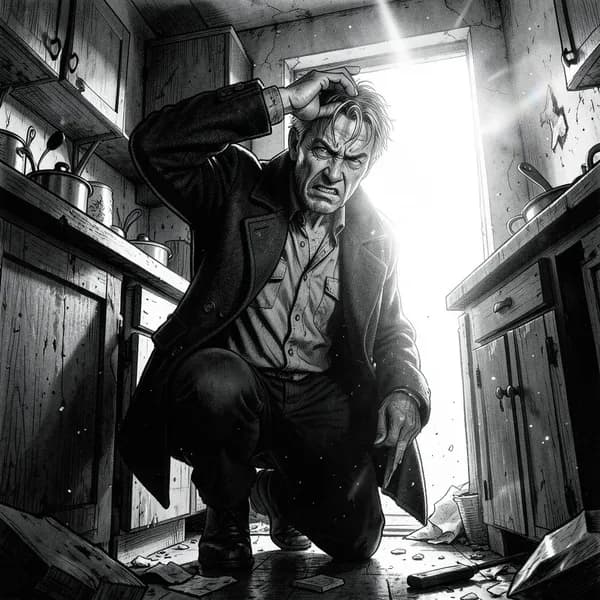
Svetlana presses her back against the brick wall, her fingers trembling as she clutches a fake passport. The ink on the document is barely dry. You hear the heavy thud of boots hitting the landing outside the door. They aren't knocking. They are preparing a breach.
“Stop looking at the door and look at the fire escape. We have sixty seconds before they reach this room.”
A flashbang detonates in the hallway, the concussive force rattling the dishes in the sink. You realize the team outside isn't here to capture her—they are here to sanitize the entire floor. You have to move now, but you are out of time and out of exits.
The door is about to splinter. How do you force a way out?
Your character. Your next move.
Can you keep them hidden until dawn?
The extraction point is set, but the assassins are closing in. You have to finish the identity profile and scrub the server logs before the perimeter is breached. Every second counts. If you make a mistake, their new life ends before it even begins. Take control of the operation and see if you have what it takes to make them disappear.
Start the operationYour Story, Your Way
Everything is customizable. Pick any genre, setting, or character — the AI builds a world around exactly what you want.
Any Character
Design your appearance, personality, backstory — every detail
Any World
Fantasy kingdoms, sci-fi stations, modern cities — you choose
Branching Paths
No two playthroughs are the same. Your choices reshape everything
Full Immersion
AI images, voice acting, sound effects — a living story
Choose between immediate extraction or setting a trap for pursuing assassins.
Fabricate digital histories and social media personas to mislead federal intelligence agencies.
Decide which personal items the subject is allowed to keep during their transition.
Manage the subject's psychological state to prevent them from contacting old associates.
The safe house smells like stale coffee and ozone. Elena sits across from you, her hands shaking as she clutches a burner phone. She is the only person alive who knows the location of the offshore account, and a dozen black-ops teams are currently scouring the city for her. You have six hours to scrub her digital footprint, manufacture a backstory that holds up under scrutiny, and get her to the extraction point at the docks. Every decision you make—from the forged passport you select to the cover story you plant in the local media—will be tested. If you fail, the silence in the room will be broken by a silenced pistol. In this interactive story, your choices are the thin line between a new life and a final one. Trust is a luxury neither of you can afford.
What is Witness Relocation in Espionage?
Witness relocation is the ultimate high-stakes chess match. It is not just about hiding; it is about creating a lie so convincing that the truth becomes irrelevant. Whether it is John Book protecting an Amish boy in the 1985 film Witness or the desperate scramble for a new life in the movie The Long Kiss Goodnight, the core tension remains the same: the subject's past is a predator that never stops hunting. The goal is total erasure. You do not just change a name; you build a psyche, forge a work history, and manufacture a reason for existence that will not invite suspicion. The trope thrives because it forces characters into intimate, forced proximity with their handlers. You learn their secrets, their fears, and their weaknesses, all while knowing that your primary duty is to ensure they survive long enough to disappear. In modern espionage, this often involves complex digital scrubbing and psychological conditioning, making it a perfect setup for high-pressure, decision-based narratives.
Why play Witness Relocation as an interactive story?
Playing through a witness relocation scenario puts the weight of a human life directly on your shoulders. Unlike a passive film, you are the one deciding if the subject is ready to face their new reality or if they are a liability waiting to break. You will face moments where you must determine if a suspicious neighbor is a genuine threat or just a coincidence. You decide which personal items the subject can keep, knowing that a single sentimental object could lead assassins straight to their new doorstep. The agency adds a layer of paranoia that books and films cannot replicate. You are constantly balancing the need for speed against the need for perfection. If you rush the identity creation, the cover will be thin. If you take too long, the hunters will find the safe house. Every choice feels like a gamble because, in this environment, the consequences are immediate and often lethal.
Famous examples of Witness Relocation in books, film, and games
The trope of the protected witness appears across a variety of media, often highlighting the fragility of identity. In the film Witness (1985), the focus is on the radical shift in environment, where a man from the urban underworld must hide in the strict, isolated culture of the Amish. The relocation is not just geographic but cultural, forcing the protagonist to adapt to a life that is the complete antithesis of his previous existence. Another notable example is the film Safe House (2012), which explores the chaos that ensues when the relocation process fails. In this narrative, the handler is forced to go on the run with their asset, turning the protection mission into a frantic, survival-focused chase. The trope also appears in various modern spy thrillers like the Bourne series, where the protagonist is essentially a witness to his own past, constantly trying to relocate his identity while being hunted by the very agency that created him. What makes this trope endure is the universal fear of losing one's identity. We all have a past, and the idea that it could be erased—or that it could come back to destroy us—is a powerful hook. Whether it is about protecting a secret or protecting a person, the witness relocation trope forces characters to confront who they are when their name, job, and history are stripped away.
FAQ
How does my choice of alias affect my survival chances?
In this game, your choice of alias is more than just a name. If you choose an identity that is too similar to the subject's original life, the threat actors are more likely to track them down. You must balance the need for a realistic background with the need for total separation from their past.
Can I fail the mission if I make the wrong choices?
Yes. Every decision you make carries risk. If you miss a detail in the subject's background or fail to secure their digital footprint, the assassins will find them. Failure usually results in the subject being compromised or killed, ending the narrative prematurely.
What makes this different from a standard detective game?
While detective games focus on solving a crime, this experience focuses on prevention and erasure. You are not looking for clues to find a killer; you are creating a ghost to hide from one. The gameplay revolves around risk management and psychological pressure rather than traditional investigation.
Is there a way to keep the subject from finding out about their past?
You can attempt to isolate them, but the subject may have their own motivations. You will have to manage their loyalty and stability. If they become suspicious or try to contact their old life, you may have to decide whether to intervene or let them face the consequences.
Explore more Espionage stories like Double Agent, Honey Trap, Dead Drop.
More Espionage Stories
Double Agent
You serve two masters, and both would kill you if they knew the truth. Every report you file is a carefully constructed lie, and every friendship could be the one that unravels your cover.
TropeHoney Trap
Seduction is your weapon, and your target has secrets worth nations. You engineer an intimate connection designed to extract intelligence, but the line between performance and genuine feeling is dangerously thin.
TropeDead Drop
A chalk mark on a park bench triggers a sequence that could change the balance of power between nations. You execute a dead drop exchange where a single mistake means exposure, capture, or worse.
TropeExtraction Mission
An asset is compromised and has forty-eight hours before the secret police close in. You must plan and execute an extraction across hostile territory where every checkpoint could be the last.
TropeMole Hunt
There is a traitor inside the agency, and agents are dying because of it. You lead the investigation, suspecting everyone including your closest colleagues, knowing the mole is watching your every move.
TropeDefection
You want out. After years of serving a regime you no longer believe in, you reach out to the other side with an offer: your knowledge in exchange for a new life. But defectors are never fully trusted and always hunted.