
Espionage · Interactive story
The Handler: Cold Calculus in the Shadows
You don't pull the trigger, but you decide who walks away from the blast.
Start as a guest. Choose your character before the story begins.
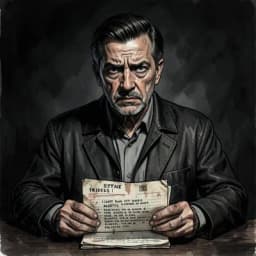
Meet the sample character
Try a scene · No signup
The Vltava Protocol
A short sample of this world. Your own version starts with your character.
You stare at the thermal feed. The embassy ballroom is a blur of black ties and silk, but your eyes are locked on the pulsing red dot that represents Mira. She is holding her champagne glass too tightly, her pulse spikes betraying her forced composure. The men in gray suits are closing the distance, and you know the signs of a trap before she even realizes she is the prey.

“They know, Viktor. I see them shifting their hands to their waistbands. Give me a reason to stay or I am ghosting.”

Your finger hovers over the physical toggle for the building's emergency lockdown. Activating it seals the exits, trapping Mira inside with four trained assassins, but it buys you thirty seconds to wipe the server logs clean. If you do nothing, she walks into a kill box, and your fingerprints remain on the mission file for the agency's internal affairs team to find.
“Hold your position, Mira. If you run, you become a liability. Wait for the distraction.”
The power grid flickers—the distraction you commanded. But in the sudden darkness of the ballroom, a man in a gray suit turns his head toward the hidden camera. He is staring directly at you, as if he knows exactly which screen you are watching from in this lonely, concrete room. The clock is ticking, and the connection is dropping.
The man on the screen is still looking at you, and the signal is breaking. What is your next move?
Your character. Your next move.
The mission is failing. Give the order.
Your field operative is pinned down in a safehouse with the stolen encrypted drives. The enemy is closing in. You can order a distraction that will expose your best asset, or you can cut the line and let the operative vanish. The choice is yours, and the consequences will ripple through the agency.
Take Command NowYour Story, Your Way
Everything is customizable. Pick any genre, setting, or character — the AI builds a world around exactly what you want.
Any Character
Design your appearance, personality, backstory — every detail
Any World
Fantasy kingdoms, sci-fi stations, modern cities — you choose
Branching Paths
No two playthroughs are the same. Your choices reshape everything
Full Immersion
AI images, voice acting, sound effects — a living story
Select which assets to deploy for high-stakes infiltration missions in hostile territories.
Decide whether to authorize a clean-up crew to erase a compromised agent's tracks.
Intercept and decode enemy communiqués to identify potential double agents within your network.
Allocate budget and resources between tactical support and long-term intelligence gathering.
The burner phone vibrates on your mahogany desk at 3:00 AM. A field operative in Istanbul is burned, their cover shredded by a double agent you should have flagged weeks ago. You stare at the map, the red pins marking assets that are now liabilities. You can authorize an extraction, risking your remaining team in the city, or you can burn the operative to protect the larger network. Every choice you make in this story carries the weight of human lives. Your desk is a distance from the gunfire, yet the blood on the files is yours. You are the architect of the mission, the one who knows the truth behind the lies, and the one who must decide if the objective justifies the cost of a human soul. The game begins with a single, irreversible command.
What is The Handler in Espionage?
The Handler is the invisible architect of the espionage world. While field agents are the ones dodging bullets or seducing targets, the Handler is the strategist behind the scenes. They manage the flow of information, sanitize the crime scenes, and ensure that when a mission goes sideways, the fallout stays contained. This role is defined by detachment; the Handler views human assets as tools to be used, maintained, or discarded. Think of George Smiley in John le Carré’s 'Tinker Tailor Soldier Spy'—a man whose power lies not in his physical strength, but in his ability to see the board and anticipate the moves of his adversaries. Or consider the calculated, often ruthless mentorship provided by Claudia in 'The Americans,' where every interaction with an operative is a test of loyalty and utility. The Handler doesn't just manage intelligence; they manage the morality of the mission, balancing the needs of the state against the survival of their people. They are the ones who decide when a lie has served its purpose and when a truth must be silenced forever.
Why play The Handler as an interactive story?
Playing as the Handler shifts the focus from reflex to cognition. You aren't reacting to an ambush; you are the one who failed to predict it. You face the pressure of managing limited resources, where every asset you send into the field represents a potential liability. You will receive encrypted reports, analyze conflicting intel, and decide whether to trust an operative’s judgment or replace them before they become a weakness. The tension comes from the silence between your orders and the results. When you order a black-bag operation, you wait for the outcome, knowing that a single miscalculation on your part leads to an international incident. You must balance the agency's cold goals with the personal relationships you develop with your agents. Do you promote a talented spy knowing they are becoming a liability, or do you cut them loose to preserve the mission's integrity? The story reacts to your coldness or your compassion, altering the loyalties of those who work for you.
The psychology of The Handler: why readers fall for this character
The Handler archetype taps into the fantasy of absolute control. In a chaotic world, the Handler is the one who understands the rules of the game and holds the power to change them. This role activates a specific desire: the ability to influence history from the shadows without the consequences of direct confrontation. We see this allure in figures like Saul Berenson from 'Homeland,' whose obsession with the 'bigger picture' often costs him his personal peace. There is a profound psychological weight to the Handler’s burden; they are the ultimate pragmatist. They embody the struggle between institutional loyalty and individual conscience. Unlike the typical hero who acts on impulse, the Handler acts on probability. Readers are drawn to this archetype because it allows them to confront the 'trolley problem' of espionage. You aren't just saving the world; you are deciding how much of the world is worth sacrificing to keep it turning. The Handler’s arc is rarely about personal growth in the traditional sense; it is about the hardening of the heart. As the story progresses, the choices become more binary: the mission or the life. The satisfaction—and the horror—of this archetype lies in the realization that the most dangerous person in the room is the one holding the file, not the one holding the gun.
FAQ
What makes the Handler different from a field agent?
A field agent operates in the moment, dealing with immediate physical threats and tactical execution. The Handler works from a distance, focusing on the strategic, administrative, and ethical components of the operation. You are the architect of the plan, not the one executing the final step.
Can I save everyone in this espionage game?
Rarely. The nature of espionage is built on compromise. Saving one asset often puts the entire network at risk. Your choices will require you to weigh the value of an individual against the success of the mission, and sometimes, the only winning move is knowing who to sacrifice.
Is this story focused on action or strategy?
The focus is on strategy, psychology, and risk management. While the consequences of your decisions involve high-stakes action, your primary role is the mental work of directing the operation and managing the fallout.
How does the AI handle my choices?
The narrative engine adapts to your specific directives. If you consistently prioritize the mission over your agents, the loyalty of your network will shift, potentially leading to mutiny or betrayal. The world remembers your choices and adjusts the difficulty and tone accordingly.
Explore more Espionage stories like Double Agent, Honey Trap, Dead Drop.
More Espionage Stories
Double Agent
You serve two masters, and both would kill you if they knew the truth. Every report you file is a carefully constructed lie, and every friendship could be the one that unravels your cover.
TropeHoney Trap
Seduction is your weapon, and your target has secrets worth nations. You engineer an intimate connection designed to extract intelligence, but the line between performance and genuine feeling is dangerously thin.
TropeDead Drop
A chalk mark on a park bench triggers a sequence that could change the balance of power between nations. You execute a dead drop exchange where a single mistake means exposure, capture, or worse.
TropeExtraction Mission
An asset is compromised and has forty-eight hours before the secret police close in. You must plan and execute an extraction across hostile territory where every checkpoint could be the last.
TropeMole Hunt
There is a traitor inside the agency, and agents are dying because of it. You lead the investigation, suspecting everyone including your closest colleagues, knowing the mole is watching your every move.
TropeDefection
You want out. After years of serving a regime you no longer believe in, you reach out to the other side with an offer: your knowledge in exchange for a new life. But defectors are never fully trusted and always hunted.