
Espionage · Interactive story
The Eye in the Sky: Command Global Espionage
One grainy image can topple a regime. Are you watching closely enough?
Start as a guest. Choose your character before the story begins.

Meet the sample character
Truth is a variable, and you are the only one watching.
Try a scene · No signup
Static on the Feed
A short sample of this world. Your own version starts with your character.
The satellite feed from Low Earth Orbit stutters. You adjust the gain, watching the thermal signature move through the dense forest canopy. It is a ghost, a heat bloom that shouldn't exist in a restricted zone. Your fingers hover over the command console, the cursor blinking like a heartbeat, demanding a designation: friend or threat.
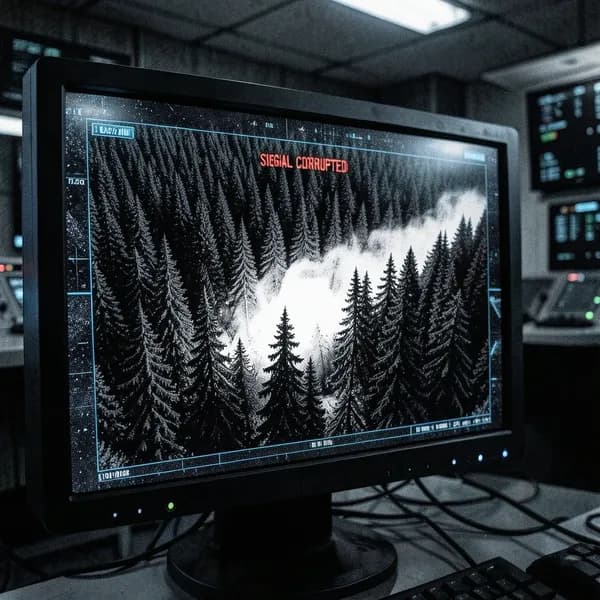
“Mark that signature as a civilian asset, Hiroshi. My patience for your hesitation is evaporating.”

Viktor’s voice drips with synthetic calm, but you hear the background static of an armed tactical team readying for deployment. The thermal signature pauses, changing shape—it is not a civilian. It is a courier carrying the encrypted ledger that ruined your career. If you flag it, your agency gets the data, but you lose your only leverage.
“I see the movement, Viktor, but the sensor data is corrupted. I need to verify the identity before I commit a strike.”
Viktor laughs, a dry sound that makes the hair on your neck prickle. Outside the bunker, the heavy security door clicks—a remote lockout. You have five seconds before the automated system wipes your access, and the courier vanishes into the mountain pass. Your hand trembles as the screen warns of an imminent signal override.
The security override countdown reaches three seconds. Do you tag the target for the strike, stall the system, or initiate a total blackout?
Your character. Your next move.
Command the lens. Change the outcome.
The target is moving into the blind spot. You have seconds to authorize a strike or pull back and wait for more evidence. Your choice will ripple through the intelligence community, potentially starting a war or stopping a coup. Do you have the resolve to act based on what you see from orbit?
Start your surveillanceYour Story, Your Way
Everything is customizable. Pick any genre, setting, or character — the AI builds a world around exactly what you want.
Any Character
Design your appearance, personality, backstory — every detail
Any World
Fantasy kingdoms, sci-fi stations, modern cities — you choose
Branching Paths
No two playthroughs are the same. Your choices reshape everything
Full Immersion
AI images, voice acting, sound effects — a living story
Decipher grainy thermal imagery to identify high-value targets before they move into dark zones.
Choose whether to sabotage a communications relay or track the enemy to their central hub.
Manipulate diplomatic outcomes by leaking specific satellite data to rival intelligence agencies at critical moments.
Balance the risk of exposing your surveillance network against the need to stop an imminent threat.
A cold, blue light pulses against your retinas as the monitor flickers to life. You are staring at a high-resolution feed of a nondescript warehouse in a desert on the other side of the globe. A black sedan pulls up to the loading dock. A man in a tan trench coat steps out, glancing at his watch. You know he shouldn't be there. You know that if you signal the extraction team now, you might save the asset, but you will burn your deep-cover source inside the agency. Every choice you make in this digital theater of shadows ripples outward, altering the outcome of geopolitical crises. The lens is your only witness, and the data you gather determines who lives and who disappears into the night. This is an interactive story where your interpretation of the visual evidence dictates the fate of nations.
What is Satellite Surveillance in Espionage?
Satellite surveillance in espionage refers to the strategic use of orbital assets to gather intelligence without leaving a physical footprint. It is the art of the invisible observer, where analysts parse through terabytes of imagery to identify anomalies: a shadow where a tank should be, a heat signature in a forbidden zone, or the sudden movement of a convoy. In the film Enemy of the State, the terror stems from the realization that nowhere is private; the satellite is the ultimate predator. Unlike field agents who risk their lives on the ground, the satellite operative manages the war from a sterile room, detached yet responsible for every death and revelation. This trope turns the map into a puzzle. It is not about what you see, but what you choose to ignore. Whether you are tracking a rogue diplomat in The Bourne Ultimatum or monitoring nuclear silos in modern military simulations, the satellite serves as the silent arbiter of truth. It forces a disconnect between the analyst and the target—a cold, calculated distance that makes the weight of your decisions feel both absolute and terrifyingly remote.
Why play Satellite Surveillance as an interactive story?
Playing an espionage story through the lens of satellite surveillance shifts the focus from physical combat to analytical survival. You are not dodging bullets; you are dodging misinformation. You will face moments where the data is contradictory: does the thermal bloom signify a missile launch or a refinery flare? You must decide whether to trust the automated AI analysis or your own intuition. If you act too soon, you reveal your presence. If you act too late, the target vanishes. You will manage the tension of remote warfare, where your primary weapon is the delay between observation and action. You will have to decide which intel to share with your superiors and which to keep for your own leverage.
Famous examples of Satellite Surveillance in books, film, and games
The trope of satellite surveillance thrives on the tension between total knowledge and human error. In GoldenEye, the satellite weapon is the ultimate prize, turning orbital technology into a literal gun pointed at the world. The film highlights the vulnerability of a society dependent on orbital data. Conversely, in the game Tom Clancy's Ghost Recon, satellite feeds provide tactical superiority, but the gameplay often forces the player to contend with signal interference and hacking—reminding us that even the most advanced tech can be subverted. In the novel The Hunt for Red October, the reliance on satellite reconnaissance creates a narrative rhythm of check and balance, where the characters are constantly trying to out-maneuver the eyes in the sky. These stories endure because they mirror our own anxieties about privacy and the invisible forces that shape our reality. The satellite is a god-like perspective, but it is always filtered through the flawed, often biased, lens of the person sitting at the desk. That gap—between the objective image and the subjective interpretation—is where the best stories happen.
FAQ
What is a satellite surveillance narrative?
It is a subgenre of espionage where the protagonist acts as a remote analyst, using orbital imagery to solve mysteries, track targets, or influence geopolitical outcomes.
How does this differ from traditional spy fiction?
Traditional spy fiction relies on field work and hand-to-hand combat; satellite stories focus on intelligence gathering, data manipulation, and the psychological weight of remote decisions.
Can I be caught while watching from orbit?
Yes. In these stories, the enemy often employs countermeasures like spoofing, jamming, or searching for the leaks in your intelligence chain, making your position vulnerable.
Is this game focused on action or strategy?
It is a blend of both, but the primary conflict is strategic. You are managing information, and your choices determine how that information is used or suppressed.
Explore more Espionage stories like Double Agent, Honey Trap, Dead Drop.
More Espionage Stories
Double Agent
You serve two masters, and both would kill you if they knew the truth. Every report you file is a carefully constructed lie, and every friendship could be the one that unravels your cover.
TropeHoney Trap
Seduction is your weapon, and your target has secrets worth nations. You engineer an intimate connection designed to extract intelligence, but the line between performance and genuine feeling is dangerously thin.
TropeDead Drop
A chalk mark on a park bench triggers a sequence that could change the balance of power between nations. You execute a dead drop exchange where a single mistake means exposure, capture, or worse.
TropeExtraction Mission
An asset is compromised and has forty-eight hours before the secret police close in. You must plan and execute an extraction across hostile territory where every checkpoint could be the last.
TropeMole Hunt
There is a traitor inside the agency, and agents are dying because of it. You lead the investigation, suspecting everyone including your closest colleagues, knowing the mole is watching your every move.
TropeDefection
You want out. After years of serving a regime you no longer believe in, you reach out to the other side with an offer: your knowledge in exchange for a new life. But defectors are never fully trusted and always hunted.