
Espionage · Interactive story
The Safe House is Compromised
Trust is a liability when your only sanctuary becomes a death trap.
Start as a guest. Choose your character before the story begins.
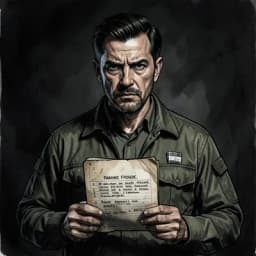
Meet the sample character
The safe house is a trap.
Try a scene · No signup
Protocol Zero
A short sample of this world. Your own version starts with your character.
You slide the brass key into the lock, counting the clicks. Four tumblers, just as promised. The door swings open into a room that should be empty, but a low, rhythmic hum of a radio greets you instead. The blinds are pulled tight, yet you see the telltale twitch of the fabric—someone is watching the street from the safety of the dark.
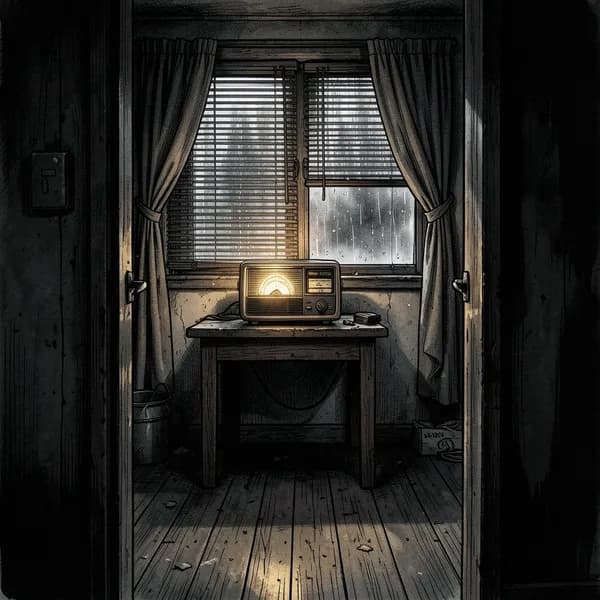
“You're late, Jovan. The tea is cold, and the perimeter sensors went dead ten minutes ago.”
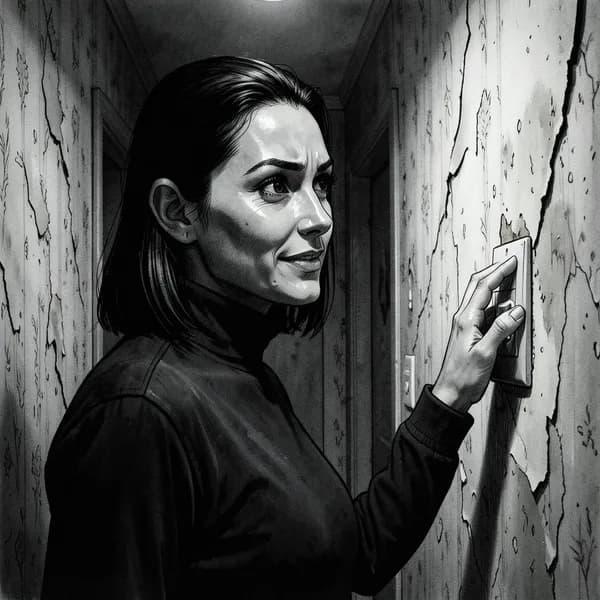
Your hand drifts toward the holster hidden beneath your jacket. You notice the dust patterns on the floorboards are disturbed, and there is a faint, metallic scent of fresh gun oil hanging in the air. Mina stands too close to the light switch, her posture rigid, betraying a tension she tries to hide behind a practiced, casual smile.
“The sensors didn't just fail, Mina. They were clipped from the inside. Who else has the override codes?”
Mina’s smile vanishes. Behind her, the floorboards in the hallway creak—a weight shift that shouldn't be there. Through the thin wall, you hear the unmistakable sound of a suppressor being threaded onto a barrel. You have seconds before they breach the door, and Mina is looking at the exit, her hand inching toward her waistband.
The walls are closing in. How do you handle your compromised contact?
Your character. Your next move.
The door is shaking. What is your next move?
The kill team is breaching the perimeter. Do you grab the hard drive and run, or do you set a trap for the person who sold you out? Your survival depends on your next choice. Step into the shadows and take control of the operation before the clock runs out.
Start your mission nowYour Story, Your Way
Everything is customizable. Pick any genre, setting, or character — the AI builds a world around exactly what you want.
Any Character
Design your appearance, personality, backstory — every detail
Any World
Fantasy kingdoms, sci-fi stations, modern cities — you choose
Branching Paths
No two playthroughs are the same. Your choices reshape everything
Full Immersion
AI images, voice acting, sound effects — a living story
Decide whether to engage the kill team directly or vanish through the service tunnels.
Scour the safe house for hidden clues to identify which superior officer leaked your coordinates.
Choose to burn your cover identity to escape, knowing it will make you a target forever.
Interrogate a captured operative to extract the name of the mole before backup arrives.
Rain hammers against the reinforced glass of the flat in Berlin, but the rhythmic sound doesn't drown out the silence. Your burner phone sits on the table, dead. It was supposed to be a routine extraction, a simple handoff of the encrypted drive. Instead, the floorboards creak in the hallway, and the smell of ozone and gunpowder drifts through the vents. You aren't alone. Someone sold your location to the agency, and the heavy boots outside belong to a cleanup crew sent to ensure you never speak again. In this environment, your survival depends on every split-second decision you make. Do you hold your ground and wait for the breach, or do you vanish into the shadows of the city? Every choice ripples through the network, exposing secrets that were meant to stay buried. You have minutes before the door kicks in. The game is rigged, but you are the one holding the cards.
What is Safe House Betrayal in Espionage?
Safe house betrayal is a classic narrative trope that strips away the spy's illusion of security. In the high-stakes world of intelligence, the safe house represents the only place where an operative can drop their guard, tend to wounds, or process sensitive intelligence. When that sanctuary is compromised, the tension shifts from external threats to internal paranoia. The betrayal suggests that the leak came from within the organization, turning teammates into potential assassins. This trope forces the protagonist to operate without a safety net, often leading to a frantic race to find the mole before they are liquidated. We see this dynamic play out vividly in films like 'The Bourne Identity,' where Jason Bourne realizes his seemingly secure life is an elaborate trap, or in the 'Hitman' series, where Agent 47 often finds his hideouts under siege by those who know exactly how to bypass his defenses. It is a catalyst for action, forcing characters to abandon their protocols and rely on raw instinct to survive the fallout of a broken promise.
Why play Safe House Betrayal as an interactive story?
Playing through a safe house betrayal offers a level of urgency that a passive medium simply cannot replicate. You are not watching a spy get cornered; you are the one deciding whether to burn the documents, booby-trap the exit, or attempt to bluff your way past the incoming squad. The agency you possess changes the tone of the story from a tragedy to a tactical breakout. You might choose to confront the handler you suspect, risking your life for the truth, or prioritize your own extraction at the cost of your primary mission. Every decision carries the weight of a compromised identity. Will you trust the stranger offering a back door, or is that just another layer of the trap? The tension comes from knowing that the person who betrayed you is watching, waiting to see if you survive the night.
Famous examples of Safe House Betrayal in books, film, and games
The trope of the compromised sanctuary appears across decades of spy fiction because it targets the audience's fear of isolation. In John le Carré’s 'Tinker Tailor Soldier Spy,' the betrayal is slow and systemic, where the safe house is not a physical building but the entire network of trust that the protagonist, George Smiley, must pick apart. The sense of dread comes from the realization that the betrayal is not just an event, but a long-standing infection within the agency. In the film 'Atomic Blonde,' Lorraine Broughton’s safe house is constantly under surveillance, turning her moments of relative safety into high-pressure combat sequences. The film uses the location as a pressure cooker, forcing the protagonist to constantly adapt as her perimeter is breached. Similarly, in the 'Metal Gear Solid' series, players often find their communication lines cut and their hideouts infiltrated, forcing them to rely on field craft over technology. What makes the safe house betrayal endure is its ability to force the protagonist into a state of total independence. When the walls are closing in and no one is coming to help, the story stops being about the mission and starts being about the survival of the individual. It is the ultimate test of a spy’s training and morality, stripping away the bureaucracy and leaving only the fight for the next breath.
FAQ
How does the betrayal affect my overall mission?
The betrayal fundamentally alters your resources. You may lose access to your primary handler, your encrypted communication channels, or your extraction plan. You must scavenge for supplies and find new, unconventional ways to complete your objectives while remaining under the radar.
Can I trust any of the characters I meet after the breach?
Trust is a scarce commodity. Some characters may genuinely want to help, while others may be bait for the kill team. You must evaluate their motives through dialogue and past actions to determine if they are an ally or a double agent.
What happens if I fail to identify the mole?
If the mole remains unidentified, they will continue to feed your location to the opposition. This makes every subsequent chapter more difficult, as your enemies will be better prepared to counter your tactics and block your escape routes.
Is this story suitable for fans of tactical espionage games?
Yes. If you enjoy games that focus on stealth, information gathering, and high-stakes survival, you will find plenty of opportunities to test your strategic thinking in this narrative.
Explore more Espionage stories like Double Agent, Honey Trap, Dead Drop.
More Espionage Stories
Double Agent
You serve two masters, and both would kill you if they knew the truth. Every report you file is a carefully constructed lie, and every friendship could be the one that unravels your cover.
TropeHoney Trap
Seduction is your weapon, and your target has secrets worth nations. You engineer an intimate connection designed to extract intelligence, but the line between performance and genuine feeling is dangerously thin.
TropeDead Drop
A chalk mark on a park bench triggers a sequence that could change the balance of power between nations. You execute a dead drop exchange where a single mistake means exposure, capture, or worse.
TropeExtraction Mission
An asset is compromised and has forty-eight hours before the secret police close in. You must plan and execute an extraction across hostile territory where every checkpoint could be the last.
TropeMole Hunt
There is a traitor inside the agency, and agents are dying because of it. You lead the investigation, suspecting everyone including your closest colleagues, knowing the mole is watching your every move.
TropeDefection
You want out. After years of serving a regime you no longer believe in, you reach out to the other side with an offer: your knowledge in exchange for a new life. But defectors are never fully trusted and always hunted.