Espionage · Interactive story
Shadows Over the City: The Rooftop Observation Post
The target is in sight, but the person watching you is the real threat.
Start as a guest. Choose your character before the story begins.
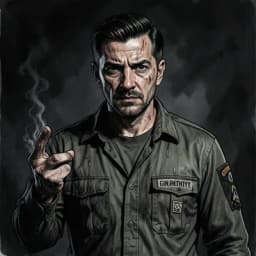
Meet the sample character
The target is closer than you think.
Try a scene · No signup
Three Seconds of Rain
A short sample of this world. Your own version starts with your character.
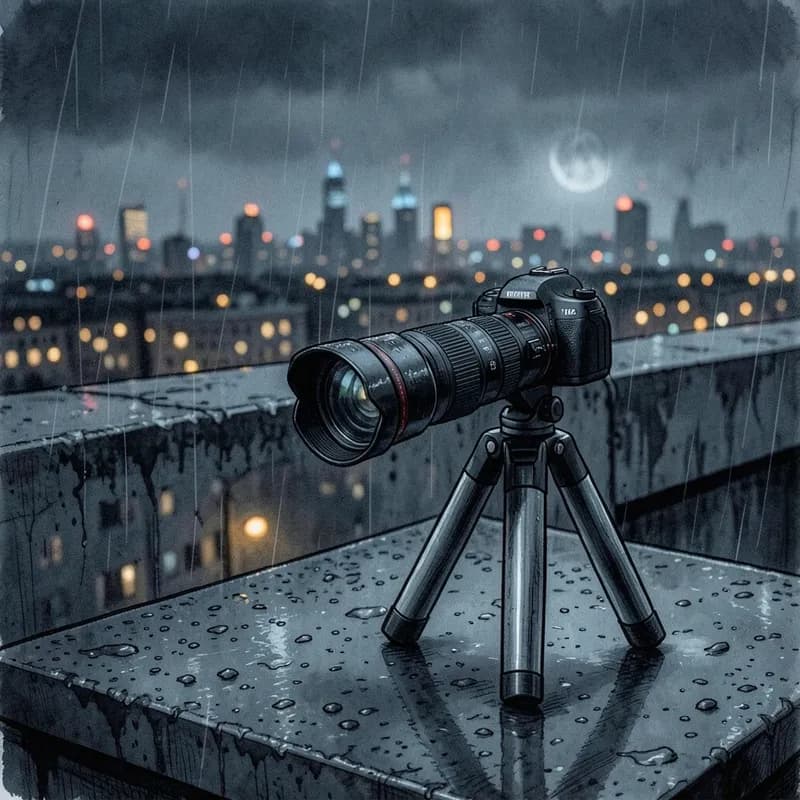
The wind howls between the chimneys, masking your shallow breathing. You adjust the focus ring, the mechanical click sounding like a gunshot in the silence. Through the glass, the Ministry’s fourth-floor window flickers with a soft, amber glow. You have tracked this movement for six weeks, memorizing the rhythm of the security patrols and the specific way the target sets his coffee mug down.
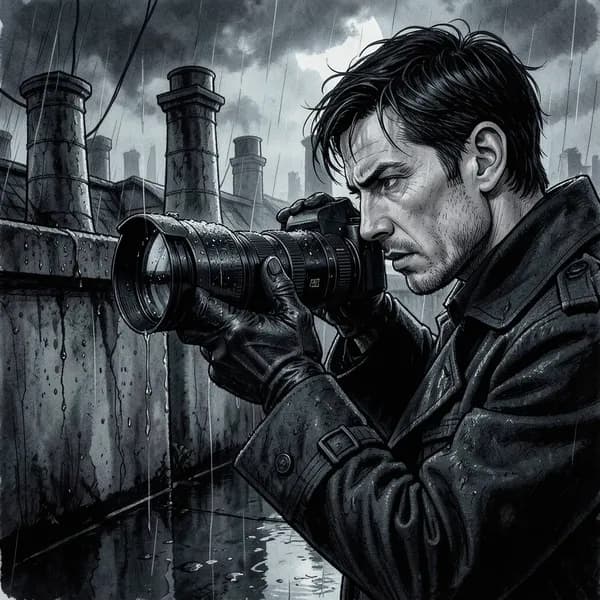
“Steady your breathing, Vane. If you flinch now, the entire network burns.”
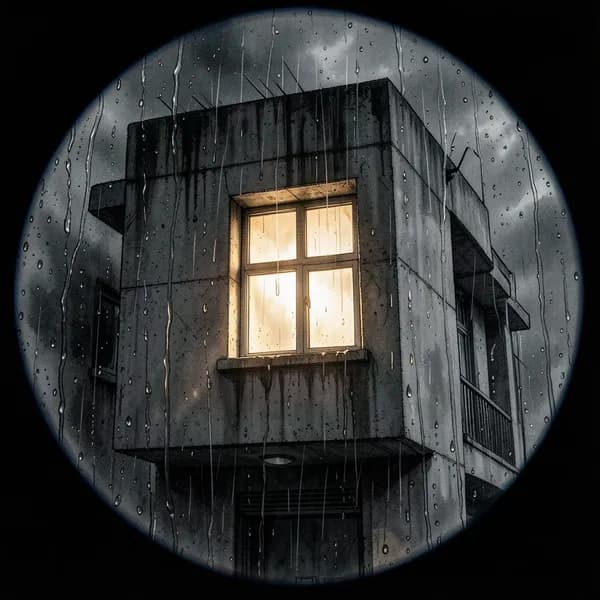
Your fingers ache from the biting cold, but you keep the rifle leveled. Your target finally steps into the frame, pulling a heavy curtain aside to peer out into the night. He is not the faceless bureaucrat the agency described. He is your brother, the one reported dead in a prison camp three years ago. The realization hits your chest like a lead weight, turning your mission into a funeral.
“He’s not the mark, Hollis. You lied to me. He’s my blood.”
The radio crackles, a sharp static that threatens to drown out the city below. Hollis doesn't answer, but you hear the tell-tale hum of a remote-detonator circuit activating in your earpiece. You have three seconds before the entire building—and everyone inside—is leveled. The choice is no longer about the mission; it is about who survives the night.
The timer is ticking down. How do you handle the impossible?
Your character. Your next move.
The target has arrived. Take your position.
The wind is picking up, and the target is finally exiting the front lobby. Do you transmit the signal to the extraction team, or do you wait for them to reach the alleyway where you can intercept them yourself? Your choices define the outcome of this operation. Secure your lens, steady your breathing, and prepare to intervene.
Assume the position nowYour Story, Your Way
Everything is customizable. Pick any genre, setting, or character — the AI builds a world around exactly what you want.
Any Character
Design your appearance, personality, backstory — every detail
Any World
Fantasy kingdoms, sci-fi stations, modern cities — you choose
Branching Paths
No two playthroughs are the same. Your choices reshape everything
Full Immersion
AI images, voice acting, sound effects — a living story
Calibrate long-range optics to capture encrypted exchanges between high-profile political targets.
Divert security patrols by hacking municipal traffic grids while maintaining your hidden position.
Decide whether to alert headquarters or handle a surprise secondary threat alone.
Maintain your own physical warmth and stealth to avoid detection by thermal sensors.
Rain slicks the asphalt five stories below. You shift your weight on the cold gravel of the roof, the damp chill seeping through your jacket. Beside you, the lens of the long-range scope is a glass eye trained on the third-floor window across the street. The curtain just twitched. That is the second time in an hour. Your pulse is steady, rhythmic, matching the ticking of the clock in your headset. You are not just watching; you are gathering the threads of a conspiracy that could topple a government. Every movement you log, every conversation you decrypt, and every decision you make in this interactive story carries the weight of a life-or-death mission. There is no backup coming if you get caught. Down there, the target is sipping coffee, unaware that their entire world is about to be dismantled by a silhouette standing in the dark.
What is Rooftop Observation Post in Espionage?
A rooftop observation post is the quintessential theater of patient, high-stakes surveillance. It is where the hunt happens, stripped of the glamour often associated with intelligence work. Think of the tension in The Conversation (1974) or the slow-burn dread of the rooftop sequences in Munich (2005). In these scenarios, the protagonist exists in a state of suspended animation, tethered to a single point of interest. The goal is simple: identify patterns, isolate the anomaly, and wait for the precise moment of vulnerability. It is not about action; it is about the anticipation of action. The setting demands a shift in perspective—literally and figuratively. You are not the hero kicking down doors; you are the architect of the breach, the one who knows exactly when the lights will go out and who will be standing in the room when they do. Mastering this post means understanding that the city is a machine, and you are looking for the loose gear that will cause the whole thing to seize.
Why play Rooftop Observation Post as an interactive story?
Playing through a rooftop stakeout forces you to grapple with the agonizing gap between observation and intervention. You will encounter moments where you must choose whether to intervene early—risking your cover to save an asset—or stay silent and watch a tragedy unfold to ensure the mission’s ultimate success. The tension comes from the physical environment: a sudden gust of wind, a security guard doing an unscripted patrol, or the realization that your vantage point has been compromised. You are not just clicking through dialogue; you are managing a kit of surveillance tools, cross-referencing feeds, and deciding which intelligence is worth the risk of transmission. Do you trust the grainy audio from the bug in the lobby, or do you trust your own eyes? When the target finally exits the building, the pressure to execute your plan perfectly becomes overwhelming. Every second spent in the chair is a test of your nerve against the backdrop of an indifferent city.
What makes Rooftop Observation Post work: the worldbuilding
The effectiveness of the rooftop observation post as a narrative device lies in its inherent isolation. It forces the protagonist into a confined space, turning the vast, chaotic city into a controlled, manageable grid. This setting creates a unique power dynamic: the watcher is omnipotent over the target’s movements, yet incredibly vulnerable to discovery. In Bourne films, the rooftop is often a place of escape or final confrontation, but in a true surveillance story, it is a place of becoming. You become the ghost in the machine. Sensory details are vital here—the smell of ozone from rooftop HVAC units, the persistent hum of city traffic that masks your breathing, and the way light pollution from the streets obscures the stars. These elements build the atmosphere of paranoia that defines the best spy literature. Consider the meticulous detail in John le Carré’s Tinker Tailor Soldier Spy, where the most significant battles are fought through the patient synthesis of fragmented information. The observation post is the ultimate expression of this craft. It requires the player to synthesize disparate pieces of intel—a license plate number, a change in gait, a signal light in a window—into a coherent narrative of intent. The conflict arises when that narrative is disrupted by an outside force, forcing you to abandon your perch and enter the fray you have been studying from afar. By placing the player in this role, the story shifts from a passive viewing experience to an active exercise in deductive reasoning and cold, calculated risk management.
FAQ
Can I get caught while sitting on the roof?
Yes. Your position is not a safe room. If you fail to mask your thermal signature or if you spend too much time in one location, local security or counter-intelligence units will track your origin point, ending your operation abruptly.
How do I decide when to act on the information I gather?
You must weigh the value of the intel against the risk of exposure. Some missions require you to collect data for days, while others demand immediate intervention when the target makes a move.
Is this setting purely about sniping targets?
No. While some missions may involve combat, the primary focus is on intelligence gathering, pattern recognition, and maintaining deep-cover stealth.
How does the AI handle my surveillance choices?
The AI adapts the target's behavior based on your actions. If you are sloppy, the target may notice the surveillance and change their schedule, forcing you to adapt your strategy on the fly.
Explore more Espionage stories like Double Agent, Honey Trap, Dead Drop.
More Espionage Stories
Double Agent
You serve two masters, and both would kill you if they knew the truth. Every report you file is a carefully constructed lie, and every friendship could be the one that unravels your cover.
TropeHoney Trap
Seduction is your weapon, and your target has secrets worth nations. You engineer an intimate connection designed to extract intelligence, but the line between performance and genuine feeling is dangerously thin.
TropeDead Drop
A chalk mark on a park bench triggers a sequence that could change the balance of power between nations. You execute a dead drop exchange where a single mistake means exposure, capture, or worse.
TropeExtraction Mission
An asset is compromised and has forty-eight hours before the secret police close in. You must plan and execute an extraction across hostile territory where every checkpoint could be the last.
TropeMole Hunt
There is a traitor inside the agency, and agents are dying because of it. You lead the investigation, suspecting everyone including your closest colleagues, knowing the mole is watching your every move.
TropeDefection
You want out. After years of serving a regime you no longer believe in, you reach out to the other side with an offer: your knowledge in exchange for a new life. But defectors are never fully trusted and always hunted.