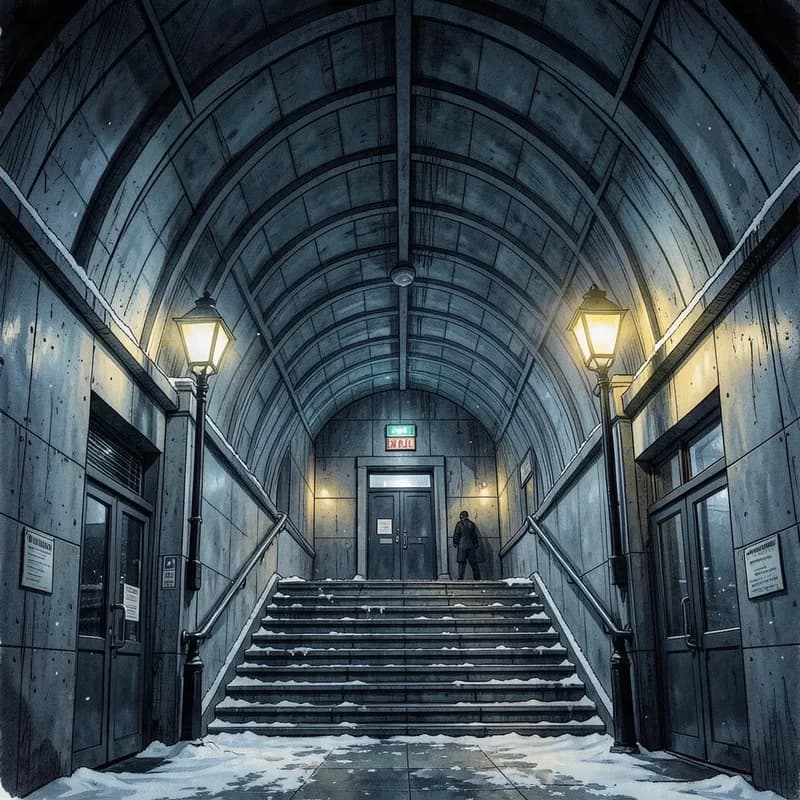
Espionage · Interactive story
Shadows Over Moscow: The Spy’s Last Stand
The cameras never blink, and the man beside you is likely recording your heartbeat.
Start as a guest. Choose your character before the story begins.
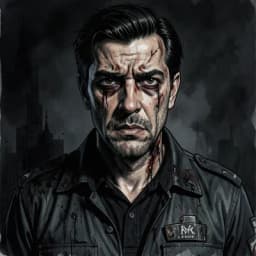
Meet the sample character
Trust is a luxury you cannot afford in the shadow of the Kremlin.
Try a scene · No signup
The Dead Drop at Mayakovskaya
A short sample of this world. Your own version starts with your character.
Wet snow clings to your wool coat as you stand near the metro entrance. The city hums with the low vibration of subway trains deep underground. Your contact, a man with a nervous twitch in his left eye, leans against a cold metal pole, pretending to read a newspaper while his gaze flickers toward the approaching black sedan.
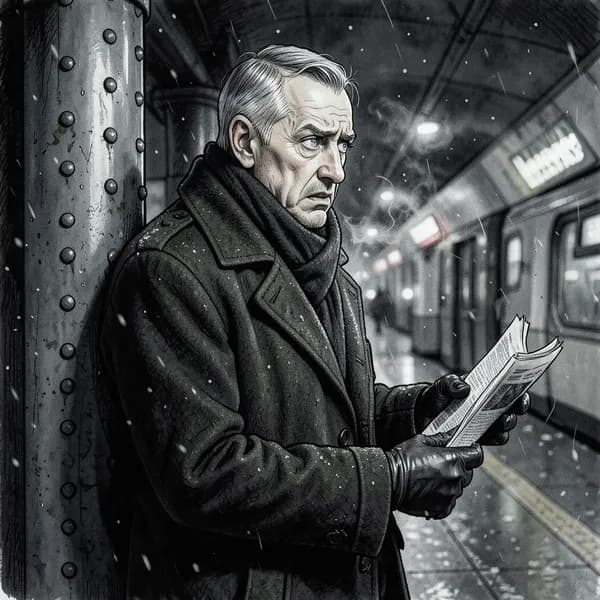
“You were followed, Viktor. I told you to take the transit loop twice before coming here.”

Your pulse spikes, but your face remains a mask of practiced indifference. You catch the reflection of a man in a gray trench coat stepping out of the shadows near the kiosk. He isn't looking at the street; he’s watching the back of your neck. The contact is already panicking, his hand drifting toward his inner pocket.
“Keep your eyes on the newspaper, Yuri. If you reach for that pistol, we both die on this sidewalk.”
The sedan slows, its headlights cutting through the falling snow like blades. The man in the gray coat reaches into his jacket, his fingers wrapping around something heavy. You have a split second to decide whether to stand your ground, sacrifice your contact to buy time, or bolt for the crowded metro tunnels.
The sedan doors are opening, and the man in the trench coat is closing the distance. What is your next move?
Your character. Your next move.
The FSB is closing in on your position.
Your contact has vanished, and the street lights are turning red. You have a briefcase full of encrypted data and three blocks to reach the embassy. Every shadow is a potential threat, and your burner phone is buzzing with a warning you can't ignore. Will you make it to the extraction point, or will you disappear into the grey expanse of the Russian night?
Escape the city nowYour Story, Your Way
Everything is customizable. Pick any genre, setting, or character — the AI builds a world around exactly what you want.
Any Character
Design your appearance, personality, backstory — every detail
Any World
Fantasy kingdoms, sci-fi stations, modern cities — you choose
Branching Paths
No two playthroughs are the same. Your choices reshape everything
Full Immersion
AI images, voice acting, sound effects — a living story
Decide whether to evade a surveillance team or lead them into a counter-ambush.
Choose which encrypted signal to send before your extraction window closes at midnight.
Navigate a tense interrogation where your only defense is maintaining a consistent lie.
The neon signs of Tverskaya Street flicker, casting long, jittery shadows against the brutalist architecture. You pull your collar up, not against the biting wind, but to hide your face from the street-level surveillance cameras tracking every movement on this block. A man in a grey trench coat stands near the metro entrance, his eyes fixed on a newspaper that he hasn't turned in ten minutes. Your contact is supposed to be here, but the air feels heavy with the scent of ozone and impending betrayal. Every step you take across the cracked pavement is a calculated risk. In this narrative, your next decision could be the one that gets you extracted or the one that leads you into a windowless basement. You are not a hero; you are a ghost in a city that refuses to let you haunt it.
What is Moscow Streets in Espionage?
Moscow Streets refers to the specific sub-genre of espionage fiction centered on the high-tension urban environment of the Russian capital. Unlike the glamorous, gadget-heavy spy stories of London or Paris, Moscow is defined by total surveillance and the constant, crushing presence of state security. Films like Tinker Tailor Soldier Spy and series like The Americans capture this perfectly—the feeling that the city itself is an antagonist. Every park bench could be bugged, every taxi driver might report to the FSB, and every coincidence is a potential setup. It is a setting where the geography of the city—the wide, open boulevards and the labyrinthine, dark courtyards—acts as a pressure cooker for human nerves. In this environment, the setting is not just a backdrop; it is an active participant in your downfall or your success.
Why play Moscow Streets as an interactive story?
Playing in this setting demands more than just quick reflexes; it requires a cold, analytical mind. You will face moments where you must decide whether to dump your secondary phone in a trash bin or risk carrying it through a checkpoint. Do you trust the defector waiting in the Gorky Park shadows, or is he a plant designed to compromise your entire network? The agency here is brutal. One wrong turn down a dead-end alley might force you into a frantic foot chase, while a misplaced word during a casual dinner conversation could signal your handlers that you have been turned. Every interaction is a test of your ability to read the room and anticipate the next move of an unseen adversary.
What makes Moscow Streets work: the worldbuilding
The effectiveness of the Moscow setting lies in its claustrophobia. Even in a city of millions, the spy is perpetually alone. Works like Red Sparrow or the Call of Duty: Modern Warfare mission 'Clean House' illustrate the sensory overload—the harsh, cold light of winter, the muffled sounds of the metro, and the overwhelming feeling that you are being watched by eyes you cannot see. The architecture of the city, with its massive, imposing Stalinist structures, makes the individual feel insignificant and easily crushed. A successful story here relies on the 'Dead Drop' mechanic—the necessity of physical interaction in a world that is increasingly digital. Conflicts arise from the friction between the old-school tradecraft of face-to-face meetings and the modern reality of mass surveillance. Character archetypes thrive here: the weary veteran looking for one last score, the fresh-faced intelligence officer who realizes their training didn't cover the moral gray areas, and the local informant whose loyalties shift with the price of gold. To write or play this well, one must lean into the paranoia. Silence is as important as dialogue, and the environment should always be treated as a secondary character that is actively working against the protagonist.
FAQ
Is this setting purely historical?
While many Moscow espionage stories draw from the Cold War, the modern era offers even higher stakes with digital surveillance and facial recognition technology.
How do I handle NPCs in this setting?
Assume everyone is a potential threat. Use your dialogue choices to probe for inconsistencies in their stories rather than just gathering information.
What defines a successful outcome?
Survival is the primary objective, but true success is completing your mission without leaving a digital or physical footprint for the authorities.
Can I play as a double agent?
Yes, the narrative structure allows you to feed misinformation to either side, but you must manage your reputation carefully to avoid being liquidated by both.
Explore more Espionage stories like Double Agent, Honey Trap, Dead Drop.
More Espionage Stories
Double Agent
You serve two masters, and both would kill you if they knew the truth. Every report you file is a carefully constructed lie, and every friendship could be the one that unravels your cover.
TropeHoney Trap
Seduction is your weapon, and your target has secrets worth nations. You engineer an intimate connection designed to extract intelligence, but the line between performance and genuine feeling is dangerously thin.
TropeDead Drop
A chalk mark on a park bench triggers a sequence that could change the balance of power between nations. You execute a dead drop exchange where a single mistake means exposure, capture, or worse.
TropeExtraction Mission
An asset is compromised and has forty-eight hours before the secret police close in. You must plan and execute an extraction across hostile territory where every checkpoint could be the last.
TropeMole Hunt
There is a traitor inside the agency, and agents are dying because of it. You lead the investigation, suspecting everyone including your closest colleagues, knowing the mole is watching your every move.
TropeDefection
You want out. After years of serving a regime you no longer believe in, you reach out to the other side with an offer: your knowledge in exchange for a new life. But defectors are never fully trusted and always hunted.