
Espionage · Interactive story
The Great Game: Espionage as Kim
A beggar in Lahore, a ghost in the mountains, a pawn for the Empire.
Start as a guest. Choose your character before the story begins.
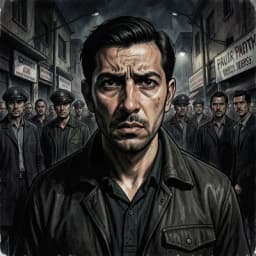
Meet the sample character
The Great Game is played in shadows, and you are the smallest piece on the board.
Try a scene · No signup
The Zam-Zammah Cipher
A short sample of this world. Your own version starts with your character.
You sit atop the great brass cannon, Zam-Zammah, your legs dangling over the scorching metal. The city of Lahore roars around you, a haze of heat, unwashed wool, and heavy spices. You aren't just a street urchin today; you are a courier, and the leather packet tucked into your thin tunic feels heavier than the entire fort.

“The red-bearded man watches from the spice stall, little fox. Do not look, but know he counts your breaths.”

The warning settles in your gut like cold lead. Mahbub Ali does not waste words on ghosts. If the Russian observer is watching, your cover as a beggar is paper-thin. You shift, your hand brushing the hilt of the small knife hidden in your waistband. The bazaar is crowded, and a thousand eyes could be tracking your movements through the dust.
“Let him watch. I am only a boy asking for alms. He will see nothing but a hungry mouth.”
A carriage rattles past, wheels screaming against the dry earth, momentarily masking the sound of footsteps behind you. You have two minutes before the contact arrives at the gate, but the red-bearded man is closing the distance, his hand resting too casually on a heavy coat pocket. You must decide how to vanish before he reaches your side.
The red-bearded man is five paces away and closing. What is your move?
Your character. Your next move.
Will you play the Great Game or be played?
The telegram is waiting to be intercepted, and the Russian agents are watching the border. Your next decision could secure the frontier or cost you your life. Step into the shoes of the most dangerous boy in India and see if you have the nerves to survive the shadows.
Start your spy missionYour Story, Your Way
Everything is customizable. Pick any genre, setting, or character — the AI builds a world around exactly what you want.
Any Character
Design your appearance, personality, backstory — every detail
Any World
Fantasy kingdoms, sci-fi stations, modern cities — you choose
Branching Paths
No two playthroughs are the same. Your choices reshape everything
Full Immersion
AI images, voice acting, sound effects — a living story
Decipher intercepted telegrams while avoiding detection by local imperial authorities.
Select which secret documents to steal from the heavily guarded government archives.
Decide whether to maintain your cover or reveal your identity to protect a comrade.
The dust of the Lahore bazaar clings to your rags. You are Kimball O'Hara, a boy with no country, moving unseen through the crowded streets while British officers and Russian agents trade secrets in the shadows. One moment you are selling trinkets to travelers; the next, you are tasked with intercepting a message that could shift the balance of power across the Hindu Kush. Your choices dictate whether you remain a street urchin or become the most effective shadow in the British Secret Service. Every handshake hides a threat, and every alleyway offers a chance to vanish before the authorities close in. You must decide who to trust when the entire map is being redrawn by men who do not know your name.
What is Kim in Espionage?
Rudyard Kipling’s 1901 novel, Kim, defines the classic spy narrative. It follows a young, orphaned Irish boy living in India who is recruited into the 'Great Game,' the 19th-century geopolitical struggle between the British and Russian empires. While the 1950 film adaptation starring Errol Flynn captured the adventure of the era, the source material focuses heavily on the psychological toll of dual loyalties and the danger of living as a double agent. Unlike modern thrillers, the Great Game is fought with maps, ciphers, and shifting identities rather than just heavy artillery. It is a story about the fluidity of identity and the immense price of playing both sides of a border. Readers and players encounter a world where information is the most valuable currency, and being a child—often ignored by those in power—is the ultimate camouflage for a spy.
Why play Kim as an interactive story?
Playing as Kim forces you to confront the constant pressure of keeping your cover while gathering intelligence. The story places you at the center of a geopolitical chess match where your agency determines the outcome of the colonial struggle. You will face dilemmas that require more than just quick reflexes; you must balance your mentor’s spiritual path with the cold-blooded demands of your handlers. Will you prioritize the mission, or will you risk everything to protect an innocent friend? You will handle encoded telegrams, navigate dangerous mountain passes, and decide which alliances to betray. Every conversation carries the weight of a potential execution, and your ability to read the intentions of others is the only thing standing between you and the gallows.
The literary legacy of Kim
Rudyard Kipling wrote Kim at a time when the British Empire was obsessed with its borders and the threat of Russian expansion. The book remains a landmark for its detailed depiction of colonial India, but its true genius lies in its protagonist. Kim is a shapeshifter, equally comfortable in the robes of a monk or the uniform of a soldier. Later adaptations, such as the 1984 television film featuring Peter O'Toole, highlighted the tension between the spiritual journey of the Lama and the cynical espionage of the Raj. Modern reinterpretations often focus on the Great Game as a precursor to contemporary shadow wars, where information is the primary weapon of influence. The character persists because he represents the ultimate outsider—someone who belongs nowhere and therefore can go anywhere. By forcing the reader to inhabit this duality, the story highlights the moral ambiguity inherent in intelligence work. Whether you view him as a hero or a tool of the state, Kim remains a masterclass in the art of the undercover operative.
FAQ
What is the Great Game in this story?
The Great Game refers to the intense 19th-century rivalry between the British and Russian empires for control over Central and South Asia. In this story, it provides the backdrop for espionage, sabotage, and intelligence gathering.
How do my choices affect my cover?
Every action you take—from how you speak to local merchants to whether you are seen with British officers—affects your suspicion level. If you act out of character, your cover will be blown, leading to failed missions.
Can I choose to reject the British Secret Service?
While the story follows the central conflict of the Great Game, you have agency in how you fulfill your duties. You can choose to be a loyal agent, a reluctant participant, or someone who manipulates both sides for personal gain.
Is this story accurate to the original book?
The story maintains the setting, tone, and character dynamics of Kipling's original work while allowing you to influence the narrative path and outcomes within that world.
Explore more Espionage stories like Double Agent, Honey Trap, Dead Drop.
More Espionage Stories
Double Agent
You serve two masters, and both would kill you if they knew the truth. Every report you file is a carefully constructed lie, and every friendship could be the one that unravels your cover.
TropeHoney Trap
Seduction is your weapon, and your target has secrets worth nations. You engineer an intimate connection designed to extract intelligence, but the line between performance and genuine feeling is dangerously thin.
TropeDead Drop
A chalk mark on a park bench triggers a sequence that could change the balance of power between nations. You execute a dead drop exchange where a single mistake means exposure, capture, or worse.
TropeExtraction Mission
An asset is compromised and has forty-eight hours before the secret police close in. You must plan and execute an extraction across hostile territory where every checkpoint could be the last.
TropeMole Hunt
There is a traitor inside the agency, and agents are dying because of it. You lead the investigation, suspecting everyone including your closest colleagues, knowing the mole is watching your every move.
TropeDefection
You want out. After years of serving a regime you no longer believe in, you reach out to the other side with an offer: your knowledge in exchange for a new life. But defectors are never fully trusted and always hunted.