Espionage · Interactive story
Silence the Grid: The Cyber Warfare Espionage Campaign
One line of code can bring a nation to its knees. Are you that line?
Start as a guest. Choose your character before the story begins.

Meet the sample character
Your code, your consequence.
Try a scene · No signup
The Zero-Day Ledger
A short sample of this world. Your own version starts with your character.
You hunch over the terminal, the blue glow of the command line reflected in your dilated pupils. You didn't expect to find your own agency's digital signature embedded in the malware that crippled the city’s power grid. Your hands hover over the keys, trembling as the logs confirm the betrayal. You are the architect of a catastrophe you thought you were preventing.
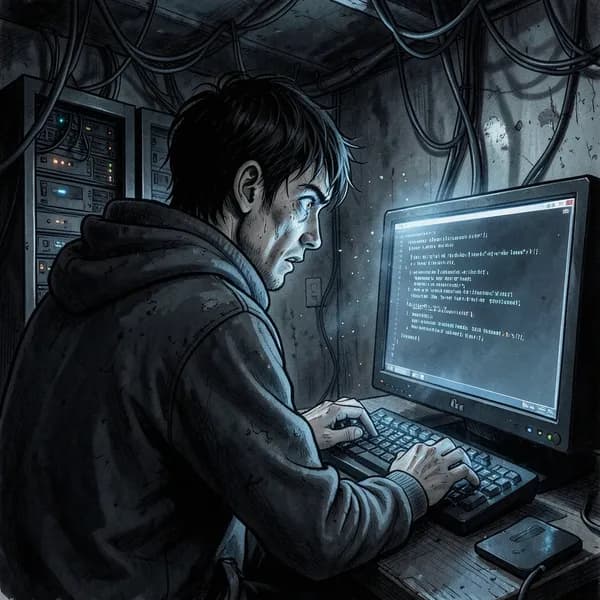
“The uplink is closing, Kenji. Send the packet to the server or destroy the drive. Pick one.”

You look at the reflection in the monitor. Mei Ling is standing in the doorway, her silhouette sharp against the hallway’s flickering fluorescent bulb. If she is here, she is not just your handler—she is the cleanup crew. You have seconds before the system auto-purges the evidence, leaving you with nothing but a death sentence.
“You signed the kill order for the grid, didn't you, Mei? I am not just a ghost in the machine anymore.”
Silence hangs heavy in the room, thicker than the humidity. Her hand drifts toward the holster at her hip, a small, metallic sound that signals the end of your leverage. The progress bar hits 99%. You can either burn the evidence, expose your handlers to the public, or trade your soul for a chance to walk out of this basement alive.
The progress bar sits at 99%. Do you upload the data, negotiate, or erase everything?
Your character. Your next move.
The terminal is open. Will you strike?
The server is waiting for your input. A single command can trigger a blackout, erase a paper trail, or frame an innocent rival. You decide the fallout. The digital shadows are closing in—take control of the network before someone else takes control of you.
Execute Command NowYour Story, Your Way
Everything is customizable. Pick any genre, setting, or character — the AI builds a world around exactly what you want.
Any Character
Design your appearance, personality, backstory — every detail
Any World
Fantasy kingdoms, sci-fi stations, modern cities — you choose
Branching Paths
No two playthroughs are the same. Your choices reshape everything
Full Immersion
AI images, voice acting, sound effects — a living story
Select your exploit protocols to bypass high-security firewalls before the system trace completes.
Decide whether to leak stolen state secrets publicly or blackmail the source for leverage.
Manage your digital footprint to avoid detection by government-grade counter-intelligence task forces.
Navigate shifting alliances with underground hacker collectives who demand proof of your technical loyalty.
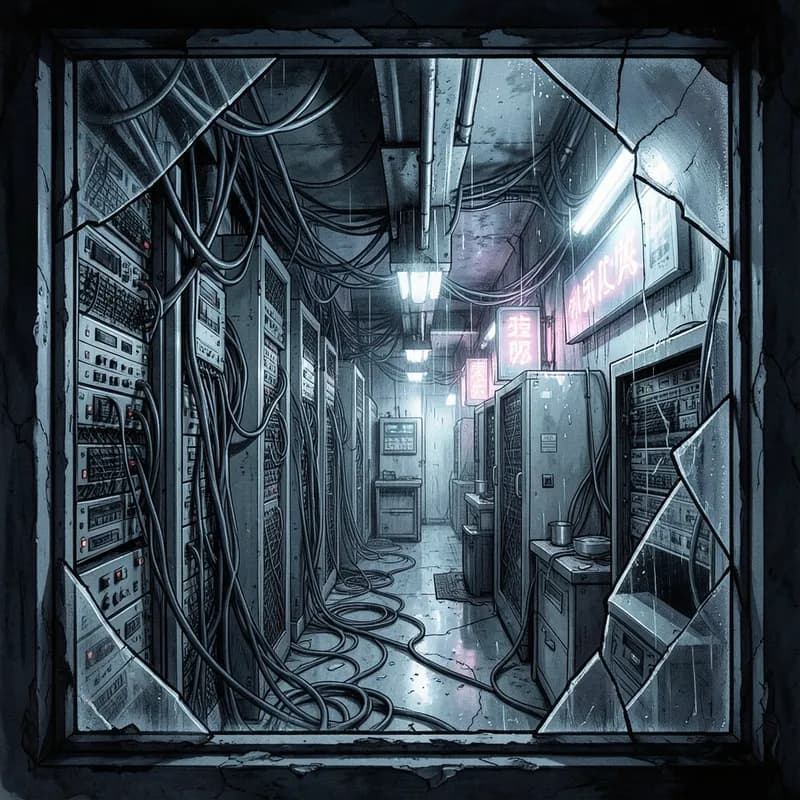
The server room hums with a frequency that vibrates in your teeth. Outside, the city lights flicker—not from a power surge, but because you just toggled the breaker for the entire financial district. You aren't holding a pistol; you are holding a terminal, and the air around you tastes like ozone and stale coffee. Every choice you make, whether to dump the decrypted files or plant a logic bomb, ripples outward into the physical world. Your decisions determine which corporate giants collapse and which shadow organizations gain control of the regional grid. You are the invisible hand, and the system is your playground. In this interactive story, your technical aptitude is the only thing standing between total control and complete exposure.
What is Cyber Warfare in Espionage?
Cyber warfare moves the battlefield from muddy trenches into the silent, cold architecture of the internet. It is a game of invisibility, where the victor is the one who leaves no footprint. Unlike traditional espionage, where a handler might meet an agent on a park bench, digital warfare happens in the dark corners of the deep web. You operate behind a veil of proxies and encrypted tunnels, targeting critical infrastructure like power plants, communication arrays, or national security databases. In the television series Mr. Robot, Elliot Alderson demonstrates the true power of this trope—a single individual can disrupt global debt structures or topple conglomerates by exploiting human and technical vulnerabilities. It is not about brute force; it is about finding the one line of broken code that brings down the entire house of cards. When the war is fought through packets and latency, the soldier who understands the system best is the one who survives. It requires a cold, calculated mindset, prioritizing the data stream over the physical reality of the target.
Why play Cyber Warfare as an interactive story?
In this digital espionage game, you are the architect of the crash. You will face moments where the moral weight of your actions clashes with your mission objectives. Do you leak the private medical records of a corrupt official to ruin them, knowing it will destroy the lives of thousands of innocent patients? Do you accept the back-door access offered by an anonymous contact, even when you suspect they are a double agent feeding you compromised malware? The tension comes from the constant uncertainty of the screen. You must manage your security, monitor for intrusion detection, and decide when to push the execute command. Every interaction, from a cryptic chat message to a brute-force decryption attempt, carries the risk of total exposure. You will feel the pulse of the network, knowing that one wrong packet could trigger a counter-trace that ends your operation—and your freedom—permanently.
Famous examples of Cyber Warfare in books, film, and games
Cyber warfare in fiction acts as a mirror to our own reliance on connected infrastructure. In William Gibson’s Neuromancer, the concept of cyberspace is a literal landscape, a hallucination of data that hackers traverse to steal industrial secrets. The tension here lies in the disconnect between the physical body and the digital action. Conversely, the film Blackhat explores the terrifying potential of cyber warfare when it manifests in the real world, turning nuclear reactors into ticking time bombs. These stories work because they remove the safety of our digital lives, reminding us that every connected device is a potential weapon. The trope endures because it speaks to a modern paranoia: the fear that the most dangerous threats are the ones we cannot see, happening right under our noses in the code that keeps society running. Whether it is the high-stakes data theft in the Watch Dogs video game series or the systemic manipulation seen in techno-thrillers, the core remains the same: the keyboard is mightier than the sword. It is a genre defined by the shift from kinetic warfare to information dominance, where the winner is determined before the target even realizes they have been compromised.
FAQ
What defines a cyber warfare story?
These stories focus on digital disruption, data manipulation, and remote sabotage rather than physical combat. The primary objective is to gain access to, control, or destroy critical network infrastructure.
How does my character affect the outcome?
Your choices dictate the success of your exploits, the political fallout of your hacks, and your standing with various shadow factions. A single decision can lead to global instability or your own digital capture.
Are these stories based on real technical concepts?
Yes. The narratives incorporate realistic concepts like firewalls, encryption, brute-force attacks, and social engineering to create a grounded, high-stakes experience.
Can I play as the villain?
The morality of your digital attacks is entirely in your hands. You can operate as a hacktivist seeking justice or a mercenary selling secrets to the highest bidder.
Explore more Espionage stories like Double Agent, Honey Trap, Dead Drop.
More Espionage Stories
Double Agent
You serve two masters, and both would kill you if they knew the truth. Every report you file is a carefully constructed lie, and every friendship could be the one that unravels your cover.
TropeHoney Trap
Seduction is your weapon, and your target has secrets worth nations. You engineer an intimate connection designed to extract intelligence, but the line between performance and genuine feeling is dangerously thin.
TropeDead Drop
A chalk mark on a park bench triggers a sequence that could change the balance of power between nations. You execute a dead drop exchange where a single mistake means exposure, capture, or worse.
TropeExtraction Mission
An asset is compromised and has forty-eight hours before the secret police close in. You must plan and execute an extraction across hostile territory where every checkpoint could be the last.
TropeMole Hunt
There is a traitor inside the agency, and agents are dying because of it. You lead the investigation, suspecting everyone including your closest colleagues, knowing the mole is watching your every move.
TropeDefection
You want out. After years of serving a regime you no longer believe in, you reach out to the other side with an offer: your knowledge in exchange for a new life. But defectors are never fully trusted and always hunted.