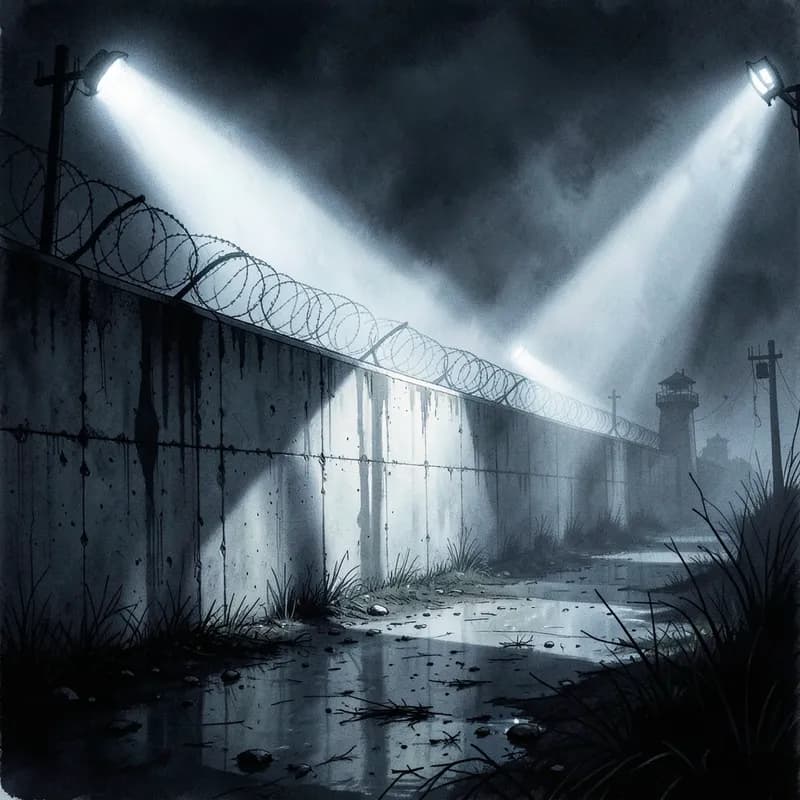
Espionage · Interactive story
Shadow Wars: Cold War Berlin
Rain slicks the pavement at Checkpoint Charlie, and everyone is watching. Who do you trust?
Start as a guest. Choose your character before the story begins.

Meet the sample character
The ledger is missing, and the Wall is watching.
Try a scene · No signup
Concrete Silence
A short sample of this world. Your own version starts with your character.
You sit at the corner table of Cafe Adler, the smell of burnt chicory coffee clinging to your wool coat. Across the street, the razor wire atop the Wall shimmers under the harsh glow of the floodlights. Your contact is late, and the man currently leaning against the lamppost has been watching your hands for the last ten minutes.
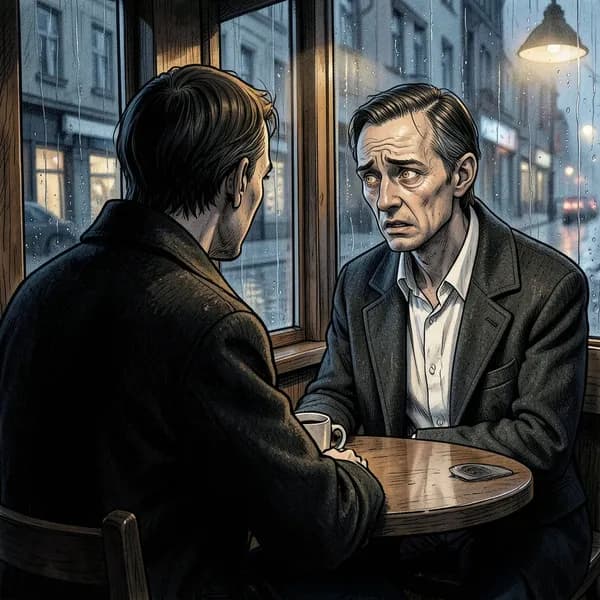
“The microfilm wasn't in the dead drop, Dieter. Why is the hollow brick empty?”
Sweat prickles your scalp despite the damp chill seeping through the glass windows. You know the ledger was moved, but admitting it confirms your own betrayal. Every person entering the cafe now looks like a state security officer in civilian clothes.
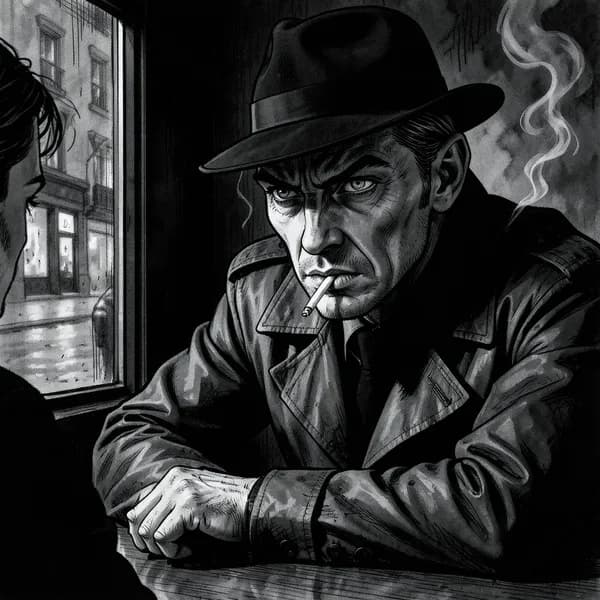
“I checked twice, Hans. Maybe your couriers have developed a sudden taste for treason, or perhaps they were intercepted.”
Hans leans forward, his shadow stretching across the table like a stain. A black sedan idles at the curb, its engine cutting out with a rhythmic tick that feels like a countdown. He taps a cigarette against his case, his eyes never leaving yours, waiting for you to blink or reach for a weapon that might not even be loaded.
The sedan engine has stopped. Hans is reaching into his jacket for a lighter—or something else. What is your next move?
Your character. Your next move.
The Wall is Watching. Will You Make it Out?
The microfilm is burning a hole in your pocket, and the Stasi are closing in. Every decision you make—from the contact you trust to the route you choose through the ruins—could be your last. Silence the informants, outsmart the checkpoints, and secure the secrets that could shift the balance of power. Your mission starts the moment you step off the train at Friedrichstraße.
Enter the Shadow WarYour Story, Your Way
Everything is customizable. Pick any genre, setting, or character — the AI builds a world around exactly what you want.
Any Character
Design your appearance, personality, backstory — every detail
Any World
Fantasy kingdoms, sci-fi stations, modern cities — you choose
Branching Paths
No two playthroughs are the same. Your choices reshape everything
Full Immersion
AI images, voice acting, sound effects — a living story
Decrypt intercepted radio transmissions before the midnight patrol reaches your safehouse.
Choose whether to defect to the East or remain loyal to your handlers.
Manage your cover identity during high-stakes interrogations at a crowded checkpoint.
Navigate the treacherous tunnels beneath the wall to smuggle defectors to safety.
The smell of coal smoke and wet wool hangs heavy over the U-Bahn platform. You adjust your trench coat, feeling the weight of the microfilm tucked into your shoe. To your left, the wall stretches into the fog, a jagged scar of concrete and barbed wire that turned neighbors into informants overnight. A man in a grey fedora pauses near the kiosk, checking his watch. He is not waiting for a train; he is waiting for a sign. Every movement here is a calculated risk, and every conversation is a potential trap. You are a ghost moving through a city that demands your silence or your head. In these streets, your decisions carry the gravity of international fallout, determining whether you slip across the border unnoticed or vanish into the interrogation rooms of the Stasi. This is an interactive story where every tactical choice forces you to weigh your mission objectives against your own survival.
What is Cold War Berlin in Espionage?
Cold War Berlin captures the peak of geopolitical paranoia. It is a city split between the Western Allies and the Soviet Bloc, functioning as a pressure cooker for global tensions. In this setting, the border is more than just a line on a map—it is the front line of an invisible conflict where the currency is intelligence and the cost of failure is absolute. Classic works like John le Carré’s 'The Spy Who Came in from the Cold' and the film 'Bridge of Spies' illustrate the suffocating atmosphere of a place where the border guards are watching, the phones are tapped, and the person sitting across from you in a smoke-filled cafe might be reporting your movements to the authorities. You are not a soldier in a battlefield; you are an asset playing a high-stakes game of cat and mouse in a city where the truth is the first casualty.
Why play Cold War Berlin as an interactive story?
Agency turns the historical dread of Berlin into a personal crisis. The tension comes from the lack of information and the constant threat of discovery. You face binary choices that feel like life or death: do you burn your cover to save an asset, or do you let them fall to preserve the mission? You might be asked to decipher a coded message found in a dead drop, or decide whether to bribe a border guard who clearly knows more than he should. Every interaction—the coffee shop meet, the midnight signal, the frantic chase through the Tiergarten—is a test of your resolve. You must manage your stress levels, your reputation within your agency, and the suspicion of those you are meant to protect.
What makes Cold War Berlin work: the worldbuilding
The setting thrives on the 'trust-no-one' aesthetic. The architecture of 1960s Berlin—the brutalist buildings, the dimly lit alleyways, the looming watchtowers—serves as the perfect backdrop for psychological warfare. Unlike modern thrillers, the focus here is on slow-burn tension and tradecraft. Films like 'Tinker Tailor Soldier Spy' and the show 'The Americans' highlight the mundanity of the spy lifestyle: the endless surveillance, the coded signals, and the crushing weight of living a double life. The conflict is internal as much as external. The most effective stories in this setting do not rely on explosions; they rely on the silence between two people sitting in a park, wondering if the other is wearing a wire. Sensory details like the crunch of gravel under boots in the dark, the flickering streetlamps in East Berlin, and the cold, metallic taste of fear define the experience. By focusing on these granular elements, the story forces you to think like an operative, where a single misplaced cigarette butt or an inconsistent alibi can lead to a one-way trip to a detention center.
FAQ
What is the primary conflict in a Cold War Berlin story?
The primary conflict is the struggle between personal morality and institutional duty, played out against the backdrop of global nuclear threats and constant surveillance.
How does the environment influence the gameplay?
The divided nature of the city creates physical barriers like the Berlin Wall, which force you to plan routes, secure transit permits, and manage dangerous border crossings to complete objectives.
Is this setting appropriate for someone who enjoys mystery?
Absolutely. The core of the experience involves piecing together fragmented intel while identifying who in your circle is actually a double agent and who is a pawn.
Can I play as a double agent?
Yes, the narrative allows you to balance loyalties, choosing to manipulate both sides or eventually picking a path that leads to your own survival.
Explore more Espionage stories like Double Agent, Honey Trap, Dead Drop.
More Espionage Stories
Double Agent
You serve two masters, and both would kill you if they knew the truth. Every report you file is a carefully constructed lie, and every friendship could be the one that unravels your cover.
TropeHoney Trap
Seduction is your weapon, and your target has secrets worth nations. You engineer an intimate connection designed to extract intelligence, but the line between performance and genuine feeling is dangerously thin.
TropeDead Drop
A chalk mark on a park bench triggers a sequence that could change the balance of power between nations. You execute a dead drop exchange where a single mistake means exposure, capture, or worse.
TropeExtraction Mission
An asset is compromised and has forty-eight hours before the secret police close in. You must plan and execute an extraction across hostile territory where every checkpoint could be the last.
TropeMole Hunt
There is a traitor inside the agency, and agents are dying because of it. You lead the investigation, suspecting everyone including your closest colleagues, knowing the mole is watching your every move.
TropeDefection
You want out. After years of serving a regime you no longer believe in, you reach out to the other side with an offer: your knowledge in exchange for a new life. But defectors are never fully trusted and always hunted.