
Espionage · Interactive story
Under the Lens: The Border Checkpoint
One wrong word at the gate, and your mission ends in an interrogation room.
Start as a guest. Choose your character before the story begins.
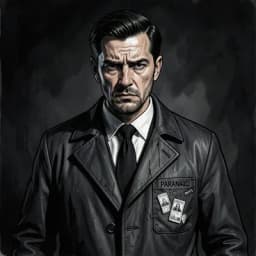
Meet the sample character
Paperwork is a death sentence when the ink is forged.
Try a scene · No signup
The Last Stamp at Iron Gate
A short sample of this world. Your own version starts with your character.
The wind howls through the concrete slats of the checkpoint, carrying the stench of diesel. You keep your eyes fixed on the cracked pavement, clutching your briefcase. In front of you, the checkpoint guard, Inspector Varga, slowly turns the pages of your passport with gloved fingers. Every second he spends lingering on your identity photo feels like a blade pressing against your spine.
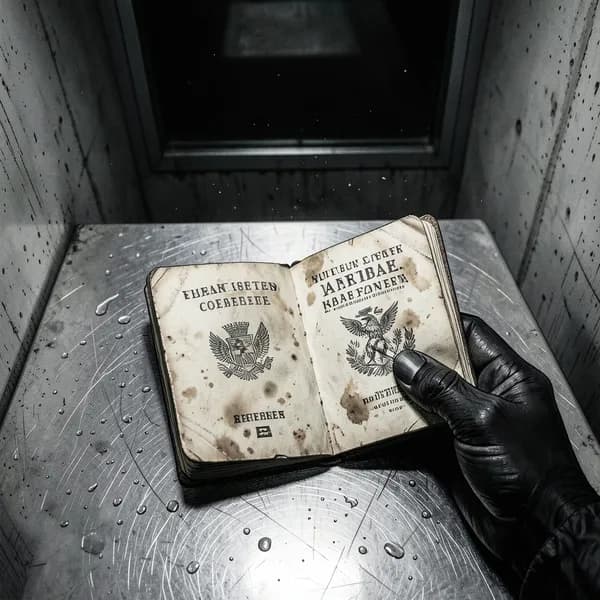
“Your visa has a peculiar smudge, citizen. A rather convenient blur over the transit stamp.”
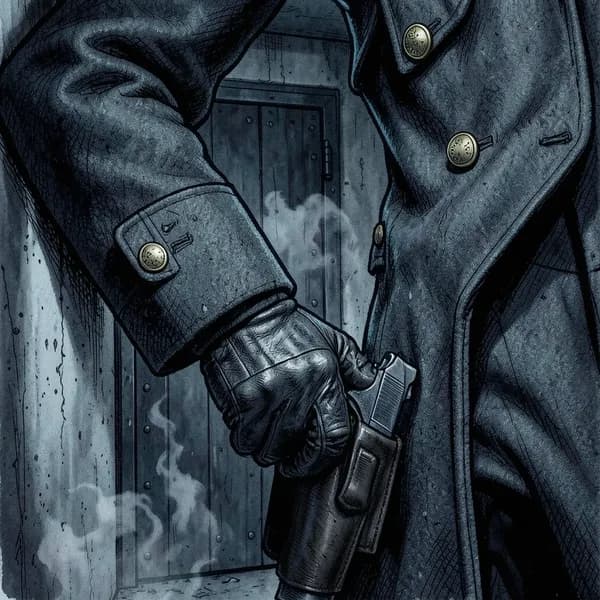
Your pulse thrums in your throat. The microfilm is stitched into your jacket lining, and the security dog is already pacing, its nose twitching toward your chest. If they pull you into the secondary inspection room, the game is finished. Varga’s thumb hovers over the stamp, his eyes drifting toward the heavy sidearm at his hip.
“It was raining in the capital, Inspector. The ink on these low-grade forms bleeds if you so much as breathe on it.”
Varga doesn't blink. He signals to the guard behind the concrete partition, and the heavy pneumatic lock on the gate clicks open—but he holds your passport just out of reach. He leans forward, his voice a low, gravelly whisper that cuts through the roar of the idling trucks. You have three seconds before his patience expires and he calls for backup.
The guard is waiting for a reaction. How do you respond to his silent threat?
Your character. Your next move.
Your cover is thin. Can you cross?
The guard is holding your passport, and he is looking at you a little too closely. Every second you wait increases the chance of exposure. Will you bluff your way through, or is it time to trigger your escape plan? Step into the checkpoint now and see if your story holds up.
Start Your Spy MissionYour Story, Your Way
Everything is customizable. Pick any genre, setting, or character — the AI builds a world around exactly what you want.
Any Character
Design your appearance, personality, backstory — every detail
Any World
Fantasy kingdoms, sci-fi stations, modern cities — you choose
Branching Paths
No two playthroughs are the same. Your choices reshape everything
Full Immersion
AI images, voice acting, sound effects — a living story
Decide whether to bribe the guard or rely on forged diplomatic paperwork.
Manage your physical tells, such as nervous pacing or shaking hands, during questioning.
Choose which illicit items to hide in your luggage versus what to abandon.
Navigate the secondary screening room where your backstory is picked apart by interrogators.
The neon hum of the terminal lights flickers against the wet concrete. You adjust your glasses, feeling the weight of the forged passport in your breast pocket. Ahead, the line moves with agonizing slowness. A guard—a man with deep bags under his eyes and a badge that says nothing—gestures for you to step forward. You have thirty seconds to present your documents, mask your stutter, and deflect his questions about your destination. In this interactive story, your choices in this moment ripple outward, dictating whether you vanish into the city or disappear into a black site. Every detail matters, from the specific stamp on your visa to the sweat beading on your forehead as the guard lingers on your photograph.
What is Border Checkpoint in Espionage?
The border checkpoint is the classic crucible of the spy thriller. It is where the abstract threat of the enemy becomes a physical, immovable presence. This setting forces a character to reconcile their internal identity—the spy they are—with their external identity—the lie they are selling. Think of the intense scenes in 'Tinker Tailor Soldier Spy' where George Smiley navigates the bureaucratic coldness of the Cold War, or the suffocating tension in 'Argo' when the team reaches the airport checkpoint. It is the ultimate threshold. You are not just moving from point A to point B; you are crossing the line where your cover is most likely to fracture. It is a place of static friction, where the power dynamic is heavily weighted against you, and the only way to survive is to be more boring, more legitimate, and more patient than the person holding the stamp. It strips away the glamour of tradecraft and leaves only the raw, grinding reality of maintaining a facade under the scrutiny of an authority figure who is trained to smell a rat.
Why play Border Checkpoint as an interactive story?
Playing through a border crossing means managing your stress levels while the AI probes your backstory. You are not just clicking buttons; you are choosing how to handle a guard’s suspicion in real-time. Do you offer a bribe, play the role of a confused tourist, or attempt to intimidate them with diplomatic immunity? Each choice changes the guard’s reaction and the path of the narrative. If you act too confident, they pull you into secondary screening. If you act too nervous, they call for the dogs. You must monitor your inventory, ensuring your cover items—a fake ticket, a doctored business card, a prop—match the persona you have adopted. The tension comes from the lack of control; you are at the mercy of the system, and your only weapon is the consistency of your performance. You will feel the weight of every lie as the AI tracks your inconsistencies.
What makes Border Checkpoint work: the worldbuilding
What makes the border checkpoint a masterclass in tension is the 'gaze.' In espionage fiction, the guard is the audience. The checkpoint is a performance stage. The best stories in this genre, like the bridge sequence in 'Bridge of Spies' or the transit scenes in 'The Americans,' succeed because they emphasize the vulnerability of the protagonist. The environment is inherently sensory: the smell of diesel, the harsh fluorescent glare, the sound of rhythmic stamping that feels like a countdown. Characters who thrive here are those who understand the psychology of the minor official. A guard at a checkpoint is a person who has power for eight hours a day and uses it to feel significant. If you treat them as an obstacle rather than a person, you lose. You have to craft a persona that fits the location—a harried businessman in a high-security zone, a weary refugee at a war-torn crossing—and maintain that facade even when the guard decides to be difficult. The conflict is never about the gun you might be carrying; it is about the truth you are hiding. The checkpoint is where the internal world of the spy meets the cold, hard reality of the border, and the friction between those two realities is where the most memorable stories are forged. The setting demands that you balance your mission objectives against the immediate, physical danger of being exposed, creating a high-stakes environment where your wit is the only thing keeping you from a prison cell.
FAQ
What makes this setting so tense?
It forces you to maintain a persona while being scrutinized by an authority figure who is trained to detect deception. Every gesture and response is analyzed for inconsistencies.
How does the AI handle my forged documents?
The AI tracks your inventory and backstory details, testing whether your answers match the facts you have established for your character throughout the mission.
Can I fail at the border?
Yes. A slip in your story, an aggressive reaction, or failing to account for a detail in your forged papers can lead to immediate detention or a failed mission.
Is this setting only for Cold War stories?
No, it works in any era where travel is restricted, from futuristic cyberpunk checkpoints to modern-day corporate espionage at private airfields.
Explore more Espionage stories like Double Agent, Honey Trap, Dead Drop.
More Espionage Stories
Double Agent
You serve two masters, and both would kill you if they knew the truth. Every report you file is a carefully constructed lie, and every friendship could be the one that unravels your cover.
TropeHoney Trap
Seduction is your weapon, and your target has secrets worth nations. You engineer an intimate connection designed to extract intelligence, but the line between performance and genuine feeling is dangerously thin.
TropeDead Drop
A chalk mark on a park bench triggers a sequence that could change the balance of power between nations. You execute a dead drop exchange where a single mistake means exposure, capture, or worse.
TropeExtraction Mission
An asset is compromised and has forty-eight hours before the secret police close in. You must plan and execute an extraction across hostile territory where every checkpoint could be the last.
TropeMole Hunt
There is a traitor inside the agency, and agents are dying because of it. You lead the investigation, suspecting everyone including your closest colleagues, knowing the mole is watching your every move.
TropeDefection
You want out. After years of serving a regime you no longer believe in, you reach out to the other side with an offer: your knowledge in exchange for a new life. But defectors are never fully trusted and always hunted.