
Dungeon Core · Interactive story
The Hoard Must Remain Intact
Your gold is your blood. Any thief who enters deserves only the fire.
Start as a guest. Choose your character before the story begins.
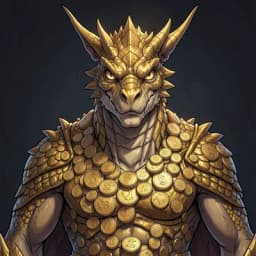
Meet the sample character
Your hoard is your life, and the world is trying to steal it.
Try a scene · No signup
The Weight of Gilded Scales
A short sample of this world. Your own version starts with your character.
You are the mountain's heart, a slumbering nightmare wrapped in golden scales. Your breath is a furnace, rattling in your chest as the intruders cross the threshold of the Glittering Hollow. Every coin they step on sends a tremor through your senses, a psychic itch that screams for violence against the trespassers who dare disturb your silence.

“Step aside, beast. This gold was stolen from the suffering families of the lowlands, and we come to reclaim what is rightfully ours.”

The arrogance of the surface-dweller scrapes against your consciousness like rusted iron. You shift, your massive claw scraping stone and sending a cascade of gold coins clattering into the darkness. Your eyes, glowing embers in the gloom, track the knight's trembling hands as he grips his blade, his heart hammering in a rhythm that begs to be silenced.
“Mine. Every scrap, every glint. You are nothing but dust beneath my talons, and dust is all you shall remain.”
Vane lunges, his blade singing a desperate note in the stagnant air. You could incinerate him instantly, turning his armor into a molten coffin. Yet, if he dies here, his panicking party behind him might trigger a cave-in, burying your precious hoard under miles of unrecoverable granite. Your hunger for blood fights your devotion to the treasure.
The knight is committed to his charge, and his party is poised to collapse the ceiling. How do you defend your legacy?
Your character. Your next move.
Will your hoard remain untouched?
The steel is ringing against your stone walls. A group of knights stands at your entrance, their torches flickering with the promise of theft. Do you unleash your fire, or will you let them walk into your most complex trap? The gold is yours to keep, but only if you choose wisely. Start your defense now.
Guard Your HoardYour Story, Your Way
Everything is customizable. Pick any genre, setting, or character — the AI builds a world around exactly what you want.
Any Character
Design your appearance, personality, backstory — every detail
Any World
Fantasy kingdoms, sci-fi stations, modern cities — you choose
Branching Paths
No two playthroughs are the same. Your choices reshape everything
Full Immersion
AI images, voice acting, sound effects — a living story
Customize your cavern layout to create lethal bottlenecks for unsuspecting adventurers.
Choose between psychological taunts or immediate physical destruction to thwart thieves.
Manage your hoard's visibility to manipulate the greed of those entering your lair.
Decide the fate of captured heroes, choosing between execution or dark corruption.
The weight of the gold coins is the only sensation that keeps the madness at bay. Beneath your scaled chest, the curse of the ring pulses, a rhythmic ache that matches the flickering torchlight echoing off your cavern walls. You remember the forge, the smell of iron, and the brother you betrayed for this very pile of metal, but those memories are fading under the heat of dragon fire. Outside, the scrape of steel against stone signals another group of fools seeking glory. They believe they are heroes; they do not understand that you are the architect of this tomb, and every tunnel, trap, and shadow is tuned to your whim. Your choices determine if these intruders leave as charred remains or if they manage to pry a single coin from your grip. The mountain is your body, and your hunger is the only law that matters.
What is Fafnir in Dungeon Core?
Fafnir represents the ultimate intersection of greed and monstrous transformation. In the Völsunga saga, he begins as a dwarf, transformed into a dragon by his all-consuming desire for Andvari’s cursed gold. This archetype defines the 'hoarding dragon' trope found in countless modern works. Think of Smaug in J.R.R. Tolkien’s The Hobbit—a creature defined by his possessiveness and his tactical defense of his mountain lair. Unlike a generic monster, Fafnir is a character shaped by loss, intelligence, and a tragic past that fuels his current lethality. In a dungeon core setting, Fafnir provides a unique vantage point: you are not just a boss to be defeated, but a strategist managing the architecture of your own demise or survival. You possess the cunning of a dwarf and the raw, elemental power of a dragon, allowing you to manipulate the environment to ensure no adventurer survives long enough to claim your prize.
Why play Fafnir as an interactive story?
Playing as Fafnir shifts the focus from the hero’s journey to the defensive complexity of a dungeon master. You manage the physical layout of your lair, deciding which tunnels to collapse and which traps to prime with fire or poison. The tension lies in your agency: will you toy with the intruders, letting them progress to lure them into a more elaborate death trap, or will you incinerate them at the entrance to protect your peace? You face decisions about how much of your hoard to risk to bait the greedy, balancing your pride against the encroaching threat of knights and sorcerers. Every interaction tests your resolve. Do you taunt the paladin to break their spirit, or do you remain silent, letting the darkness of the cavern do the work for you? The narrative adapts to your tactical choices, forcing you to reconcile your past as a dwarf with your present as a creature of pure, burning possession.
The literary legacy of Fafnir
Fafnir originates from the Old Norse Völsunga saga, a foundational text of Germanic heroic legend. He is the son of Hreidmar, a dwarf who kills his own father to secure a hoard of cursed gold. This act of kin-slaying and the resulting curse are central to the narrative, establishing Fafnir as a warning against unchecked avarice. His transformation into a dragon serves as a physical manifestation of his internal rot. This character has persisted through centuries of literature and art, most notably in Richard Wagner’s Ring Cycle, where the dragon remains a formidable obstacle in the pursuit of the Rhinegold. In modern media, the archetype appears in games like Dungeons & Dragons, where the dragon’s lair is a puzzle of environmental hazards and high-stakes combat. Fafnir remains compelling because he bridges the gap between human tragedy and mythological horror. He provides a grounded, psychological motivation for the 'boss monster' role, asking the audience to consider the cost of total possession. By stepping into this role, you engage with a legacy that defines how we interpret power, wealth, and the inevitable consequences of giving in to one's worst impulses.
FAQ
How does playing as a dragon change the dungeon core experience?
Unlike playing as a disembodied dungeon spirit, playing as Fafnir provides a physical presence. You are the boss, the trap, and the final obstacle. Your decisions are influenced by your dragon nature—greed, pride, and an intense territorial instinct—which adds a layer of tactical aggression not found in other dungeon management games.
Can I choose not to kill the adventurers?
You have full agency. While your instinct is to protect the hoard, you can choose to manipulate, threaten, or even corrupt adventurers to serve your goals. The narrative adapts to your specific brand of cruelty or cunning.
Is this story focused on combat or strategy?
It is a blend of both. You must strategically design your lair to weaken heroes, but you also engage in direct combat when they reach your inner sanctum. Your choices in the planning phase directly impact how much of your power you must exert during the final confrontation.
What makes Fafnir different from a generic dragon boss?
Fafnir is characterized by his past as a dwarf. He is not a mindless beast; he is a greedy, intelligent, and deeply cynical creature. The story focuses on his internal conflict, his memories of his former life, and his obsession with the gold he stole.
Explore more Dungeon Core stories like Dungeon Awakening, First Adventurer Wave, Floor Design.
More Dungeon Core Stories
Dungeon Awakening
You open your eyes to discover you have no body, no limbs, no voice — only a glowing crystal and an awareness that stretches through stone and earth. You are a dungeon now, and the instinct to build, to grow, to defend pulses through you like a second heartbeat.
TropeFirst Adventurer Wave
You sense them at your entrance — the first adventurers, armed and hungry for loot. They are weak, but so are you, and this first encounter will establish your reputation as either a pushover to be farmed or a threat to be respected.
TropeFloor Design
You carve corridors, place traps, and sculpt rooms with the precision of an architect and the cunning of a predator. Every floor you design is a puzzle meant to test, delay, and ultimately defeat the adventurers who dare to enter, and the mana you spend must be invested wisely.
TropeBoss Creation
You pour mana into your most powerful minion, shaping it into something terrifying and unique — the boss that will guard your deepest floor. You choose its abilities, its arena, and its behavior, knowing that if it falls, the adventurers reach your core.
TropeMana Cultivation
You draw mana from the earth, from fallen adventurers, from the ambient magic of the world, and channel it into growth. Every point of mana is a choice between expansion, defense, and evolution, and the hunger for more never stops.
TropeDungeon Expansion
You break through to a new layer of earth and the possibilities flood your awareness — new biomes, new materials, new monster types. Each expansion makes you more powerful but also draws the attention of stronger adventurers and rival dungeons.