
Dungeon Core · Interactive story
Architect of Terror: The Art of Boss Creation
Will your guardian be a mindless brute or a calculated nightmare for would-be heroes?
Start as a guest. Choose your character before the story begins.
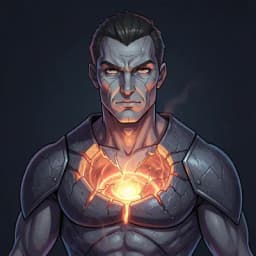
Meet the sample character
The last line of defense is not stone, but a choice.
Try a scene · No signup
The Sovereign’s Final Guardian
A short sample of this world. Your own version starts with your character.
You hover above the basalt pedestal, watching the viscous mana swirl in the stillness of the Vault. The heroes are three levels above, hacking through your iron-plated golems with annoying efficiency. You have exactly one chance to infuse your masterpiece before they descend the final spiral staircase.

“The party has breached the iron gates. Their cleric is faster than the projections suggested, my liege.”

You ignore the report, your attention locked on the hollow, alabaster shell of the construct before you. It needs a soul, a shape, and a lethal purpose. You feel the heat radiating from your own core, a reminder that you are as vulnerable as you are powerful. The clock is ticking.
“They expect a brute. They deserve something much more precise.”
You reach into your own essence, pulling out a jagged shard of memory. You can turn this guardian into a reflection of your cold logic, or something far more volatile. As the first footsteps echo against the stone stairs, you realize that if this creation fails, your core will be shattered into dust.
How will you anchor the guardian's soul to ensure the intruders never see the light of day?
Your character. Your next move.
Prepare your guardian before the gates shatter.
The adventurers are already on the fourth floor. You have enough mana for one final mutation to your boss's armor or a new, devastating spell. Will you play it safe or gamble on a high-risk ability that could end the fight instantly? The fate of your dungeon rests on your final design choices.
Design your dungeon bossYour Story, Your Way
Everything is customizable. Pick any genre, setting, or character — the AI builds a world around exactly what you want.
Any Character
Design your appearance, personality, backstory — every detail
Any World
Fantasy kingdoms, sci-fi stations, modern cities — you choose
Branching Paths
No two playthroughs are the same. Your choices reshape everything
Full Immersion
AI images, voice acting, sound effects — a living story
Select unique elemental affinities to counter specific hero classes like paladins or mages.
Design the arena layout to restrict movement or provide tactical advantages for your boss.
Choose personality traits that force heroes to react to taunts or deceptive combat patterns.
Allocate limited mana pools between defensive armor, offensive spells, or environmental traps.
The stone walls of the third floor hum with static mana. Far above, the faint, rhythmic clanking of steel boots echoes down the spiral staircase. Your core pulses, a singular point of consciousness surrounded by miles of traps, corridors, and hungry shadows. You have one chance to finalize your masterpiece before the intruders reach the sanctum. You reach out into the void, pulling strands of darkness and raw elemental energy to forge a guardian. Every choice you make—from the length of its reach to the specific weakness it hides behind a facade of strength—defines the fate of the party currently hacking through your front gates. In this interactive story, your tactical decisions determine if your dungeon remains a legend or becomes a graveyard for adventurers. The air grows cold as the party steps onto the pressure plate of your final chamber, and your creation stirs, waiting for the command to strike.
What is Boss Creation in Dungeon Core?
Boss creation is the defining moment in the dungeon core genre where the architect moves from passive observer to active defender. It represents the transition from building simple traps or spawning cannon fodder to sculpting a unique entity designed specifically to counter the strengths of the heroes threatening your core. Think of it as the ultimate puzzle-solving exercise. In the video game classic Dungeon Keeper, you rely on managing minions to handle threats, but the core mechanic of custom boss design allows for a much more personal touch. It is about identifying the specific weaknesses of the intruders—perhaps a party heavy on magic but light on physical defense—and crafting a guardian that exploits those gaps. In anime series like Overlord, the floor guardians are crafted with deliberate purpose, each possessing specific traits and backstories that make them formidable obstacles for anyone foolish enough to intrude. Boss creation is not merely about raw stats or high damage numbers. It is about psychology and resource allocation. You must decide if your creation will rely on psychological warfare, environmental manipulation, or pure, overwhelming physical might. When you design a boss, you are effectively writing the climax of a story that you have been building floor by floor. The effectiveness of your creation depends on how well you understand the tools at your disposal and the nature of the threat standing at your door.
Why play Boss Creation as an interactive story?
Playing through boss creation gives you the agency to act as the primary antagonist. You are not just watching a story unfold; you are the one deciding if your boss will taunt the heroes, set traps in the arena, or wait in the shadows for a surprise attack. You face high-stakes dilemmas: do you sacrifice your long-term mana reserves to give your boss a regeneration ability, or do you bet everything on a single, high-damage strike? Every modification you apply to your minion changes how the heroes respond. If you give your boss a shield, the heroes might switch to a defensive stance. If you make it fast, they might try to bottleneck it in a corridor. The tension comes from the mismatch between your plans and the unpredictable nature of the adventurers. You can witness the result of your design choices in real-time as the battle progresses, testing the synergy between your dungeon layout and your final guardian. The satisfaction comes from seeing a party that seemed unstoppable crumble against a boss you personally shaped from nothing.
Famous examples of Boss Creation in books, film, and games
The trope of the creator-architect holds a significant place in fantasy media. In the game Dungeon Keeper, the player controls the layout and the placement of minions, but the core experience revolves around ensuring that the 'bosses'—your most powerful creatures—are positioned to protect the heart of the dungeon. This is a foundational example of how architectural choices dictate the success of a boss encounter. Shifting to literature and anime, Overlord offers a more nuanced look at this trope. Ainz Ooal Gown spends immense effort customizing his floor guardians, not just for combat efficiency, but for their specific roles in the dungeon’s ecosystem. Each guardian is a masterpiece of design, tailored to hold a specific floor and interact with intruders in ways that go beyond simple violence. Another example is found in the manga series That Time I Got Reincarnated as a Slime, where the protagonist Rimuru Tempest oversees the development of his subordinates into powerful guardians. His process is highly collaborative and strategic, focusing on how these figures represent the dungeon's overall strength and identity. These examples demonstrate that boss creation is a versatile tool for storytelling. Whether it is the gritty, resource-starved environment of a classic dungeon crawler or the high-fantasy, personality-driven approach of modern isekai, the act of creating a guardian is always the ultimate test of the architect's vision. It endures because it forces the creator to confront their own limitations and make a final, decisive stand against the forces of change.
FAQ
How does my choice of boss affect the overall dungeon difficulty?
Your boss acts as the final check on your dungeon's design. If your early floors are too easy, a powerful boss can act as a safety net. If your floors are traps-heavy, a boss designed to finish off weakened heroes is more effective than one built for a long, drawn-out duel.
Can I change my boss's abilities during the battle?
Depending on your mana reserves and your dungeon's core level, you can often trigger reactive abilities. This adds a layer of real-time strategy, allowing you to adapt to the heroes' tactics as they discover your boss's weaknesses.
What happens if my boss is defeated?
A defeated boss usually leads to the destruction of your core, ending the run. However, the story leading up to the defeat—how long the heroes took and how much damage they sustained—is recorded, providing a score and lessons for your next attempt.
Is this experience focused more on combat or design?
It is a hybrid. You spend time in the design phase crafting the stats and arena, but the combat phase tests how well those design choices hold up against unpredictable hero behaviors.
Explore more Dungeon Core stories like Dungeon Awakening, First Adventurer Wave, Floor Design.
More Dungeon Core Stories
Dungeon Awakening
You open your eyes to discover you have no body, no limbs, no voice — only a glowing crystal and an awareness that stretches through stone and earth. You are a dungeon now, and the instinct to build, to grow, to defend pulses through you like a second heartbeat.
TropeFirst Adventurer Wave
You sense them at your entrance — the first adventurers, armed and hungry for loot. They are weak, but so are you, and this first encounter will establish your reputation as either a pushover to be farmed or a threat to be respected.
TropeFloor Design
You carve corridors, place traps, and sculpt rooms with the precision of an architect and the cunning of a predator. Every floor you design is a puzzle meant to test, delay, and ultimately defeat the adventurers who dare to enter, and the mana you spend must be invested wisely.
TropeMana Cultivation
You draw mana from the earth, from fallen adventurers, from the ambient magic of the world, and channel it into growth. Every point of mana is a choice between expansion, defense, and evolution, and the hunger for more never stops.
TropeDungeon Expansion
You break through to a new layer of earth and the possibilities flood your awareness — new biomes, new materials, new monster types. Each expansion makes you more powerful but also draws the attention of stronger adventurers and rival dungeons.
TropeRival Dungeon
You sense another consciousness in the earth, another dungeon core expanding toward your territory. The rival is hungry, clever, and competing for the same mana and adventurers, and only one of you will dominate this region.