
Dungeon Core · Interactive story
Sit Upon the Hoard: The Dragon’s Labyrinth
Centuries of gold. One mountain of fire. How will you burn the intruders?
Start as a guest. Choose your character before the story begins.

Meet the sample character
The architect of the hoard watches the intruders.
Try a scene · No signup
Copper Scales and Greed
A short sample of this world. Your own version starts with your character.
You feel the vibrations through the stone floor—the rhythmic, iron-shod footfalls of an interloper. Your eyes open, glowing like molten ore in the dark. The air in the cavern tastes of metal and stagnant time, heavy with the weight of centuries-old treasures. You shift, and a cascade of gold coins clatters against your scales, a sound you have come to love more than any song.

“Show yourself, beast! The king promised a fortune for your head, and I have no intention of leaving empty-handed.”
Your tail flexes, carving a deep groove into the bedrock. You are the dungeon; every trap, every pressure plate, and every shifting wall is an extension of your own will. The knight is standing near a tripwire you haven't triggered in two hundred years. You have the power to collapse the ceiling or roast him in his steel shell where he stands.
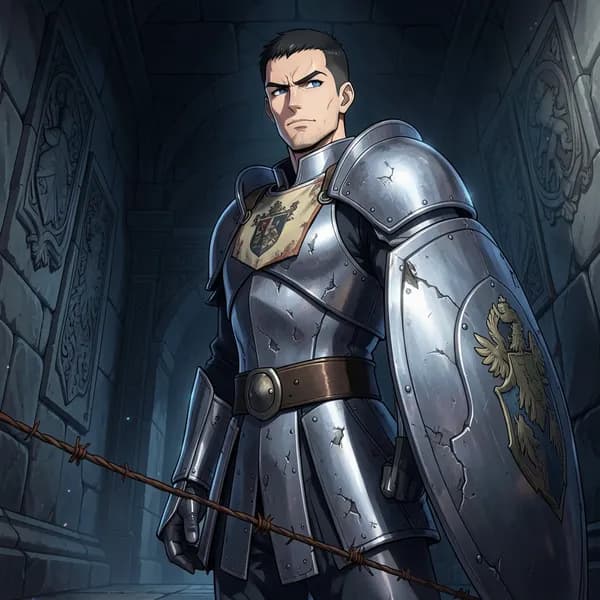
“A king's promise? You bring a beggar's ambition to a dragon's domain.”
The knight raises his shield, his knuckles white, unaware that the ground he stands on is hungry. You feel the heat building in your gullet, a torrent of liquid fire waiting for the signal to erupt. Outside, the rest of his party waits in the corridor, unaware that their leader is seconds away from becoming charcoal. You must decide if he is worth the effort of a full purge.
The knight stands vulnerable on the precipice of your trap. How will you assert your dominance?
Your character. Your next move.
The intruders have entered your barrow.
They think they are here for the gold, but they are walking into a grave of your own construction. Will you let them reach the inner sanctum, or will you incinerate them in the dark? The choice is yours to make. Your hoard is waiting.
Claim your throne todayYour Story, Your Way
Everything is customizable. Pick any genre, setting, or character — the AI builds a world around exactly what you want.
Any Character
Design your appearance, personality, backstory — every detail
Any World
Fantasy kingdoms, sci-fi stations, modern cities — you choose
Branching Paths
No two playthroughs are the same. Your choices reshape everything
Full Immersion
AI images, voice acting, sound effects — a living story
Adjust the temperature of your cavern to wither armor and melt incoming steel weapons.
Select which ancient traps to reset to ensure no treasure hunter leaves your domain alive.
Negotiate with lesser monsters to guard the outer perimeters while you remain in slumber.
Choose when to reveal your presence to maximize terror before the final confrontation begins.
The air in the barrow is thick with the scent of sulfur and oxidized copper. Beneath your talons, the pile of gold shifts, a soft clinking of coins that echoes against the damp stone walls. You have slept for three hundred years, your scales hardened by the passage of ages and the weight of your own malice. A thief has breached the outer chamber, his torchlight casting long, dancing shadows against your hoard. You could ignore him, letting the traps you laid centuries ago claim his life, or you could wake. Your breath is a furnace, and your patience has finally run dry. Every decision you make here dictates whether your mountain of stolen wealth remains secure or serves as the burial ground for another insolent hero.
What is Beowulf's Dragon in Dungeon Core?
The dragon in the epic poem Beowulf is one of literature’s most iconic antagonists. Unlike the mindless beasts of later fantasy, this wyrm is a calculating hoarder, a creature awakened by the theft of a single jeweled cup. In modern media, this archetype appears everywhere from Smaug in J.R.R. Tolkien’s The Hobbit to the loot-obsessed dragons in Dungeons & Dragons. Being a dungeon core entity means you are not just a monster; you are the architect of your own demise or dominion. You manage the physical infrastructure of the barrow, deciding which corridors are rigged with pressure plates and which chambers are best suited for a fiery ambush. It is a game of resource management, territorial defense, and, most importantly, knowing when to use your full draconic fury upon those who covet your life's work.
Why play Beowulf's Dragon as an interactive story?
Playing as the dragon forces you to balance the cold, analytical mind of a dungeon master with the ego of an ancient predator. You are not just waiting for combat; you are actively curating the experience for the thieves crawling through your home. Do you leave a trail of breadcrumbs—a few loose gold coins—to lead them into a dead-end trap? Do you let them reach the heart of the hoard just to watch them realize they are trapped in a furnace of your design? You face choices regarding your own physical evolution: do you grow your scales thicker, or do you focus on the potency of your venom? The tension lies in the trade-off between hoard security and personal gratification. If you kill them too quickly, you lose the satisfaction of the hunt. If you wait too long, they might find a weakness in your architecture. You are the final boss of your own story.
The literary legacy of Beowulf's Dragon
The dragon of Beowulf represents the ultimate corrupting force of wealth. In the original Old English text, the creature is not merely a beast but a symbol of the greed that brings down kings. Its death marks the end of the hero Beowulf, signaling a transition from the age of monsters to the age of men. This literary legacy has been reimagined in countless ways. In the 2007 film Beowulf, the dragon is depicted with a more complex, almost tragic lineage, while in the Dark Souls series, players frequently encounter ancient drakes that guard desolate ruins, echoing the isolation of the original creature. Modern adaptations often shift the focus from the dragon as a villain to the dragon as a victim of humanity’s insatiable greed. Yet, the core appeal remains the same: the power to possess, the power to protect, and the power to destroy. By stepping into this role, you interact with themes that have persisted for over a thousand years. You are the embodiment of that ancient, heavy silence found in the barrow, and you are the fire that keeps the world at bay. It is a position of absolute authority, where your only companion is the glint of gold in the dark.
FAQ
What is a dungeon core game?
It is a narrative experience where you control the environment rather than the hero. You build, defend, and strategize from the perspective of the dungeon itself.
Can I choose how to kill the heroes?
Yes. You can rely on environmental traps, minion management, or direct intervention using your fire and strength.
Does the story change based on my choices?
Every action, from the traps you set to the monsters you spawn, alters how adventurers navigate your territory.
Is this based on the original Beowulf poem?
It takes inspiration from the character’s nature and setting, allowing you to inhabit the role of the hoard-guardian.
Do I need to fight as the dragon?
Combat is an option, but you can also win by exhausting, trapping, or terrifying intruders before they ever reach your throne.
Explore more Dungeon Core stories like Dungeon Awakening, First Adventurer Wave, Floor Design.
More Dungeon Core Stories
Dungeon Awakening
You open your eyes to discover you have no body, no limbs, no voice — only a glowing crystal and an awareness that stretches through stone and earth. You are a dungeon now, and the instinct to build, to grow, to defend pulses through you like a second heartbeat.
TropeFirst Adventurer Wave
You sense them at your entrance — the first adventurers, armed and hungry for loot. They are weak, but so are you, and this first encounter will establish your reputation as either a pushover to be farmed or a threat to be respected.
TropeFloor Design
You carve corridors, place traps, and sculpt rooms with the precision of an architect and the cunning of a predator. Every floor you design is a puzzle meant to test, delay, and ultimately defeat the adventurers who dare to enter, and the mana you spend must be invested wisely.
TropeBoss Creation
You pour mana into your most powerful minion, shaping it into something terrifying and unique — the boss that will guard your deepest floor. You choose its abilities, its arena, and its behavior, knowing that if it falls, the adventurers reach your core.
TropeMana Cultivation
You draw mana from the earth, from fallen adventurers, from the ambient magic of the world, and channel it into growth. Every point of mana is a choice between expansion, defense, and evolution, and the hunger for more never stops.
TropeDungeon Expansion
You break through to a new layer of earth and the possibilities flood your awareness — new biomes, new materials, new monster types. Each expansion makes you more powerful but also draws the attention of stronger adventurers and rival dungeons.