
Workplace Fiction · Interactive story
The Ghost in the Virtual Office
Is your career still moving, or are you just staring at a flickering cursor?
Start as a guest. Choose your character before the story begins.
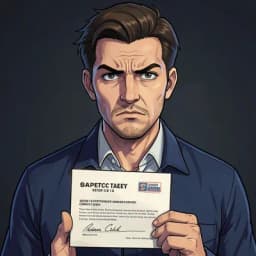
Meet the sample character
Visibility is a choice, not a given.
Try a scene · No signup
The Muted Mic
A short sample of this world. Your own version starts with your character.
The hum of your desktop tower is the only sound in your apartment, a low-frequency drone that syncs with the static in your headset. You watch a grid of seventeen faces, each one framed in professional lighting you can’t afford. Marcus, your department lead, is moving through the slides. He pauses on the team lead roster, your name noticeably missing from the list, replaced by a junior analyst who started last month.

“I think we're all aligned on these assignments, right? No objections?”

Your heart hammers against your ribs, a frantic rhythm that betrays your professional calm. You’ve spent three months correcting the backend errors that Marcus now claims as his own innovation. To stay silent is to accept the erasure, but to speak up is to risk being branded a disruptor in a culture that rewards compliance above all else.
“Actually, Marcus, I have some data that suggests the current project timeline ignores the stability issues I flagged last week.”
Marcus freezes. The cameras on the screen don't move, but you can feel seventeen pairs of eyes tracking the tension. You realize that by challenging the hierarchy, you have finally made yourself visible—but you have also painted a target on your back. The cursor blinks on your screen, waiting for your next move before the meeting turns into a firing squad.
Marcus stares into his webcam, his jaw tightening. How do you handle the silence you’ve just created?
Your character. Your next move.
Claim your seat at the digital table.
Your manager is about to start the Q3 review, and your name is missing from the list. Do you send a passive-aggressive email, schedule a surprise one-on-one, or dig into the project files to find the proof you need? Every click changes your standing in the company. Start your story now and decide who you are in the virtual office.
Start Your Office DramaYour Story, Your Way
Everything is customizable. Pick any genre, setting, or character — the AI builds a world around exactly what you want.
Any Character
Design your appearance, personality, backstory — every detail
Any World
Fantasy kingdoms, sci-fi stations, modern cities — you choose
Branching Paths
No two playthroughs are the same. Your choices reshape everything
Full Immersion
AI images, voice acting, sound effects — a living story
Choose whether to maintain professionalism or vent your frustrations in private company chat channels.
Decide how to handle a manager who consistently takes credit for your remote contributions.
Manipulate meeting dynamics by strategically timing your interventions to maximize executive visibility.
Balance your mental health against the pressure to stay constantly connected to the virtual office.
Hiroshi stares at the grid of muted icons on his monitor. His manager, Sarah, is talking, but her voice is a tinny echo filtered through digital compression. He has sent three reports this week that went acknowledged only by a thumbs-up emoji. The boundary between his living room and the boardroom has dissolved, leaving him with nothing but a cold cup of coffee and the gnawing suspicion that his name is being removed from the promotion list while he isn't looking. In this interactive story, your choices dictate whether you remain a pixelated ghost or force your way back into the room. Every Slack message you send and every meeting you choose to speak up in shifts the power dynamic of your virtual team.
What is Remote Work Disconnect in Workplace Fiction?
Remote work disconnect is a narrative trope focusing on the erosion of professional identity in a digital-first environment. It explores the psychological toll of being physically separated from the hub of corporate power. Unlike traditional office dramas where conflict happens at the water cooler, this trope thrives on silence, missed cues, and the ambiguity of text-based communication. It highlights the fear that without physical presence, one’s contributions are invisible. A prime example is the show 'Severance,' which literalizes the disconnect between one's professional and personal selves, creating an environment where the 'work' version of a person is entirely trapped within a digital prison. Similarly, Dave Eggers’ novel 'The Circle' portrays a workplace where constant digital visibility masks a deep, profound isolation from reality. This trope forces characters to fight for relevance in a world where their manager only knows them as a profile picture.
Why play Remote Work Disconnect as an interactive story?
Playing through this trope places you in the center of a high-stakes corporate power vacuum where your digital footprint is your only currency. You will face decisions that test your professional survival: do you confront a manager who ignores your contributions in group chats, or do you play the long game by building private alliances? The tension arises from the lack of traditional feedback; you must interpret the silence of your colleagues and decide if it is malicious or merely a byproduct of screen fatigue. Agency transforms the frustration of remote work into a tactical game. You might choose to leak a project update to force a meeting, or perhaps you decide to bypass your direct supervisor to lobby the executive team. Each decision alters how your coworkers perceive your dedication and ambition, directly impacting your trajectory within the firm.
Famous examples of Remote Work Disconnect in books, film, and games
The feeling of being a ghost in your own career is a recurring theme in modern media. In the film 'Office Space,' while the setting is a physical cubicle farm, the protagonist’s descent into apathy perfectly mirrors the modern remote worker’s struggle with corporate invisibility. The cubicles act as walls that disconnect him from any sense of purpose, a feeling exacerbated when one works from home. Another example is the television series 'Severance,' which pushes the disconnect to its logical extreme; the characters literally do not remember their work life once they leave the office. This captures the anxiety of the remote work era—the feeling that your 'work' self is a separate entity that exists only within the glowing rectangle of your monitor. Finally, in the game 'Papers, Please,' the player is confined to a tiny, isolated booth, forced to process endless streams of data while the world outside remains a series of abstract, often cold, interactions. This experience highlights the dehumanizing nature of rote, disconnected labor. These stories endure because they reflect a universal modern fear: that we are becoming mere data points in a system that doesn't care if we disappear.
FAQ
What is the core conflict in a remote work disconnect story?
The core conflict is the loss of influence and visibility. Because you lack the physical presence to command attention, you must find ways to assert your value through digital channels. The tension stems from the difficulty of reading social cues and the suspicion that others are moving ahead while you are ignored.
Can I influence my character's promotion path?
Yes. Your choices regarding how you handle office politics, communication with superiors, and your responsiveness to after-hours requests directly affect your career trajectory. You can choose to be an assertive climber or a quiet, overlooked worker.
Is this game suitable for those who work from home?
Many players find these stories relatable precisely because they mirror the frustrations of modern remote work. It provides a space to process workplace stress and explore alternative reactions to common professional hurdles.
How does the AI influence the office dynamics?
The AI tracks your choices and adapts the personalities of your coworkers accordingly. If you are aggressive in meetings, expect your colleagues to become defensive or alliance-focused. The virtual office reacts to your specific actions.
Explore more Workplace Fiction stories like Office Rivalry, Startup Chaos, Corporate Whistleblower.
More Workplace Fiction Stories
Office Rivalry
You and your coworker are competing for the same promotion, the same project, and the same recognition, and the rivalry has turned every meeting into a battlefield. The stakes are careers and egos, the weapons are emails and presentations, and the collateral damage is everyone caught between you.
TropeStartup Chaos
You are building a company from nothing, fueled by caffeine, equity promises, and the belief that your idea can change the world. The startup is chaos personified — roles shift daily, funding is always about to run out, and every week brings a crisis that could end everything.
TropeCorporate Whistleblower
You discover your company is doing something deeply wrong and you have the evidence to prove it. Going public means destroying your career, your relationships, and possibly your safety, but staying silent means becoming complicit in harm you can never undo.
TropePromotion Competition
You are in the running for a position that will change everything — your salary, your authority, your entire trajectory. The competition is fierce, the politics are brutal, and you must decide how much of yourself you are willing to compromise to climb one rung higher.
TropeToxic Boss
You report to someone who makes your working life a daily exercise in survival — micromanagement, public humiliation, impossible demands, and credit-stealing are their standard tools. You must navigate the toxic boss without losing your job, your sanity, or your self-respect.
TropeMerger Drama
You learn that your company is merging with a rival, and overnight your colleagues become competitors for a shrinking number of positions. The merger is a corporate earthquake — cultures clash, loyalties shift, and the survivors will be chosen by people who do not know your name.