
Werewolf Fiction · Interactive story
Shadow of the Peak: The Mountain Cave
Where the air turns thin and the beast beneath your skin takes control.
Start as a guest. Choose your character before the story begins.
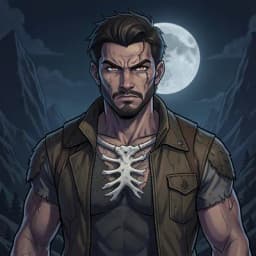
Meet the sample character
The pack demands a price for sanctuary.
Try a scene · No signup
Frost and Marrow
A short sample of this world. Your own version starts with your character.
Your breath hitches in the frigid dark of the cave, forming jagged plumes of white vapor. Outside, the wind howls like a wounded beast, but inside, the silence is heavier, weighted by the scent of pine and aggressive, dominant musk. You press your back against the rough limestone, teeth chattering as the temperature drops.
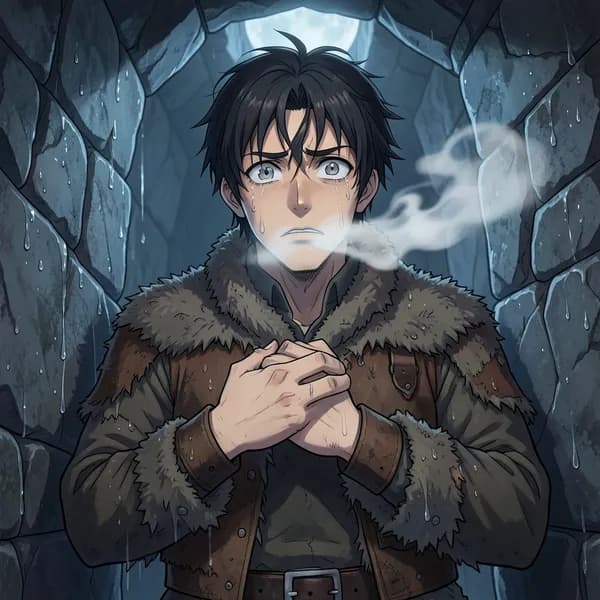
“Your heartbeat is too loud, Joren. It echoes off these walls like a confession.”
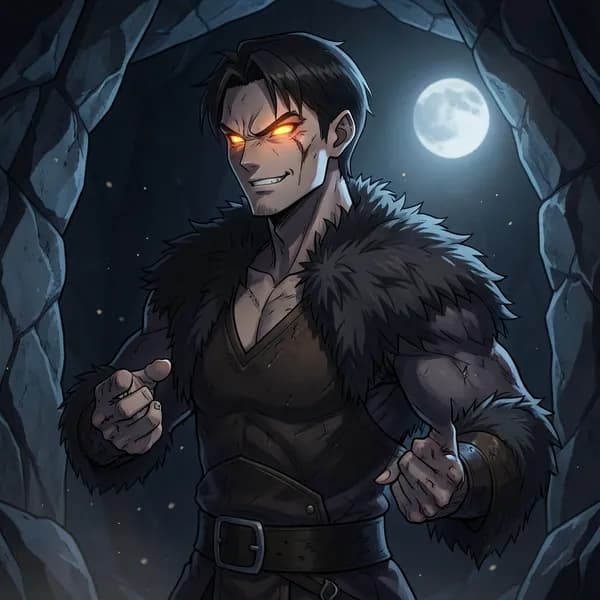
Silas steps into the sliver of moonlight filtering through the cavern entrance. His eyes glow with a sickly, amber intensity, his posture relaxed but ready to tear your throat out. You can smell the copper on his hands—he has been killing again. The wolf under your own skin stirs, reactive and terrified, desperate to flee but pinned by the weight of his gaze.
“I have nothing to confess to you, Silas. I am just trying to survive the freeze.”
He closes the distance in a blink, his fingers locking around your jaw with bruising pressure. He forces your head back, exposing your neck to the biting mountain air. His nostrils flare as he draws in the scent of your fear, his lips curving into a jagged, predatory grin. He knows your secret, and he is waiting to see if you will fight or beg for mercy.
Silas tightens his grip, his nails digging into your jawline as he forces you to look at him. How do you respond to the alpha?
Your character. Your next move.
The pack is closing in.
Every second counts in the dark. Will you light a fire to bait the hunters into a trap, or slip into the shadows of the deeper tunnels to wait out the night? Your survival depends on the instincts you cultivate right now. Step into the mountain cave and decide your fate.
Enter the mountain caveYour Story, Your Way
Everything is customizable. Pick any genre, setting, or character — the AI builds a world around exactly what you want.
Any Character
Design your appearance, personality, backstory — every detail
Any World
Fantasy kingdoms, sci-fi stations, modern cities — you choose
Branching Paths
No two playthroughs are the same. Your choices reshape everything
Full Immersion
AI images, voice acting, sound effects — a living story
Select which herbs to use for healing wounds caused by silver-tipped arrows.
Decide whether to challenge the pack alpha for leadership during the lunar cycle.
Choose how to mask your scent using mud and pine needles to evade trackers.
Navigate treacherous, lightless tunnels to find hidden escape routes from the pack.
The scent of pine and wet stone clings to your fur as you scramble into the dark maw of the cavern. Outside, the wind howls—a rhythmic reminder that the hunters are closing the distance. You are wounded, your side burning where the silver blade bit deep during the last skirmish. Here, in the damp silence of the mountain cave, the human world fades into irrelevance. The darkness is absolute, save for the faint, bioluminescent moss clinging to the limestone walls. Your breath comes in ragged, heavy hitches that echo against the jagged ceiling. Every decision you make in this sanctuary dictates whether you emerge as the apex predator of the range or remain as nothing more than carrion for the mountain crows. Your claws scrape against the frozen floor as you prepare to either defend your territory or slip deeper into the uncharted tunnels to wait out the moon.
What is Mountain Cave in Werewolf Fiction?
In werewolf lore, the mountain cave is a primal, liminal space. It represents the ultimate break from civilization, acting as both a sanctuary for the wounded and a sacred site for the pack’s most brutal rituals. Unlike the domestic settings often found in urban fantasy, the mountain cave forces characters to confront their biological reality. There is no electricity, no modern medicine, and no social pretense—only the raw, instinct-driven hierarchy of the pack. We see this trope utilized effectively in media like the television series Bitten, where remote locations serve as the pressure cooker for character conflict, and in the classic film The Wolfman, where the isolation of the landscape emphasizes the protagonist's descent into madness. The setting strips away the human facade, leaving the character to grapple with the wolf without distractions. It is a place where legends are forged in blood and where the thin, freezing air forces the heart to beat faster, heightening every sense until the smell of an approaching enemy is as clear as a shout.
Why play Mountain Cave as an interactive story?
Playing through a mountain cave scenario places the weight of survival directly on your shoulders. In this environment, agency is not just about dialogue; it is about physical survival. You will face moments where you must choose between tending to your own wounds or securing the entrance against a rival alpha. Do you hoard the limited food supplies to ensure your strength for the next moon, or do you share them to cement your position within the pack? The tension is constant, as the cave environment changes based on your actions. If you choose to explore the deeper, forbidden tunnels, you might uncover ancient pack secrets, but you risk being isolated from your allies when the hunters arrive. The interactive nature of this setting means that every growl, every scent you track, and every defensive maneuver you execute shifts the power balance. You are not just reading about a struggle for dominance; you are actively deciding how much of your humanity you are willing to discard to keep the beast alive.
What makes Mountain Cave work: the worldbuilding
The mountain cave setting functions as a narrative crucible. It works because it forces a collision between nature and the supernatural. The sensory details—the damp chill that sinks into the marrow, the smell of musk and wet fur, the absolute silence broken by the sound of dripping water—create a visceral experience that grounds the reader in the story. In works like Ginger Snaps or the werewolf encounters in The Witcher, the environment is never passive; it is a participant. When a character is confined to a cave, their internal conflict is amplified. They are trapped not just by stone walls, but by the physical limits of their own transformation. This setting naturally generates conflict. The hierarchy of a pack is tested when resources are scarce and the group is huddled in a confined space. Character archetypes thrive here: the wounded veteran, the young pup learning the ropes, and the exile hiding from a past life. By utilizing the cave, writers can strip away the social niceties of modern life. Characters are forced to rely on their acute hearing and smell, turning the narrative into a sensory-heavy experience. The isolation provides a perfect backdrop for the 'feral' aspect of the werewolf trope, where the thin line between man and monster is tested at every turn. When you play in this setting, you are forced to consider the cost of your instincts. Is the power of the wolf worth the loss of your humanity? This question is best explored in the dark, cold corners of the mountain, where the only thing that matters is the next breath and the next kill.
FAQ
How does the cold environment affect my character's survival?
In the mountain cave, extreme cold forces you to manage your energy carefully. If you spend too much time in the shivering, freezing outer chambers, your stamina drops, making you weaker in combat or during a transformation.
Can I leave the cave once I enter?
Yes, but leaving the cave exposes you to trackers and the elements. Some paths lead to safety, while others might lead you straight into an ambush depending on the choices you made regarding your pack's security.
Does the mountain cave setting change my relationship with the pack?
Absolutely. The isolation of the cave often leads to power struggles. Your actions—such as hoarding food, showing mercy, or asserting dominance—will directly influence how other pack members view you and whether they support you or turn against you.
Is this setting suitable for a player who prefers stealth over combat?
Yes. The mountain cave is filled with hidden tunnels and crevices. You can choose to play as a scout, using your senses to detect threats early and avoiding direct confrontation, focusing on survival through intelligence rather than brute force.
Explore more Werewolf Fiction stories like Fated Mates, Alpha Challenge, First Shift.
More Werewolf Fiction Stories
Fated Mates
The bond hits you like a freight train the moment your eyes meet — your wolf knows before your mind catches up. Navigate the overwhelming pull of a fated mate bond while deciding whether destiny gets to choose your partner or you do.
TropeAlpha Challenge
A challenger has risen against the alpha, and the entire pack holds its breath. Whether you're the one issuing the challenge or caught between two wolves fighting for dominance, your choices will reshape the pack hierarchy forever.
TropeFirst Shift
Bones crack, skin tears, and the wolf inside you awakens for the first time in an agonizing, exhilarating transformation. Your first shift changes everything about who you are and where you belong — if you survive it.
TropePack Rejection
Cast out by the only family you've ever known, you must survive as a lone wolf in a world where packless means powerless. Fight your way back, find a new pack, or prove that you're stronger alone than they ever imagined.
TropeRogue Wolf
A rogue wolf has been spotted on pack territory — feral, dangerous, and answering to no alpha. Track the rogue through dark forests and discover that the threat might be a misunderstood outcast, a deadly enemy, or your fated mate.
TropeMate Bond Rejection
Your fated mate looks you in the eye and rejects the bond, and the agony nearly destroys you. Claw your way through the devastating pain to discover whether this rejection is truly the end or the beginning of something even more powerful.