
Villainess Fiction · Interactive story
Burn the Script: A Villainess Goes Rogue Interactive Experience
The duke is waiting at the altar, but the carriage is already headed west.
Start as a guest. Choose your character before the story begins.
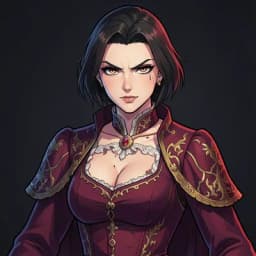
Meet the sample character
The script calls for your ruin, but you have other plans.
Try a scene · No signup
The Ledger of Abandoned Crowns
A short sample of this world. Your own version starts with your character.
The crystal chandelier above the Sapphire Ballroom catches the light, casting blinding glimmers across your silk gown. Every guest waits for the inevitable: the moment you, the supposed antagonist, spill wine on the protagonist’s pristine dress to trigger your own social exile. The script for this night feels like lead shackles around your wrists.

“Beatriz, the glass is in your hand. Do not test my patience—spill it now, or suffer the consequences.”

The silence in the room is a vacuum. You look down at the vintage red wine, the stain that is intended to destroy your life of luxury. Instead of malice, you feel a sudden, icy clarity. Your hidden cache of gold is already waiting at the city gate, and the horse is saddled for your departure.
“Keep your threats, Valerius. I am finished playing the villain for your theater.”
You set the glass down on a passing server’s tray with a deliberate click. The ballroom freezes. You have just shattered the narrative sequence, and the courtiers stare at you with terrified confusion. You can walk out the grand doors into the freezing night, or you can force a confrontation that changes everything. The choice belongs to you.
How do you break the script and reclaim your future?
Your character. Your next move.
Rewrite Your Ending, Leave the Script Behind.
The guards are at the gate, and the prince is waiting for an apology you have no intention of giving. Will you stay and play the villain, or will you take the gold, the horses, and your freedom? Your choices determine if you survive the fallout or build a new life in the shadows.
Start Your Escape NowYour Story, Your Way
Everything is customizable. Pick any genre, setting, or character — the AI builds a world around exactly what you want.
Any Character
Design your appearance, personality, backstory — every detail
Any World
Fantasy kingdoms, sci-fi stations, modern cities — you choose
Branching Paths
No two playthroughs are the same. Your choices reshape everything
Full Immersion
AI images, voice acting, sound effects — a living story
Liquidate the estate's hidden caches to secure your escape from the capital.
Manipulate rival noble houses to ensure they stay occupied while you vanish.
Establish an independent trade network using resources intended for your ruin.
Train the guards meant to capture you to become your personal bodyguards instead.
The ink on the page says you are destined for exile or a quiet, tragic death. The protagonist is already practicing her righteous monologue, waiting for your inevitable downfall. But you aren’t playing the part today. You stand in the grand foyer of the estate, the heavy velvet curtains blocking out the morning sun, and realize that every piece of jewelry in this room is yours to take. You don't need a redemption arc or a prince to save you from the narrative. As you reach for the handle of the manor’s back door, you make a choice that wasn't in the original text. You leave the court, the politics, and the inevitable misery behind. This is a story of total autonomy, where your decisions dictate whether you vanish into history or become the architect of a new, dangerous world.
What is Villainess Goes Rogue in Villainess Fiction?
Villainess Goes Rogue is the ultimate rejection of the traditional redemption trope. In most stories, the villainess must grovel, apologize, or sacrifice herself to prove she is 'good.' This subgenre flips the script by having the character simply opt out. Instead of vying for the crown or chasing the hero’s affection, the rogue villainess liquidates her assets, gathers her secrets, and disappears into the wild or the underworld. Consider 'The Villainess Reverses the Hourglass'—while she focuses on revenge, the true rogue spirit emerges when she stops caring about her status entirely and starts building an independent power base. Or look at the manga 'I'm Not a Villainess, Just a Villain,' where the character stops engaging with the social hierarchy to pursue her own technical or magical interests. It’s about the refusal to be an antagonist or a protagonist; it is about being a person with agency. By abandoning the social chess match, you stop being a piece and start being the player.
Why play Villainess Goes Rogue as an interactive story?
Playing a rogue villainess means trading court gossip for survival skills and business acumen. You will face moments where the 'original' path—the one that leads to your execution—is presented as the easy, comfortable option. Choosing to go rogue means burning bridges, literally or metaphorically. You might choose to sabotage a royal shipment to fund your escape, or perhaps you decide to recruit the henchmen the original story treated as disposable to build a trade empire. The tension comes from the fact that the world still expects you to play your role. When the guards come knocking, do you use your political influence to deflect them, or do you vanish into the night with the family treasury? Every decision alters your reputation, your resources, and the world's perception of who you are.
Famous examples of Villainess Goes Rogue in books, film, and games
The trope of the rogue villainess is a subversion of the predestined path. In 'The Most Heretical Last Boss Queen,' the character struggles with the weight of her future crimes, but the rogue aspect truly shines when she uses her future knowledge to dismantle the power structures she was supposed to uphold. Similarly, in the game 'Otome Games are Tough for Mobs,' the protagonist often finds that the only way to avoid the bad end is to stop participating in the game's core social loops entirely. These stories endure because they tap into a universal desire: the urge to walk away from a system that is rigged against you. Whether it is a historical drama or a high-fantasy setting, the rogue villainess represents the freedom to define one's own worth outside of the eyes of society. It is the ultimate power fantasy—not ruling the world, but simply refusing to be a part of it.
FAQ
What is the core difference between a redemption arc and going rogue?
A redemption arc requires the villainess to seek approval from the original cast and society. Going rogue rejects that approval entirely, prioritizing the character's own goals over the narrative's demands.
How do my choices impact the rogue ending?
Your choices determine your available resources and who you leave behind. If you are too cautious, the narrative may force you back into the original script; if you are bold, you can secure true independence.
Can I still interact with the main characters if I go rogue?
Yes, but the dynamic changes. Instead of being their enemy or their love interest, you become an outsider—sometimes an ally, sometimes a ghost they can no longer control.
Is this genre right for me?
If you enjoy stories where the protagonist outsmarts the system rather than conforming to it, this is for you. It appeals to those who prefer strategy and independence over traditional romance.
Explore more Villainess Fiction stories like Reincarnated as the Villainess, Otome Game Awakening, Avoiding the Death Flag.
More Villainess Fiction Stories
Reincarnated as the Villainess
You open your eyes and realize you have been reborn as the villain of a romance novel you once read. The death flags are already set, the heroine is closing in, and you must rewrite your fate using your knowledge of the plot before the story reaches its original, fatal conclusion.
TropeOtome Game Awakening
You wake up inside an otome game as the villainess character, surrounded by capture targets who are destined to destroy you. You must navigate romance routes, avoid bad endings, and use your meta-knowledge to survive a dating sim that was never designed to give your character a happy ending.
TropeAvoiding the Death Flag
Every event in the original story that leads to the villainess's execution is a death flag, and you know them all. You dodge, deflect, and dismantle each trigger with increasing desperation as the plot resists your changes and keeps pushing you toward the scaffold.
TropeCapturing the Heroine's Love Interest
The prince, the knight, or the mage was supposed to fall for the heroine, but your charm and strategic kindness have thrown the script off course. You capture the heart of a love interest who was never meant to be yours, with consequences that ripple through the entire story.
TropeBefriending the Heroine
Instead of opposing the heroine, you extend a hand of friendship that the original villainess never would have offered. You discover that the supposed protagonist is more complex than the story painted her, and your alliance changes the narrative in ways neither of you expected.
TropeVillainess Redemption
You choose to redeem the villainess's reputation through genuine kindness, charity, and changed behavior. You face skepticism from a court that expects cruelty and suspicion from those who remember the original villainess's sins, proving that a changed heart is the hardest battle of all.