Vampire Fiction · Interactive story
The Unmaking of Lucy Westenra
The blood is the life, but whose blood will define your eternal future?
Start as a guest. Choose your character before the story begins.
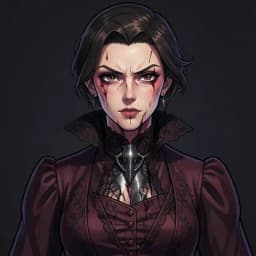
Meet the sample character
A thirst that wine cannot sate.
Try a scene · No signup
The Hillingham Waking
A short sample of this world. Your own version starts with your character.
You claw at your corset, the silk biting into skin that has turned cold as marble. Outside, the London fog clings to the glass like a spectral shroud, muffling the world. Your pulse is a frantic, hollow thud against your ribs, demanding something warmer than the stale air of this bedroom.
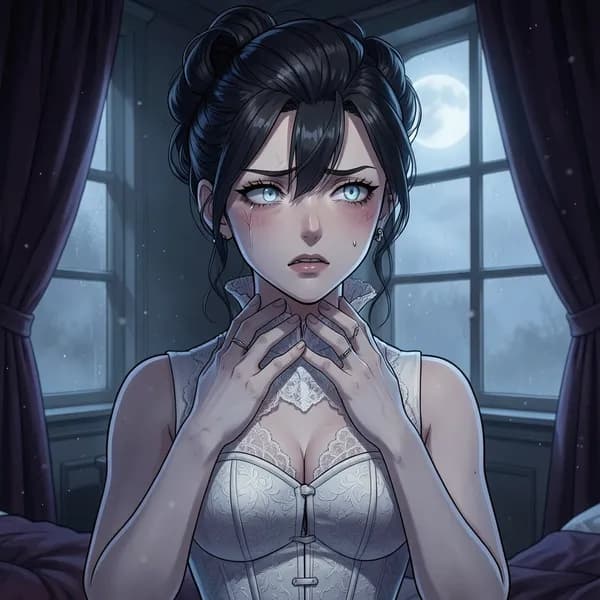
“Lucy, darling, you look so pale. Let me fetch the doctor; your malady grows worse by the hour.”

His warmth radiates from him, a beacon of pulsing life. You can hear the rhythmic rush of blood in his jugular, a steady, enticing drumbeat that makes your mouth ache. Every instinct you possess demands you close the distance, but the societal cage you have spent a lifetime building still holds you tight.
“Arthur, stay back. The light—it hurts my eyes, and the air feels like glass.”
He reaches out, his hand trembling, his palm soft and inviting against your cheek. You see a hairline fracture in his skin where he cut himself shaving, a droplet of crimson blossoming like a tiny, brilliant rose. The scent hits you with the force of a physical blow, and the floor seems to tilt beneath your feet as the beast inside demands release.
Arthur's pulse thrums against your fingertips, and the crimson drop on his skin is all you can see. What will you do?
Your character. Your next move.
Will you succumb to the darkness or command it?
The fog is closing in, and the suitors are sharpening their stakes. Lucy’s fate is no longer written in stone—it is written in your choices. Take control of her final nights in London and decide who she becomes when the sun sets. Your story starts now.
Begin the transformationYour Story, Your Way
Everything is customizable. Pick any genre, setting, or character — the AI builds a world around exactly what you want.
Any Character
Design your appearance, personality, backstory — every detail
Any World
Fantasy kingdoms, sci-fi stations, modern cities — you choose
Branching Paths
No two playthroughs are the same. Your choices reshape everything
Full Immersion
AI images, voice acting, sound effects — a living story
Conceal your worsening symptoms from Victorian suitors to maintain your status in high society.
Choose whether to resist the vampire’s influence or embrace the strength of the undead.
Manipulate Van Helsing and his allies to misdirect them from your true intentions.
Decide the fate of your household as the hunger begins to take hold.
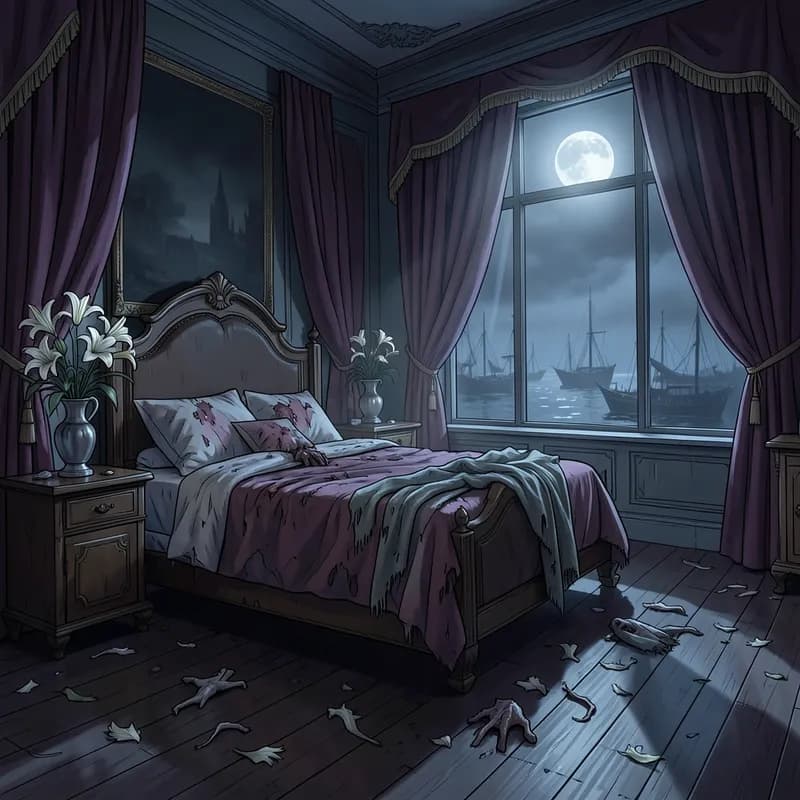
The scent of lilies hangs heavy in the bedroom, cloying and sweet, masking the metallic tang of something sharper. You lie in the four-poster bed, your skin pale as marble, listening to the rhythmic scratching of claws against the windowpane. Outside, the fog of London curls around the house like a shroud. You are not merely a victim waiting for a stake to the heart or a savior to arrive with garlic and crucifixes. The shadow at the window is waiting for a sign, and the choice is yours. Every pulse of your fading heart offers a new path. Will you fight the hunger rising in your veins, or will you invite the darkness in to claim what remains of your humanity? In this interactive story, your decisions dictate whether you remain a tragic footnote in Victorian history or become the architect of a new, blood-drenched era.
What is Lucy Westenra in Vampire Fiction?
Lucy Westenra is the quintessential tragic figure of Bram Stoker’s 1897 novel, Dracula. Introduced as a beautiful, kind-hearted young woman in Victorian England, she becomes the first major casualty of Count Dracula’s arrival in London. In the original text, Lucy’s transformation into the 'Bloofer Lady'—an undead predator who targets children—serves as a gothic warning against the perceived sexual liberation of women during the fin de siècle period. Her story is one of helplessness, as a group of men led by Abraham Van Helsing systematically hunt her down to 'save' her soul through a gruesome execution. Her portrayal has shifted dramatically over the last century. In Francis Ford Coppola’s 1992 film, her transformation is depicted as a chaotic, sensual awakening, while the 2020 BBC/Netflix miniseries reimagined her as a character with more agency, leaning into the horror of her physical decay and eventual rebirth. Despite these variations, Lucy remains the primary lens through which audiences view the corrupting influence of the vampire. She is the bridge between the mortal world and the predatory ancient, a symbol of beauty surrendered to the night. By engaging with her narrative, you are stepping into a character defined by her transition, moving beyond the static victimhood of the source material to explore the internal struggle of a woman caught between two states of being.
Why play Lucy Westenra as an interactive story?
Playing as Lucy Westenra transforms a passive literary tragedy into an active struggle for survival and identity. Instead of reading about her slow decline, you inhabit the tension of her Victorian constraints. You face the suffocating pressure of societal expectations while battling a supernatural infection that demands you abandon your morals. The agency here is absolute. Will you attempt to hide your symptoms from your suitors, Arthur and Quincey, risking their lives in the process? Will you seek out the Count to understand the power coursing through you, or will you attempt to master the darkness before it consumes your mind entirely? Every interaction with Van Helsing becomes a high-stakes gamble; one wrong word could expose your condition, while a calculated lie might grant you the time needed to secure your own survival. This experience adds weight to the classic horror elements of the story, forcing you to balance the preservation of your reputation with the preservation of your soul.
The literary legacy of Lucy Westenra
Lucy Westenra holds a unique position in gothic literature. Unlike Mina Harker, who represents the virtuous, intellectual ideal of the Victorian woman, Lucy is the embodiment of desire and the 'fallen' woman. Bram Stoker crafted her as a mirror to the anxieties of the 1890s, where the fear of changing gender roles and the rise of the 'New Woman' were often coded through supernatural horror. Her death and subsequent second death—the staking—are framed as necessary acts of purification, restoring the patriarchal order of the novel. Over the decades, creators have found endless fascination in her arc. From the campy, tragic portrayals in Hammer Horror films to the more grotesque and visually daring interpretations in modern television, Lucy is frequently used to explore the intersection of beauty and decay. She represents the fragility of the human body and the terrifying permanence of the vampire curse. Modern retellings often focus on the injustice of her end, asking what would happen if she had the power to fight back against those who deemed her a monster. By revisiting her story, we are not just looking at a Victorian relic; we are examining the desire to reclaim a narrative that has been dictated by others for over a century. Her enduring nature comes from the fact that she is the only character in the Dracula mythos who truly experiences the full, terrifying spectrum of the change—from the living, to the afflicted, to the immortal.
FAQ
Can I prevent Lucy’s transformation in this story?
Your choices determine the outcome. You have the potential to resist the infection, find unconventional cures, or steer your path toward a completely different resolution than the one found in the original novel.
How does this story handle the Victorian setting?
The narrative treats the Victorian era as a restrictive, high-pressure environment. The social rules of the period are active obstacles; you must navigate tea parties, courtships, and medical examinations while hiding the supernatural changes occurring within you.
Is this story suitable for fans of classic Gothic horror?
Yes. The atmosphere leans into the tropes of the 19th-century gothic novel, focusing on isolation, the encroaching supernatural, and the psychological torment of the protagonist.
What makes this different from reading the book?
In the book, Lucy is a character observed by others. Here, you are the protagonist. You make the decisions, face the consequences, and experience the psychological weight of the transformation from the inside.
Explore more Vampire Fiction stories like Vampire Turning, Blood Bond, Vampire Court Politics.
More Vampire Fiction Stories
Vampire Turning
The bite sinks in and your mortal life drains away, replaced by an eternity you never asked for. Navigate the terrifying first nights of your new existence as you decide what kind of immortal you'll become — predator, protector, or something entirely new.
TropeBlood Bond
A single exchange of blood creates a connection more intimate than any kiss — you feel their emotions, crave their presence, and can never truly hide from them again. Decide whether the blood bond is a prison or the deepest love you've ever known.
TropeVampire Court Politics
Immortals who have been scheming for centuries make mortal politicians look like amateurs. Navigate the lethal intrigues of vampire court where every alliance is temporary, every smile hides fangs, and a wrong word can mean a century of torment.
TropeDaywalker
While every other vampire hides from the sun, you walk freely in daylight — a gift that makes you the most hunted and most valuable vampire in existence. Both sides want you, and your unique power forces a choice no vampire should have to make.
TropeVampire Hunter Romance
Trained to kill vampires since childhood, you've never hesitated — until now. The vampire in your crosshairs is making you question everything you've been taught, and every night you don't pull the trigger, the line between hunter and hunted blurs.
TropeAncient Vampire Awakening
After centuries of slumber, an ancient vampire has risen — and the modern world is nothing like the one they left. Help them navigate smartphones and social media, or watch as their ancient power reshapes a world that forgot they existed.