
Urban Fantasy · Interactive story
Where the City Ends and the Fae Begin
The park bridge isn't just stone; it's a doorway to everything you’ve been missing.
Start as a guest. Choose your character before the story begins.
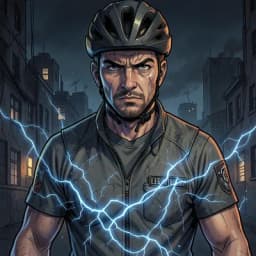
Meet the sample character
The bridge doesn't just span a river; it spans realities.
Try a scene · No signup
Toll for the Stone Arch
A short sample of this world. Your own version starts with your character.
You stand in the center of O'Malley's Arch. The familiar hum of city traffic has been replaced by the sound of wind whispering through trees that don't exist in this district. The stone beneath your boots pulses with a rhythmic, low-frequency thrum that feels less like architecture and more like a warning.

“You're late, Mateo. The toll collector doesn't take kindly to excuses, especially from a human who smells like cheap gas and broken promises.”

The air tightens, making your lungs burn with the sharp scent of ozone. A violet mist curls around your ankles, dragging at your sneakers with invisible, insistent fingers. You feel the weight of the envelope in your jacket—a delivery that wasn't meant for this zip code, let alone this reality.
“I had traffic, Siobhan. Next time, try finding a bridge that doesn't require a hike through a park that keeps rearranging its own layout.”
She taps a sharp, obsidian fingernail against her palm, and the stone of the bridge begins to dissolve into starlight and shifting shadow. The gap beneath your feet widens, revealing a swirling abyss of colors that defy human sight. You have seconds before the crossing closes permanently, leaving you stranded in the static between worlds.
The bridge is dissolving beneath you. How do you pay the toll to keep the path open?
Your character. Your next move.
The toll is due. Will you pay it?
The fog is thickening, and the park lights are already starting to look like dying stars. You can turn back to the city or step into the unknown to see what the fae have in store for you. Your choices define the outcome. Start your story now.
Cross the BridgeYour Story, Your Way
Everything is customizable. Pick any genre, setting, or character — the AI builds a world around exactly what you want.
Any Character
Design your appearance, personality, backstory — every detail
Any World
Fantasy kingdoms, sci-fi stations, modern cities — you choose
Branching Paths
No two playthroughs are the same. Your choices reshape everything
Full Immersion
AI images, voice acting, sound effects — a living story
Negotiate a toll with a shifting entity using only your wits and inventory.
Choose whether to maintain your human identity or adapt to fae customs.
Decide which reality you prioritize when the bridge begins to collapse behind you.
Interact with hidden entities who monitor the boundary for rule-breaking mortals.
Midnight in the city park. The streetlamps flicker, casting long shadows over the weathered stone bridge that shouldn't be there—at least, it shouldn't look like that. The air tastes like static and ozone, smelling faintly of crushed violets and wet asphalt. You stand at the midpoint, the transition zone where the hum of distant traffic dies into a rhythmic, alien thrum. One step toward the park exit keeps you in the world of spreadsheets and morning commutes. One step deeper into the fog, and you are walking into a court of thorns and starlight. In this interactive story, your choices determine which reality claims you. Do you hold onto the logic of the concrete jungle, or do you trade your shadow for a seat at the Unseelie table?
What is Bridge Between Worlds in Urban Fantasy?
A bridge between worlds is a specific type of threshold setting that marks the boundary between mundane reality and the supernatural. In urban fantasy, this often manifests as a liminal space—a place that exists in the cracks of the city. Think of the subway entrance that only appears on rainy Tuesdays or the park bridge that, at exactly 3:00 AM, leads to a realm of shifting architecture and predatory glamour. It is a concept popularized in works like Jim Butcher’s *The Dresden Files*, where Harry Dresden traverses the 'Nevernever' through doors and reflection points, or the hidden worlds found in Neil Gaiman’s *Neverwhere*. These settings function as a pressure valve for the narrative. They allow characters to step out of their everyday lives and into a high-stakes environment where the laws of physics are replaced by the laws of bargains, blood, and ancient etiquette. When you encounter such a bridge, you aren't just crossing a path; you are choosing to leave behind the safety of the known for the volatile promise of the unknown.
Why play Bridge Between Worlds as an interactive story?
Playing through a portal-based narrative shifts the power dynamic from passive observation to active negotiation. When you reach that midpoint on the bridge, the silence isn't empty; it’s expectant. You are forced to decide what you are willing to leave behind and what you are prepared to sacrifice to cross over. Will you offer a memory as a toll to the gatekeeper lurking in the mist? Will you attempt to deceive a fae noble who is watching from the reeds? The tension lies in the fact that every choice has a cost. If you act too human, you might be ignored; if you act too much like the inhabitants of the other side, you might lose the ability to return home. You will face moments where the bridge begins to dissolve, requiring you to make split-second decisions that alter the history of both worlds. The agency here is constant—your tone, your items, and your history define whether you are seen as a threat, a guest, or a snack.
What makes Bridge Between Worlds work: the worldbuilding
Effective portal settings rely on the contrast between the mundane and the surreal. The most compelling stories in this vein, such as those found in *The Magicians* or the classic *Alice in Wonderland* tropes adapted for modern grit, succeed because they treat the 'other side' as a place with consequences. A bridge isn't just a gimmick; it is a filter. The sensory details are paramount—the transition should feel physical. The smell of burning leaves, the sudden shift in temperature, or the way the city lights distort into impossible colors all serve to ground the supernatural in a tactile way. Conflict arises naturally here because these thresholds are rarely unguarded. You have gatekeepers, ancient pacts, and the inherent danger of two colliding realities. Character archetypes thrive here: the skeptical detective who accidentally stumbled into the wrong park, the desperate student looking for a shortcut, or the exiled fae trying to find a way back to a home that no longer exists. By forcing characters to interact with these thresholds, you create a narrative engine that drives them toward change. They cannot walk across the bridge and remain the same person they were on the other side. The setting demands a transformation, and the most successful stories are those that track exactly how much of a person's humanity remains after the crossing.
FAQ
What makes this setting different from a standard portal fantasy?
Standard portal fantasy often focuses on the destination. Our urban fantasy focus keeps the city in the rearview mirror. The tension comes from the proximity of your normal life—your apartment, your job, your phone—and the terrifying realization that it is only a few steps away, yet completely unreachable.
Can I choose not to cross the bridge?
Absolutely. Your agency is the primary engine of the story. Choosing to walk away is a valid path, though it often leads to its own set of consequences, as the entities on the bridge do not appreciate being ignored.
How does the AI handle my unique character decisions?
The narrative engine tracks your personality traits and past choices. If you establish yourself as a trickster, the fae you encounter will treat you with a mix of respect and wariness, opening up dialogue options that wouldn't be available to a more straightforward character.
Is this setting suitable for horror-themed stories?
The bridge is a liminal space, which makes it perfect for psychological horror. The uncertainty of the fog and the unpredictable nature of the fae allow for high-tension scenarios where the threat is often psychological as much as it is physical.
Explore more Urban Fantasy stories like Hidden Magical World, Supernatural Detective, Magic in Modern City.
More Urban Fantasy Stories
Hidden Magical World
Beneath the ordinary city streets lies a world of magic invisible to mundane eyes. You stumble past the veil and discover that everything you thought you knew about your neighborhood is a beautiful lie.
TropeSupernatural Detective
You take the cases no ordinary PI would touch — missing werewolves, hexed heirlooms, murders committed by ghosts. Every clue leads deeper into a supernatural underworld where the truth could kill you.
TropeMagic in Modern City
Spellcraft and smartphone apps coexist in a metropolis where witches ride the subway and demons broker real estate deals. You navigate a city where ancient power hums beneath neon lights.
TropePortal in the Alley
A shimmering rift between worlds hides in a graffiti-covered alley you pass every day. One night you step through and discover that the other side has been waiting for someone exactly like you.
TropeVampire Nightlife
The city's elite nightclub scene is run by immortals who feed on more than just blood — they crave influence, power, and loyalty. You've caught their attention, and there's no polite way to decline an invitation.
TropeWerewolf in the City
The full moon rises over skyscrapers and you feel the change clawing its way out. You must balance a day job, relationships, and the primal fury that turns concrete jungles into hunting grounds.