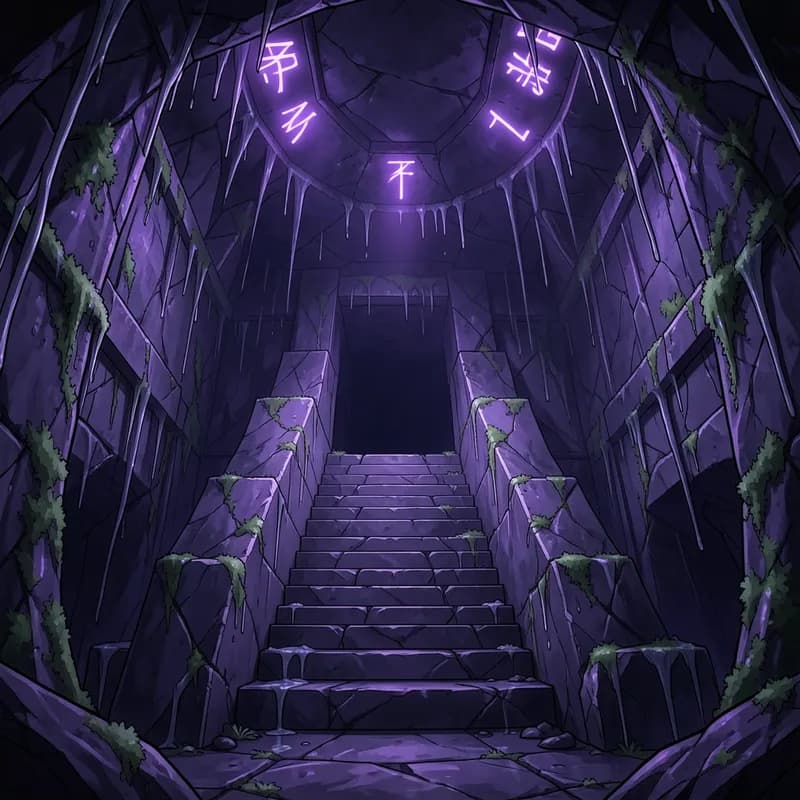
Treasure Hunting · Interactive story
Shadows of the Forgotten: Exploring Ancient Temples
Gold glitters in the dark, but the floor beneath you is shifting.
Start as a guest. Choose your character before the story begins.

Meet the sample character
Before the trap resets, you must decide what the relic is truly worth.
Try a scene · No signup
The Obsidian Maw
A short sample of this world. Your own version starts with your character.
Your boots sink into the thick silt of the atrium, where the floor is paved with basalt tiles carved into jagged teeth. Ahead, the massive stone door stands slightly ajar, revealing a chamber bathed in a faint, pulsing violet light. The smell of stagnant water and ancient decay clings to your throat, warning you that this place hasn't seen a living soul in five centuries.
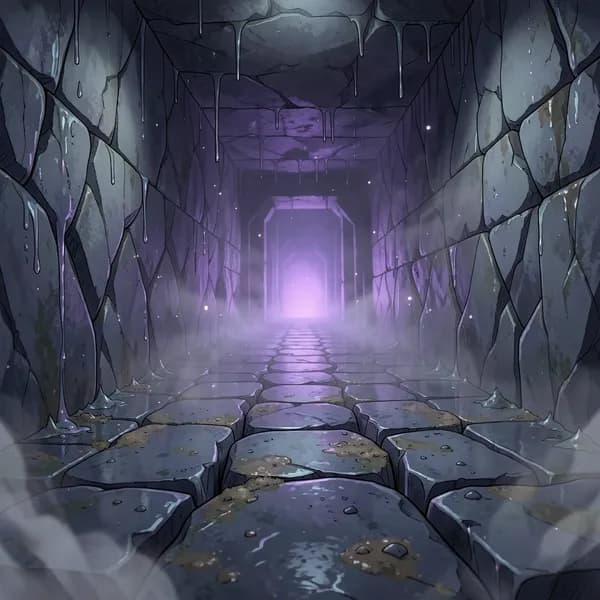
“Stop. Look at the masonry joints near your feet—this isn't architecture, it's a pressure-sensitive scale.”

You freeze mid-stride, your heart hammering against your ribs. Tlalli points her lantern toward a hairline fracture in the wall, where a faint metallic clicking suggests a clockwork mechanism is winding up. You have enough supplies to blast through the lock, but the vibration might trigger the ceiling to collapse, burying the treasure—and yourselves—in an instant.
“If we wait for the gears to reset, the light in that pedestal will fade, and we'll be left picking through rubble in the dark.”
The clicking accelerates. A low groan vibrates through the floorboards, and a cloud of dust rains down from the ceiling. You can see the glimmer of the Jade Heart resting on the pedestal, now mere feet away. The stone door begins to slide shut with a final, heavy slam, leaving you with only seconds to choose your path before the room seals forever.
The stone door is grinding shut. How do you reach the pedestal before the room seals?
Your character. Your next move.
Will you claim the relic or become history?
The stone door is closing, and the floor is beginning to vibrate. Do you grab the golden idol and risk the collapse, or do you search for a hidden mechanism to stabilize the room? Every choice in this temple leads to a different fate. Step inside, test your wits, and see if you have the nerves to survive the descent.
Begin Your ExpeditionYour Story, Your Way
Everything is customizable. Pick any genre, setting, or character — the AI builds a world around exactly what you want.
Any Character
Design your appearance, personality, backstory — every detail
Any World
Fantasy kingdoms, sci-fi stations, modern cities — you choose
Branching Paths
No two playthroughs are the same. Your choices reshape everything
Full Immersion
AI images, voice acting, sound effects — a living story
Decipher ancient hieroglyphs to bypass pressure-sensitive floor traps before they trigger.
Choose between saving a priceless artifact or escaping a collapsing burial chamber.
Manage limited torch fuel while deciding which subterranean tunnels to investigate further.
Interact with mechanical puzzles that require logic and observation to unlock sealed doors.
The air inside the ziggurat tastes of copper and stale centuries. Your torchlight flickers against walls carved with weeping deities, their stone eyes following every step you take across the cracked floor tiles. A faint, rhythmic clicking echoes from the darkness ahead—the sound of clockwork gears that haven't turned in a thousand years, waiting for a heartbeat to trigger them. You are the first to walk these halls in an age, but the architecture was built to ensure you are also the last. Every decision you make determines if you claim the relic or become a permanent part of the foundation. In this interactive story, your survival hinges on your ability to read the warning signs hidden in the dust and decide whether to press forward into the dark or retreat before the ceiling descends.
What is Ancient Temple in Treasure Hunting?
The Ancient Temple is a staple trope in treasure hunting fiction, serving as the ultimate test of both wit and endurance. It is a closed-system environment where the setting itself acts as an antagonist. Unlike a forest or a mountain range, a temple is designed with intent; every corridor, pressure plate, and inscribed warning was placed there by a long-dead civilization to protect something of immense value. Think of the iconic opening sequence of 'Raiders of the Lost Ark' or the intricate, puzzle-heavy tombs found in the 'Tomb Raider' video game series. These stories rely on the tension between historical curiosity and physical danger. The allure lies in the contrast between the majesty of ancient art and the brutality of the traps meant to guard it. Whether it is a Mayan pyramid hidden by jungle growth or a sub-aquatic shrine lost to the tides, the temple forces the protagonist to slow down, observe, and deduce the logic of a culture that no longer exists. It is not just about finding the loot; it is about proving you are worthy enough to reach it without triggering the mechanisms that have turned countless predecessors into skeletons.
Why play Ancient Temple as an interactive story?
Playing through an ancient temple setting provides a unique stakes-based experience. You are not just observing a character move through a dungeon; you are the one deciding whether to trust the suspicious-looking lever or attempt to decipher the cryptic warnings on the walls. When you encounter a room flooded with shifting sand, the agency rests with you—do you rush toward the exit, risking a collapse, or do you stand your ground to solve the sequence of the glyphs? This setting thrives on the 'high-risk, high-reward' feedback loop. You might find a cache of gold, but the act of taking it could initiate a terminal trap. The tension comes from the weight of your choices. A wrong turn in a dark hallway doesn't just result in a minor inconvenience; it leads to a total failure of the expedition. Every sound, every shadow, and every inscription is a clue that you must synthesize to survive.
What makes Ancient Temple work: the worldbuilding
The efficacy of the Ancient Temple as a narrative device comes from its claustrophobia. By restricting the movement of the protagonist, the setting forces a high level of engagement with the immediate surroundings. Successful stories in this genre, such as H. Rider Haggard’s 'King Solomon's Mines' or the 'Uncharted' game series, excel because they treat the temple as a character with its own agenda. The architecture should feel oppressive and intelligent. Use sensory details to build this: the smell of ozone before a trap fires, the vibration of stone against stone, or the sudden, unnatural silence when the air circulation changes. Conflict arises naturally from the environment—the temple wants to keep its secrets, and your presence is an intrusion. Character archetypes thrive here. You have the academic, who views the temple as a library to be studied, and the scavenger, who views it as a vault to be cracked. Both perspectives create friction when the temple begins to fight back. To make this setting effective, focus on the 'why' of the architecture. Why was this room built? Was it a place of worship, or a prison for something meant to stay buried? When the player understands the purpose of the space, they can predict the traps. A temple dedicated to a god of storms will have different hazards than one dedicated to a god of silence. By grounding the traps in the culture of the creators, you transform a generic dungeon into a narrative puzzle that rewards players for paying attention to the lore, making every victory feel earned rather than lucky.
FAQ
What makes an ancient temple story different from a standard dungeon crawl?
A standard dungeon crawl focuses on combat and looting, whereas an ancient temple story emphasizes environmental puzzles, history, and the survival of the explorer. The setting is a puzzle in itself, requiring the player to understand the context of the ruins to avoid deadly traps.
How do my choices affect the outcome in this setting?
Your choices dictate whether you successfully navigate the traps or succumb to them. Deciding which path to take, which artifacts to disturb, and how you interpret ancient warnings will determine if you reach the treasure or become trapped inside forever.
Can I play as an archaeologist or a tomb robber?
Yes. Your character's background influences how you perceive the temple. An archaeologist might prioritize preserving the site and deciphering scripts, while a tomb robber might ignore historical value in favor of finding the quickest route to the gold, often triggering more traps in the process.
Is this setting suitable for players who prefer logic puzzles over combat?
Absolutely. Ancient temple stories are ideal for those who enjoy deduction. The primary challenge involves observing patterns, understanding architectural clues, and using logic to bypass mechanisms, making it perfect for players who prefer cerebral challenges.
Explore more Treasure Hunting stories like Ancient Map Discovery, Lost City Expedition, Underwater Treasure.
More Treasure Hunting Stories
Ancient Map Discovery
A crumbling parchment falls from the pages of a forgotten book and the markings on it point to something that was never meant to be found. You decipher cryptic symbols and follow a trail that spans continents, knowing that others have died trying to reach the same destination.
TropeLost City Expedition
Legends speak of a city swallowed by jungle, sand, or time itself, and you have found evidence that it is real. You assemble a team and venture into uncharted territory where the ruins hold treasures beyond price and secrets that powerful people would kill to keep buried.
TropeUnderwater Treasure
A fortune lies at the bottom of the sea, locked inside the hull of a ship that went down centuries ago. You dive into the deep with limited air and visibility, racing rival salvagers and fighting currents to pry gold from the grip of the ocean floor.
TropeCursed Treasure
The treasure is real, the gold gleams, and every person who has ever taken a piece has met a terrible end. You stand at the threshold of unimaginable wealth with a choice: walk away or take the risk, knowing the curse is either superstition or the most dangerous thing in the room.
TropeTomb Raiding
The seal on the tomb has been unbroken for millennia and the air inside smells of dust and eternity. You step past warnings carved in dead languages, navigating burial chambers where the ancients buried their kings alongside enough gold to buy a kingdom and enough traps to protect it.
TropeJungle Temple
Vines part to reveal carved stone and the unmistakable geometry of a temple built by a civilization that vanished without explanation. You push deeper past overgrown altars and collapsed corridors, piecing together what happened here while the jungle fights to reclaim every inch.