
Time Travel · Interactive story
Architects of the Fractured Century
The past is a battlefield, and the future is a casualty of your choices.
Start as a guest. Choose your character before the story begins.
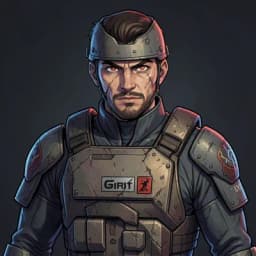
Meet the sample character
History is a casualty of war.
Try a scene · No signup
The Clockwork Martyr's Gambit
A short sample of this world. Your own version starts with your character.
The static in your teeth is the first sign the timeline is fraying. You stand on the cobblestones of London as a Stuka siren wails, but the sound morphs into a high-pitched digital whine. Behind you, the brick wall of the bakery dissolves into a humming, crystalline fracture. Your hands tremble, not from the cold, but from the weight of the chronometer strapped to your wrist. Every second you stay, reality bleeds a little more.

“Stop staring at the fractures, Jiro. If we don't collapse this node now, the entire decade will be erased from the record.”

Saito grips your shoulder, his fingers cold against your jacket. He doesn't know your sister is trapped on the other side of that shimmering tear in the masonry. You watch a shadow move behind the crystalline wall—a woman’s silhouette, clutching a locket you recognize. The chronometer on your wrist beeps a rhythmic, warning red. If you don't act, the collapse will incinerate everything within a three-block radius.
“If I pull her out now, the paradox will be catastrophic. But I didn't travel across three centuries to watch her vanish into a void.”
The ground beneath you groans as the timeline fights to stabilize. The silhouette behind the glass reaches out, her hand pressing against the boundary of the fracture. You see her lips move, mouthing your name, but the roar of the impending collapse drowns out all sound. The choice is yours: save her and risk the destruction of the city, or seal the rift and ensure her permanent deletion from history.
How do you respond to the fracture before the timeline permanently re-aligns?
Your character. Your next move.
The future is burning. Will you save it?
The enemy is already moving, shifting the pieces in the 18th century to ensure your defeat in the 21st. You have the device, the authorization, and the burden of history on your shoulders. Choose your faction, lock your coordinates, and step into the fray. Every second you hesitate is a second they gain the advantage.
Join the Temporal WarYour Story, Your Way
Everything is customizable. Pick any genre, setting, or character — the AI builds a world around exactly what you want.
Any Character
Design your appearance, personality, backstory — every detail
Any World
Fantasy kingdoms, sci-fi stations, modern cities — you choose
Branching Paths
No two playthroughs are the same. Your choices reshape everything
Full Immersion
AI images, voice acting, sound effects — a living story
Select which historical era to fortify against temporal infiltration attempts.
Decide whether to preserve a paradox or collapse it to save your team.
Negotiate truces with rival time-travelers while hiding your own faction's true agenda.
Assess the long-term consequences of your actions through shifting environmental descriptions.
Han-sol adjusted his chromatic stabilizer, his boots pressing into the mud of a trench that shouldn't exist in 1914. Around him, soldiers from a future that burned to ash fought infantry from a past that never learned to fly. He held a kinetic trigger, a device capable of collapsing this entire century into a localized singularity. If he fires, the war ends, but the civilization he calls home ceases to have ever existed. He looks at the flickering watch on his wrist, knowing that his next move will ripple through millennia. The air tastes like ozone and burnt copper as the opposing faction’s temporal scouts materialize on the ridge. You decide if he pulls the trigger or attempts a desperate parley. Every choice you make forces the timeline to bend, snap, or rewrite itself entirely. You are not a spectator here; you are the architect of the final history.
What is Timeline War in Time Travel?
A timeline war occurs when multiple factions utilize temporal displacement to gain strategic dominance over history. Unlike stories where a protagonist visits the past to fix a personal mistake, a timeline war operates on a macro-scale. It is a conflict fought across eras, where an action taken in the Roman Empire can be countered by an adversary in the 22nd century. These narratives thrive on the idea that history is not a rigid line, but a dynamic, malleable resource. In the anime Steins;Gate, for instance, characters struggle against shifting world lines, realizing that every minor alteration compounds into catastrophic shifts in the present. This trope introduces the concept of the 'temporal pincer,' where combatants anticipate an enemy’s move before they even make it, creating a chess game where the board itself is constantly being replaced. The stakes are total: erasure of one's own existence or the subjugation of the entire human experience. It demands that participants think in four dimensions, considering how a change in the 16th century affects the logistics of an army in the 25th.
Why play Timeline War as an interactive story?
Playing through a temporal conflict requires a different kind of vigilance. You face decisions where the 'right' answer is obscured by the fog of changing realities. Do you assassinate a tyrant, knowing it might lead to a more efficient, dangerous regime? Do you allow a disaster to occur because it is a fixed point required for your own faction to survive? The agency you hold creates a unique tension; you aren't just reacting to the plot, you are managing the fallout of your own interference. You might find yourself in the aftermath of a skirmish, trying to determine if the person you just saved is actually a sleeper agent from a rival timeline. The game forces you to weigh the ethical cost of your mission against the strategic necessity of winning the war. Every dialogue choice with a temporal defector or a commanding officer carries the weight of thousands of years. You will encounter moments where you must choose which era to prioritize for defense, knowing full well that your decision leaves another century vulnerable to enemy tampering.
Famous examples of Timeline War in books, film, and games
The concept of a war fought across time has evolved significantly through modern media. In the film Tenet, the conflict is defined by 'temporal pincer movements,' where characters move backward and forward through time to influence the same objective simultaneously. This creates a fascinating layer of complexity where the enemy is often oneself or a version of the mission that has already occurred. Similarly, the long-running Doctor Who franchise frequently depicts the 'Time War'—a devastating conflict between the Time Lords and the Daleks that effectively locked the universe in a cycle of destruction, proving that even god-like entities are subject to the trauma of a war that has no beginning or end. In manga like Tokyo Revengers, the timeline war is more grounded but equally volatile, as the protagonist struggles to prevent a criminal organization from rising to power by jumping back into his younger body. These works succeed because they treat time as a volatile weapon rather than a static backdrop. The trope endures because it challenges the reader to grapple with the fragility of their own reality. When any moment can be rewritten, the only thing that retains value is the integrity of the person making the changes. Whether it is an epic space-opera conflict or a gritty, localized struggle, the core appeal remains the same: the power to hold the entire history of the world in your hands and the crushing responsibility that comes with it.
FAQ
What happens if I create a paradox?
Paradoxes are not just narrative dead-ends; they are active threats. Creating a paradox might cause your character to be erased from the timeline, force the story into a darker branching path, or trigger a reality-shattering event that reconfigures the world around you. You must manage your actions to avoid these unstable outcomes.
Is this a strategy game or a story-focused game?
It is an interactive narrative where your choices dictate the strategic outcome. While you do not manually move units on a grid, the decisions you make—such as which era to prioritize or who to trust—determine the success or failure of your faction’s mission.
Can I save everyone in the timeline?
In a timeline war, sacrifice is often inevitable. Because the narrative is built on cause and effect, saving one group may lead to the erasure of another. The story is designed to challenge your morality, not provide a perfect ending.
How does the AI handle my changes to history?
The system tracks the 'state' of the timeline based on your choices. If you change a significant event in the past, the AI updates the setting, the NPCs, and the challenges you face in future chapters to reflect that new reality.
Explore more Time Travel stories like Butterfly Effect, Time Loop, Grandfather Paradox.
More Time Travel Stories
Butterfly Effect
You stepped on something you should not have, and now the present is unrecognizable. Every small change you make in the past cascades into catastrophic consequences, and fixing one thing always breaks another.
TropeTime Loop
You are living the same day over and over, and you are the only one who knows. Each loop gives you another chance to get it right—but the repetition is driving you closer to the edge.
TropeGrandfather Paradox
You have accidentally created a paradox that threatens to unravel your own existence. The timeline is collapsing around you, and you must find a way to resolve the contradiction before you are erased.
TropeTime Police
You enforce the laws of time itself, hunting down those who would alter history for personal gain. But the latest case is personal—someone has changed your own past, and regulations say you cannot intervene.
TropeHistorical Correction
History went wrong and you have been sent to fix it. You must blend into a past era, locate the point of divergence, and correct it without creating new problems that are even worse.
TropeFuture Knowledge Advantage
You are stuck in the past with knowledge of everything that will happen. The temptation to profit from what you know is overwhelming, but every advantage you take risks alerting people who should never learn the truth.