System Apocalypse · Interactive story
Ascend the Impossible: Tower Floor Survival
One floor, one biome, one chance to survive the nightmare waiting on the stairs.
Start as a guest. Choose your character before the story begins.

Meet the sample character
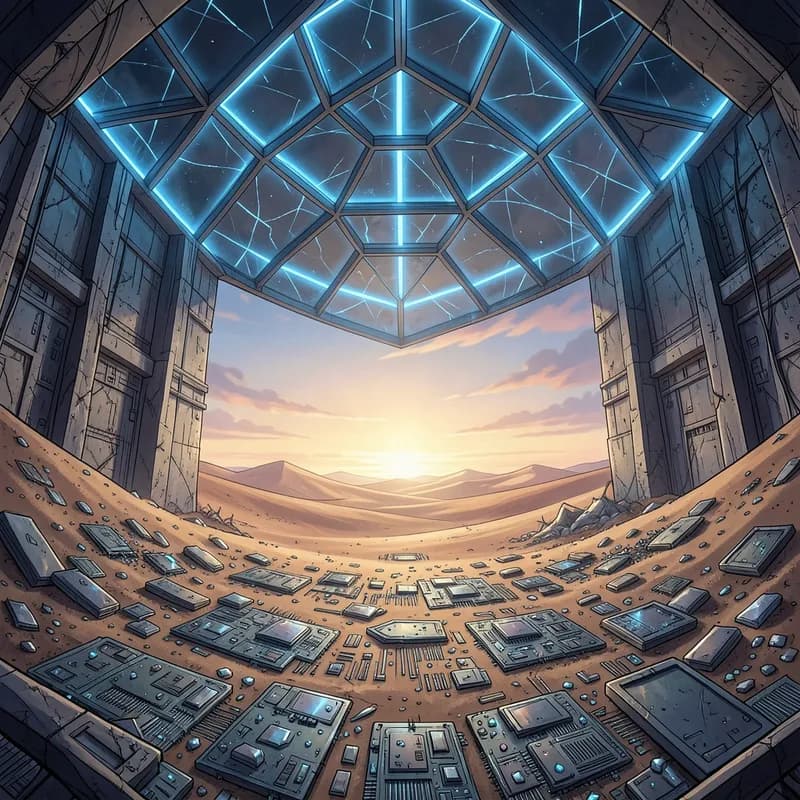
Floor 42: Where circuits turn to dunes.
Try a scene · No signup
The Salt-Crusted Spire
A short sample of this world. Your own version starts with your character.
You drag your boots through sand composed of pulverized circuit boards, the heat radiating off the horizon distorting the air into a shimmering glitch. Above, the ceiling of the tower floor is a solid slab of obsidian, pulsing with a rhythmic blue light that forces a synthetic day-night cycle upon this trapped biome.

“The quest timer is ticking down, Jiro. If we don't reach that override pedestal now, the gate locks for another twelve hours. My health bar is already flickering yellow.”

You check your status window: 04:12 remaining. Junya is right. Your stamina gauge is critically low, and the last wave of mechanical beetles shredded your primary armor plating. The HUD floods your vision with toxicity warnings, the red text jittering as the floor’s defensive systems identify you as an interloper.
“I am not sprinting into a kill zone based on a guess. That pedestal is rigged, and I would rather lose a cycle than lose my head to a hidden trap.”
A deep, grinding hum vibrates through the ground—the sound of a thousand servos engaging at once. The dunes ahead shift, revealing the boss: a shifting monolith of jagged obsidian and glowing fiber optics. It hasn't detected you yet, but the pedestal sits unguarded in the open, and the monster’s scan radius is widening.
The boss is turning. Do you risk the sprint, or find another way to survive the floor?
Your character. Your next move.
The next floor is waiting. Will you climb?
Your status window is blinking. You have one health potion left, and the boss door is just ahead. Do you heal now, or save the potion for the fight? Every choice you make in the tower matters. Start your climb and see how far you can ascend before the system catches up to you.
Begin Your Tower AscentYour Story, Your Way
Everything is customizable. Pick any genre, setting, or character — the AI builds a world around exactly what you want.
Any Character
Design your appearance, personality, backstory — every detail
Any World
Fantasy kingdoms, sci-fi stations, modern cities — you choose
Branching Paths
No two playthroughs are the same. Your choices reshape everything
Full Immersion
AI images, voice acting, sound effects — a living story
Allocate limited stat points to specialize your character for specific biome challenges.
Choose to hunt floor bosses for rare loot or bypass them using stealth.
Manage resource depletion as your stamina and mana bars dwindle between floors.
Influence NPC factions within the tower to build a temporary army for floor raids.
The sky vanished at noon, replaced by a jagged ceiling of obsidian rock. Before you could scream, a translucent blue window flickered into existence: 'Floor 1: Temperate Forest. Objective: Reach the exit staircase.' You are standing in a dense, alien woodland where the predators have glowing red eyes and the flora pulses with toxic energy. You check your status window—Health: 100%, Mana: 20%, Class: Scavenger. Every step you take changes the environment, and the decisions you make determine whether you become the predator or the prey. This is an interactive story where the tower adapts to your tactical choices, forcing you to manage limited resources while the pressure of the next floor looms overhead. If you choose to engage the swarm, you might find rare loot, but your stamina will crater. If you hide, you save your strength, but you risk missing the window to cross the river before the environment shifts again.
What is Tower Floor in System Apocalypse?
The Tower Floor setting is a staple of progression-based fiction, popularized by works like 'Tower of God' and the 'Aincrad' arc in 'Sword Art Online.' In these stories, space is compressed into a vertical structure where each level contains a unique, self-contained ecosystem. One floor might be an endless frozen tundra, while the next is a high-gravity industrial wasteland. The physics of these floors are artificial, dictated by the 'System' that governs the tower. Because the tower creates these biomes, it can dictate the rules of gravity, oxygen levels, and magic density on a whim. Players or characters within this setting are not merely exploring; they are climbing a ladder of escalating danger. The primary objective is usually to find the 'Boss Room'—a specialized chamber that guards the path to the next level. Defeating the boss is the only way to advance, and the rewards are often game-changing, providing the gear or skills necessary to survive the increased difficulty of the floor above. It is a high-stakes environment where stagnation equals death.
Why play Tower Floor as an interactive story?
Playing through a Tower Floor narrative provides a specific tension between long-term survival and short-term survival. You are constantly managing your 'Status Window,' deciding whether to dump points into Agility to outrun a floor’s hazard or into Strength to break through a boss’s armor. Because the tower is a game, every choice is quantified. If you decide to save a struggling NPC, you might gain a valuable ally, but you lose the time needed to scout the boss's weaknesses. The agency you possess changes the trajectory of your climb. You might find a secret passage that skips a deadly floor, or you might trigger a 'Hard Mode' event that forces you to fight a floor guardian with half your resources. The system tracks your reputation, your gear durability, and your hidden stats, making every combat encounter a puzzle. You aren't just reading about a character fighting a monster; you are deciding which skill to activate, which potion to drink, and whether to risk a critical hit when your health is in the red.
What makes Tower Floor work: the worldbuilding
The effectiveness of the Tower Floor setting lies in its inherent structure: it provides a natural, logical progression of conflict. In 'The Tower of Druaga,' the mystery of what lies at the summit fuels the urgency. Writers and game designers use this to create a 'closed loop' of excitement. The setting generates conflict through environmental variance; a character who thrives in a forest biome might be completely helpless in a vacuum-sealed space station floor. This forces the protagonist to adapt, learn new skills, and diversify their strategy. Sensory details are vital here—the metallic smell of blood on the concrete floors, the hum of the system interface, the unnatural silence before a boss appears. Successful stories in this genre focus on the 'System Log'—the cold, objective text that warns of incoming danger. By treating the tower as a sentient, hostile entity, the setting becomes a character in its own right. The most compelling stories emphasize the cost of the climb. Every item gained is a trade-off. Every floor conquered is a step toward an unknown truth. When you write or play in this setting, you must focus on the limitations of your character. If they are too powerful, the tower loses its threat. The best stories come from those moments when the player is out of mana, the boss is at 10% health, and they have to use an item they picked up three floors ago in a way they never intended.
FAQ
How does the difficulty scale between floors?
Difficulty typically scales by introducing more complex environmental hazards and higher-tier enemy AI. As you ascend, the system reduces the availability of recovery items, forcing you to rely on your learned skills and tactical positioning rather than brute force.
Can I change my character class during the climb?
Some floors offer 'Class Advancement' trials. If you survive these high-risk challenges, you can pivot your build, though this often requires sacrificing your previous skill progression for a significant power spike.
What happens if I fail a boss fight?
Failure usually results in a penalty, such as loss of gear, temporary stat reduction, or being sent back to the previous floor. The system is unforgiving, and death is often a permanent end to your current run.
Is the tower environment always hostile?
Not always. Some floors act as 'Safe Zones' or trading hubs where you can interact with other climbers. These moments provide a reprieve, but they also introduce political tension and resource competition.
Explore more System Apocalypse stories like System Activation Day, First Monster Wave, Class Selection.
More System Apocalypse Stories
System Activation Day
You watch a translucent blue window materialize in front of your eyes and the world as you knew it ends. The System has arrived, granting humanity stats, classes, and levels while simultaneously unleashing monsters across the globe, and the old rules of civilization are gone in an instant.
TropeFirst Monster Wave
You hear the screaming before you see them — creatures that should not exist, pouring through rifts in reality and tearing through a world that has no idea how to fight back. The first monster wave is pure chaos, and survival depends on how quickly you adapt to a reality where ordinary people must become warriors.
TropeClass Selection
You stand before a screen listing classes you can become — warrior, mage, healer, assassin, and stranger options that defy categorization. This choice will define your power, your role, and your survival odds, and the System does not allow do-overs.
TropeTutorial Dungeon
You are teleported into a contained space designed to teach you the System's rules through a series of escalating challenges. The tutorial dungeon is supposed to be survivable, but the mortality rate is horrifying, and the lessons are taught through blood.
TropeTower Appearance
You watch a massive tower materialize in the center of the city, its peak vanishing into clouds that were not there a moment ago. The tower is a challenge, a reward system, and a mystery all at once, and the floors above hold power that could save or doom what remains of humanity.
TropeGuild Founding
You bring together survivors with complementary classes and a shared determination to do more than just survive. Founding a guild means organizing humanity's fightback, but it also means navigating egos, resource conflicts, and the question of whether you are building a team or a government.