System Apocalypse · Interactive story
Trade Blood for Power: The System Shop Awaits
Every kill buys you another day, but the prices only ever go up.
Start as a guest. Choose your character before the story begins.
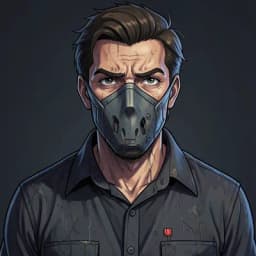
Meet the sample character
Every breath is a transaction.
Try a scene · No signup
The Credit Bleed
A short sample of this world. Your own version starts with your character.
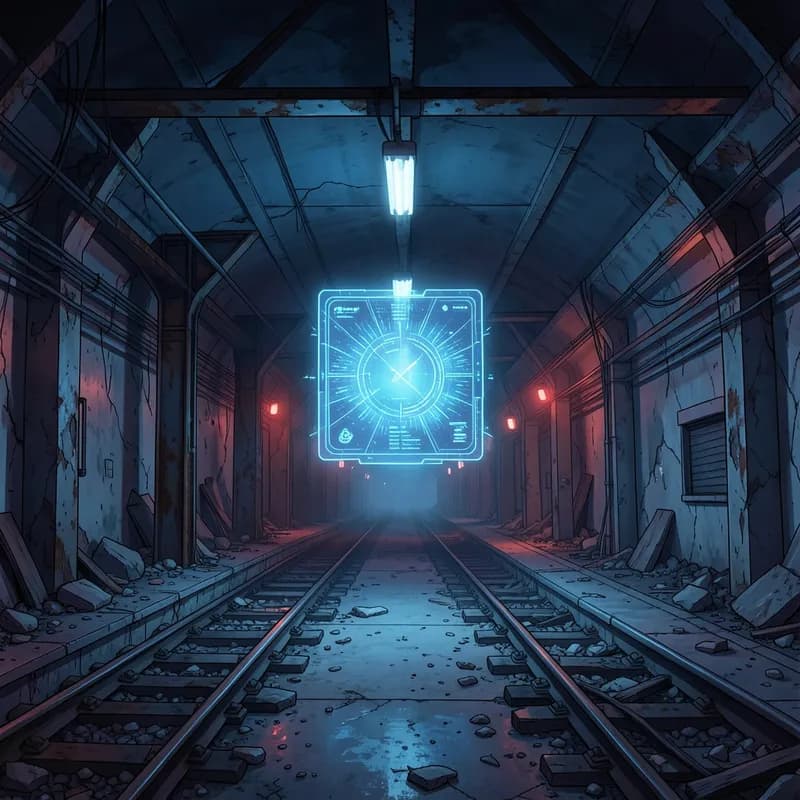
You stare at the flickering blue light of the System Shop floating three inches from your retina. Your bank balance—displayed in jagged, digital crimson—reads a pathetic 450 Credits. A basic health potion costs 500. The groans of the chitinous swarm echoing down the subway tunnel suggest you have less than two minutes before the next wave tears through the barricade.
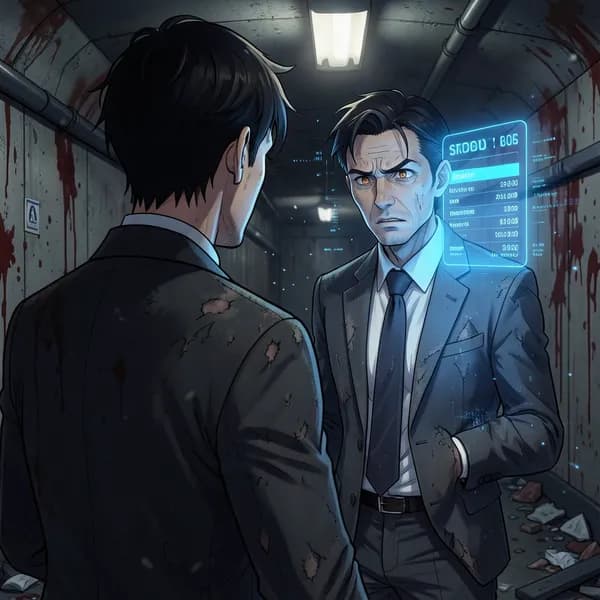
“Give me the credits, Jiro. My leg is shredded, and if I don't heal, I’m just bait for those things.”

The metallic tang of blood hangs heavy in the humid station air. You look at Sato, his face pale and slick with sweat, then back at the shop interface. There is a rusty iron gladius listed for 400 credits. It is barely better than your current kitchen knife, but it might get you through the night. If you give your money to him, he is mobile, but you are defenseless.
“If I drop the credits, I am defenseless, Sato. And if I buy the blade, you are dead weight. Tell me why I should not just leave you here.”
The shop timer pulses rhythmically, counting down the seconds until the blockade fails. A notification blinks in the corner: New item available: 'Fragile Ally Contract'. Price: 400 Credits. The choice is not just about survival; it is about what price you put on another human life while the world collapses around you. What is the value of a soul in this economy?
The creatures are clawing at the steel shutters. How do you balance your ledger?
Your character. Your next move.
Your inventory is empty and the horde is coming.
You have enough credits for one last item. Do you buy the heavy armor to survive the next ten minutes, or the high-damage blade that might end the fight before it truly starts? Your choice in the shop determines your survival.
Open the shop and chooseYour Story, Your Way
Everything is customizable. Pick any genre, setting, or character — the AI builds a world around exactly what you want.
Any Character
Design your appearance, personality, backstory — every detail
Any World
Fantasy kingdoms, sci-fi stations, modern cities — you choose
Branching Paths
No two playthroughs are the same. Your choices reshape everything
Full Immersion
AI images, voice acting, sound effects — a living story
Select specific gear upgrades that permanently alter your combat style and character build.
Manage limited currency earned through dangerous missions against the rising cost of survival.
Decide between immediate health recovery or investing in long-term skill progression and power.
Negotiate with rare shop events that offer exclusive items for a limited, high-stakes duration.
The sky turned a static-filled violet at exactly 3:00 AM, and the blue screens followed. You are not a hero; you are just someone who survived the first wave of the infestation. Your status window flickers in the corner of your vision, showing a balance of 450 credits—barely enough for a basic health tonic or a week's worth of rations. Outside the barricaded door, the screeching of an evolved hound echoes through the hallway. You have a choice: burn your credits on a high-grade steel blade to fight, or save them for the armor that might stop the next bite. In this story, your decisions dictate whether you become a legend or another corpse for the system to process. Every transaction carries the weight of life and death, forcing you to calculate the value of your own existence against the cost of your gear.
What is System Shop in System Apocalypse?
The System Shop is the central economic hub of an apocalypse narrative. When the world is converted into a game, the shop becomes the only reliable source for gear, skills, and medical supplies that aren't available in the crumbling physical world. It acts as a gatekeeper for progress; you earn currency by hunting monsters or completing system objectives, then trade that currency for items that allow you to reach higher-level zones. Think of it like the interface in 'Solo Leveling,' where Sung Jin-woo relies on the shop to access unique weapons and consumables that turn the tide of impossible battles. Without the shop, a survivor is limited by their base stats and whatever scrap they can scavenge. With it, the potential to scale your power is limited only by your ability to hunt and your willingness to spend. It transforms the apocalypse from a desperate struggle for scraps into a strategic game of resource management. You are constantly balancing the need for immediate survival—like buying a bandage for a festering wound—against the long-term goal of purchasing a legendary skill book that could make you untouchable. It turns every monster encounter into a calculated risk, as each kill provides the funds for your next upgrade.
Why play System Shop as an interactive story?
Playing through a system shop narrative adds a layer of brutal economic consequence to your choices. You are not just fighting; you are managing a balance sheet where the red ink represents your death. When you face a boss, you have to decide if your current equipment is sufficient or if you need to drain your savings for a temporary buff. You will face moments where the shop offers a high-tier item, but buying it leaves you without enough credits for ammunition or food. These decisions create tension that goes beyond simple combat mechanics. You might find a rare item, but the cost is double what you have, forcing you to choose between selling your current gear—leaving you vulnerable—or passing up an opportunity that might never return. The agency to choose your path through the shop changes your character build, determining whether you become a swift assassin relying on high-crit daggers or a tanky brawler who can outlast any horde. Every time you open that interface, you are betting on your own future.
Famous examples of System Shop in books, film, and games
The concept of an item shop as a survival lifeline is a pillar of modern progression fantasy. In 'Solo Leveling,' the shop is essential to the protagonist's growth, providing him with items that bridge the gap between his initial weakness and his eventual dominance. It shows how the shop can be a tool for extreme character scaling. Conversely, in the game 'The Tutorial is Too Hard,' the shop interface functions as a brutal reminder of the player's limitations. Items are priced at exorbitant rates, forcing the character to prioritize survival over comfort, turning every purchase into a reflection of their current desperation. In 'Omniscient Reader's Viewpoint,' the shop serves a different purpose, acting as a medium for the constellations—the viewers of the apocalypse—to sponsor players with items, blending the shop economy with social and political maneuvering. What makes this trope endure is that it provides a tangible metric for power. Readers and players are obsessed with the 'level up' fantasy, and the shop is the mechanism that proves growth is happening. It turns the chaotic, terrifying setting of an apocalypse into a structured, quantifiable game, giving the protagonist a clear path to follow, even when the world around them is falling apart. The shop is the only thing that makes sense in a world that has lost all logic.
FAQ
How does the shop economy work?
You earn currency, often called credits or points, by defeating monsters, clearing dungeons, or completing system quests. This currency is spent in a digital interface that appears in your HUD. The shop typically features tiered inventory, where better items require higher levels or rare event currency.
Can I lose all my items if I die?
In most system apocalypse stories, death is permanent, meaning your inventory is lost along with your life. This high-stakes environment ensures that every purchase in the shop is a critical decision, as you are essentially investing in your own continued survival.
Is the system shop fair?
The shop is rarely fair. Prices often fluctuate based on demand, rarity, and the system's own arbitrary rules. Some stories feature dynamic pricing where the system actively works against the protagonist, making it harder to buy what you need when you are at your most vulnerable.
What happens if I run out of money?
Running out of credits leaves you dependent on your base stats and scavenged supplies. Without the ability to purchase healing potions or weapon repairs, you become significantly more susceptible to environmental hazards and stronger monster variants, creating a downward spiral that defines the struggle of the genre.
Explore more System Apocalypse stories like System Activation Day, First Monster Wave, Class Selection.
More System Apocalypse Stories
System Activation Day
You watch a translucent blue window materialize in front of your eyes and the world as you knew it ends. The System has arrived, granting humanity stats, classes, and levels while simultaneously unleashing monsters across the globe, and the old rules of civilization are gone in an instant.
TropeFirst Monster Wave
You hear the screaming before you see them — creatures that should not exist, pouring through rifts in reality and tearing through a world that has no idea how to fight back. The first monster wave is pure chaos, and survival depends on how quickly you adapt to a reality where ordinary people must become warriors.
TropeClass Selection
You stand before a screen listing classes you can become — warrior, mage, healer, assassin, and stranger options that defy categorization. This choice will define your power, your role, and your survival odds, and the System does not allow do-overs.
TropeTutorial Dungeon
You are teleported into a contained space designed to teach you the System's rules through a series of escalating challenges. The tutorial dungeon is supposed to be survivable, but the mortality rate is horrifying, and the lessons are taught through blood.
TropeTower Appearance
You watch a massive tower materialize in the center of the city, its peak vanishing into clouds that were not there a moment ago. The tower is a challenge, a reward system, and a mystery all at once, and the floors above hold power that could save or doom what remains of humanity.
TropeGuild Founding
You bring together survivors with complementary classes and a shared determination to do more than just survive. Founding a guild means organizing humanity's fightback, but it also means navigating egos, resource conflicts, and the question of whether you are building a team or a government.