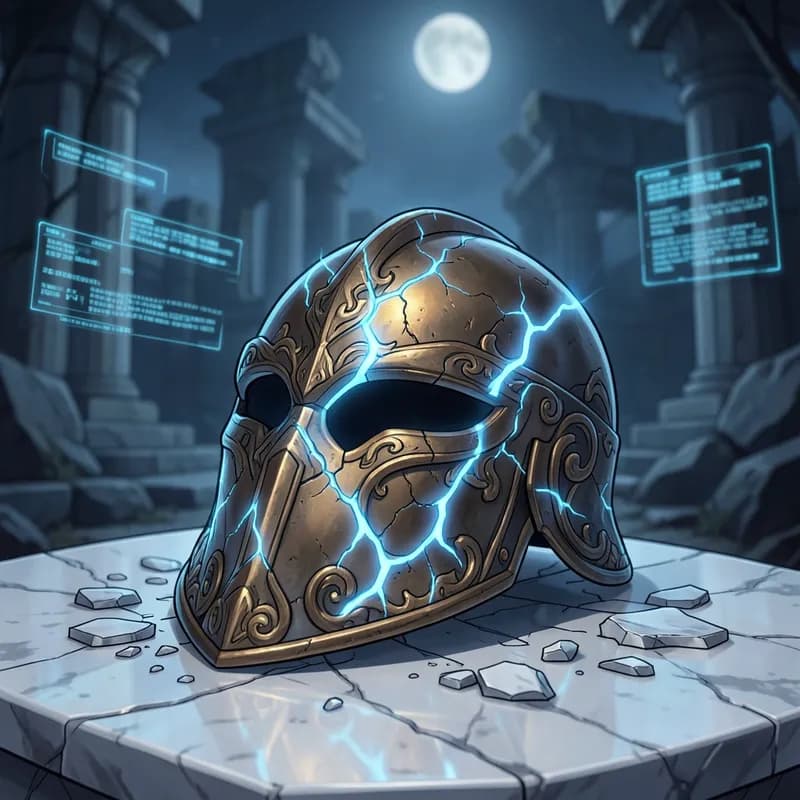
System Apocalypse · Interactive story
The Hero of the System: Perseus Reborn
The sky turns to code, the monsters awaken, and your divine gear is your only lifeline.
Start as a guest. Choose your character before the story begins.
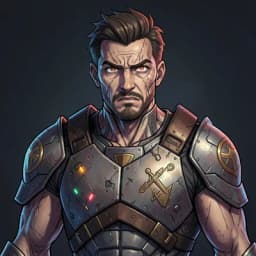
Meet the sample character
The gods have abandoned the server, but their weapons still have one patch left.
Try a scene · No signup
The Gorgon Protocol
A short sample of this world. Your own version starts with your character.
You stand amidst the shattered columns of the Parthenon. A translucent blue system window hovers in your peripheral vision, blinking with a persistent error: [CONNECTION UNSTABLE]. You adjust the strap of the mirrored shield on your left forearm. It weighs heavy, glowing with a soft, pulsing light that mocks the surrounding decay.

“The status bar says the Gorgon spawns in exactly sixty seconds, Nikander. If you don't move now, the whole sector resets and we lose the quest credit.”

Static crawls across the base of the pillars like invasive ivy. You glance at your inventory sub-menu: Winged Sandals at 14% durability and the Helm of Invisibility entering a ten-minute cooldown. The Gorgon’s shadow stretches across the stone—a jagged, polygon-glitched mass of corrupted data. She is coming, and your equipment is failing.
“If her hit-box is glitching this hard, I am not wasting my stamina on a direct strike. I am going to force a server disconnect.”
The Gorgon lets out a screech that sounds like a corrupted audio file, turning the marble floor into pixelated dust where her gaze passes. You have one window of opportunity to trigger your divine equipment before the System stabilizes the boss's attack pattern. If you miscalculate the timing, you won't just die; your character data will be wiped permanently.
The Gorgon is tearing through the environment geometry, closing the distance—what is your play?
Your character. Your next move.
Claim your divine gear and survive the system.
The notification is already blinking on your screen. The Gorgon waits in the ruins of the city, and your winged sandals are cooling down. Will you fight, or will you let the system overwrite your story? Pick up your shield and define your own path.
Start your quest nowYour Story, Your Way
Everything is customizable. Pick any genre, setting, or character — the AI builds a world around exactly what you want.
Any Character
Design your appearance, personality, backstory — every detail
Any World
Fantasy kingdoms, sci-fi stations, modern cities — you choose
Branching Paths
No two playthroughs are the same. Your choices reshape everything
Full Immersion
AI images, voice acting, sound effects — a living story
Manage limited charges on divine artifacts to survive high-level monster ambushes in urban ruins.
Choose when to reveal your legendary status to NPCs to gain tactical advantages or allies.
Navigate complex quest trees where every decision impacts your character stats and survival rating.
Balance your stealth stats using the helm of invisibility against high-aggro boss mechanics.
The air hums with static as the blue light of a status window manifests before your eyes. You are not just a survivor in this crumbling city; you are Perseus, the one chosen by the system to tip the scales. A notification pings in your peripheral vision: *Quest Received: The Gorgon’s Lair.* Your hands tremble, gripping the cold, metallic hilt of an artifact that feels like it belongs to another age. Around you, the ruins of the subway station shift into a dungeon floor, the concrete walls bleeding shadows. Every decision you make—whether to conserve your limited stamina or risk an aggressive strike—alters the path ahead. This is a world where ancient legends collide with modern game mechanics, and your survival rests on how you manage the divine equipment granted to you. Will you master the system, or will your legend end before the first boss falls?
What is Perseus in System Apocalypse?
Perseus is the quintessential hero of Greek mythology, known for his cunning and his reliance on divine artifacts rather than raw, unchecked power. In the context of a system apocalypse, he represents the 'Equipped Hero' archetype. Unlike characters who rely on innate strength, Perseus succeeds because he knows how to utilize his tools—the winged sandals of Hermes, the reflective shield of Athena, and the helm of Hades. In pop culture, his journey has been reimagined countless times, from the stop-motion wonder of the 1981 film *Clash of the Titans* to his role as a recurring figure in the roguelike game *Hades*. When he is dropped into a system apocalypse, his classic quest structure translates perfectly into a modern RPG framework. The monsters he faces are no longer just mythological beasts; they are level-gated encounters, and his legendary gear now functions as high-tier loot. He is the bridge between the hero of old and the optimized player of today, proving that even in a world governed by algorithms and health bars, strategy remains the ultimate weapon.
Why play Perseus as an interactive story?
Playing as Perseus forces you to balance the weight of ancient expectations against the cold, hard logic of a system apocalypse. You are not just fighting; you are managing a HUD that tracks your divine items as if they were rare gear drops. When you face a boss, the game asks you to choose: do you rely on the invisibility provided by the Helm of Hades to bypass the encounter, or do you risk a direct engagement using the mirrored shield to reflect high-damage attacks? The tension comes from the scarcity of resources. You only have so much mana to power your artifacts, and every choice ripples through the system, potentially altering the difficulty of future encounters. You are forced to think like a gamer while acting like a legend. You must decide which quest chains to prioritize and which alliances to forge, knowing that the system keeps track of every failure and victory. Your agency is the difference between becoming a local legend or just another line of code deleted by a higher-level mob.
The literary legacy of Perseus
Perseus first appeared in the foundational texts of Greek mythology, notably in the works of Apollodorus and Ovid’s *Metamorphoses*. His narrative arc is arguably the first true 'quest log' in literature: he is tasked with an impossible mission, acquires the necessary tools, overcomes a series of escalating obstacles, and eventually returns home as a changed man. This structure is the blueprint for the modern hero's journey and, by extension, the modern RPG. Across centuries, his story has been adapted into everything from Renaissance paintings to the modern *Percy Jackson* series, which brings his lineage into the contemporary world. What makes Perseus enduring is his vulnerability. He is not a god; he is a man who needed help. In a system apocalypse, this translates into a character who is constantly upgrading, learning, and adapting. He is the ultimate protagonist for a game-based story because his entire mythos is built on 'getting the right item for the right job.' By placing him in a setting where the world itself has become a game, we honor the core of his legend: a man who, when given the tools to win, never hesitates to use them.
FAQ
How does the system apocalypse setting change the Perseus myth?
In this version, the mythic elements are integrated into a game UI. The Gorgon is a boss with specific hit-points, and the winged sandals are treated as legendary-tier equipment with cooldown timers. It turns the classic quest into a strategic survival game.
Can I choose which divine items to use?
Yes. Your inventory management is critical. You must decide which artifact to equip based on the specific threats you encounter, and each item has unique properties that affect how you interact with the environment.
Is this a standard retelling of the Greek myth?
No. While the character and his artifacts are drawn from mythology, the plot is an original system apocalypse story. You are living through the collapse of society as it transforms into a game, not just retelling an old story.
Does my choice of gear affect the ending?
Absolutely. The gear you prioritize and the way you use it impacts your character progression and the alliances you form. Certain endings are only accessible if you have mastered specific artifacts throughout your journey.
Explore more System Apocalypse stories like System Activation Day, First Monster Wave, Class Selection.
More System Apocalypse Stories
System Activation Day
You watch a translucent blue window materialize in front of your eyes and the world as you knew it ends. The System has arrived, granting humanity stats, classes, and levels while simultaneously unleashing monsters across the globe, and the old rules of civilization are gone in an instant.
TropeFirst Monster Wave
You hear the screaming before you see them — creatures that should not exist, pouring through rifts in reality and tearing through a world that has no idea how to fight back. The first monster wave is pure chaos, and survival depends on how quickly you adapt to a reality where ordinary people must become warriors.
TropeClass Selection
You stand before a screen listing classes you can become — warrior, mage, healer, assassin, and stranger options that defy categorization. This choice will define your power, your role, and your survival odds, and the System does not allow do-overs.
TropeTutorial Dungeon
You are teleported into a contained space designed to teach you the System's rules through a series of escalating challenges. The tutorial dungeon is supposed to be survivable, but the mortality rate is horrifying, and the lessons are taught through blood.
TropeTower Appearance
You watch a massive tower materialize in the center of the city, its peak vanishing into clouds that were not there a moment ago. The tower is a challenge, a reward system, and a mystery all at once, and the floors above hold power that could save or doom what remains of humanity.
TropeGuild Founding
You bring together survivors with complementary classes and a shared determination to do more than just survive. Founding a guild means organizing humanity's fightback, but it also means navigating egos, resource conflicts, and the question of whether you are building a team or a government.