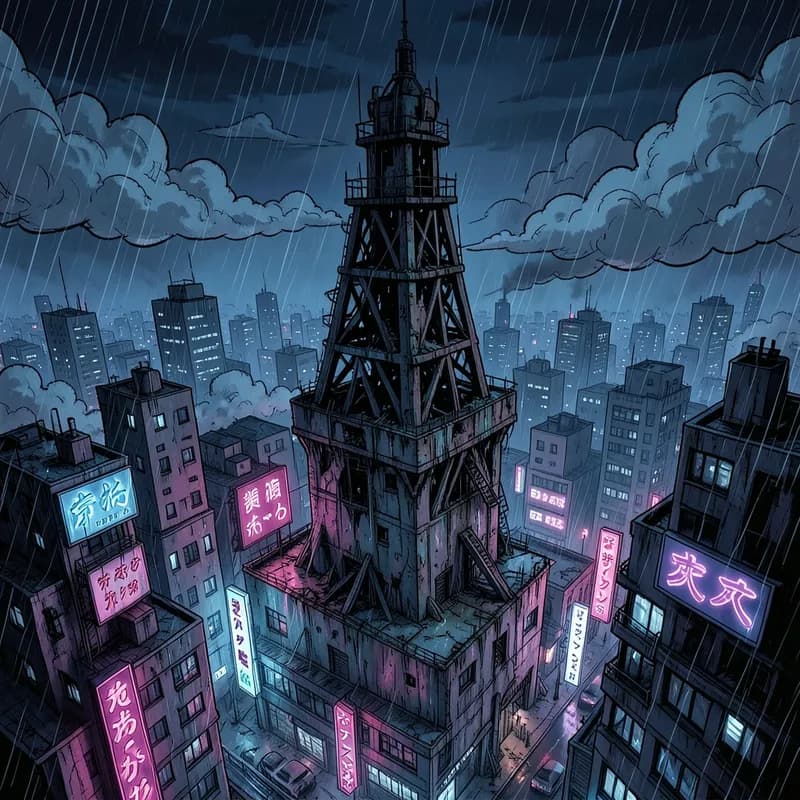
Superhero · Interactive story
Architect of Justice: The Tech Genius
When your only superpower is an overclocked processor and a soldering iron, survival is calculated.
Start as a guest. Choose your character before the story begins.
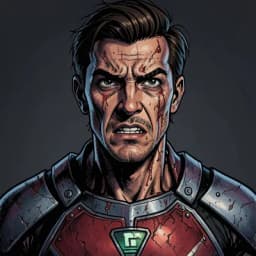
Meet the sample character
Try a scene · No signup
Protocol Zero: The Chromium Collapse
A short sample of this world. Your own version starts with your character.
You kneel on the vibrating steel catwalk, the cooling fans of your exo-suit screaming in protest. Below, the neon glow of the lower city streaks like blurred blood. Your HUD flickers, dumping red error logs into your vision: Core Stability 14%. The prototype armor is heavier than your own skin now, and the hydraulic fluid weeping from your left elbow joint is starting to smoke.
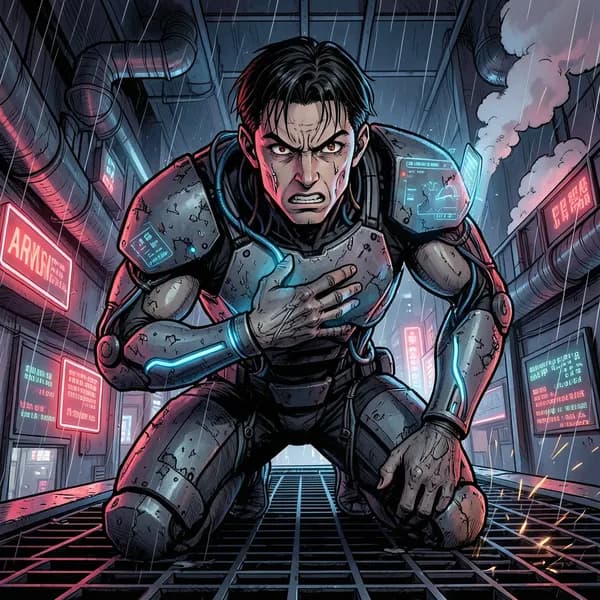
“You built a cage, not an armor, boy. And now you are going to suffocate inside it.”
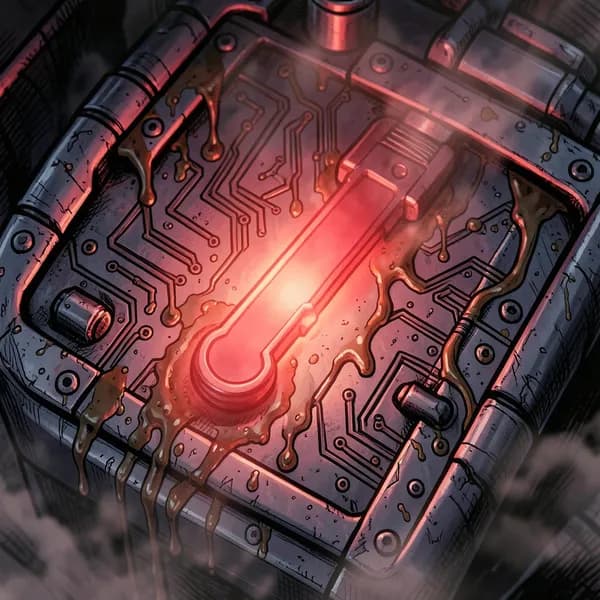
The magnetic clamps on your gauntlets release with a sharp whine, letting your sidearm clatter to the grating. Your fingers tremble inside the haptic interface. If you push the output further, the battery might stabilize, or it might detonate, taking the entire bridge down with you. The mercenary is closing the distance, his pulse-blade humming with lethal intent.
“If I go down, the city's network will broadcast your face to every terminal in this sector.”
Your neural link spikes with white-hot pain as you reroute the suit's remaining power to the sensory array. The bridge shudders under the impact of the mercenary's heavy boots. You have one second before he strikes. The override key is glowing crimson, but the radiation alarm is blaring in your skull. Do you sacrifice the suit's integrity to finish this, or do you gamble on a desperate escape?
The pulse-blade is descending. What is your final command to the suit?
Your character. Your next move.
The city is falling. Will you build the solution?
The blueprints are on your desk, and the servers are waiting for your command. Every line of code you write and every bolt you tighten will decide the fate of Neo-Veridia. Don't just watch the disaster—engineer the outcome.
Begin your inventionYour Story, Your Way
Everything is customizable. Pick any genre, setting, or character — the AI builds a world around exactly what you want.
Any Character
Design your appearance, personality, backstory — every detail
Any World
Fantasy kingdoms, sci-fi stations, modern cities — you choose
Branching Paths
No two playthroughs are the same. Your choices reshape everything
Full Immersion
AI images, voice acting, sound effects — a living story
Debug complex security systems while under fire from incoming projectiles.
Allocate limited power cells between life-support systems and offensive weaponry.
Choose between open-source innovation or proprietary control of your inventions.
Repair critical hardware mid-battle to prevent a total system failure.
The smell of ozone and burnt soldering flux clings to your clothes. Outside the laboratory window, the skyline of Neo-Veridia flickers as emergency sirens wail, a dissonant chorus signaling another failure of the city's infrastructure. You adjust the haptic feedback gloves on your hands, staring at the prototype drone hovering silently above your workbench. You are not a god among men; you are the one who builds the tools they use to play pretend. Every decision you make—from the encryption protocols on your firewall to the caliber of the kinetic rounds in your suit—determines whether you remain a ghost in the machine or the architect of a new order. Your intellect is the only line of defense against a city collapsing under the weight of its own corruption. You must decide if your inventions will serve the public good or if the temptation to reshape the world in your image is too great to ignore.
What is The Tech Genius in Superhero?
The Tech Genius archetype operates on the premise that raw intelligence, resources, and engineering prowess are more potent than any genetic mutation or radioactive accident. Unlike heroes who rely on innate biological gifts, the Tech Genius must constantly innovate, maintaining a precarious balance between their civilian life and their high-tech arsenal. A prime example is Tony Stark in the Marvel Cinematic Universe, whose evolution from a merchant of death to a self-sacrificing protector illustrates the core tension of this archetype: the responsibility that comes with absolute control over one's creations. Similarly, Bruce Wayne utilizes his vast wealth and engineering acumen to bridge the gap between mortal limitations and superhuman threats. This archetype is defined by the laboratory. It is a place of solitude, trial, and error, where the character’s worth is measured by the efficacy of their latest hack or hardware upgrade. They are observers who calculate probabilities, often seeing the world as a series of systems waiting to be optimized or disrupted. Whether they are building power armor in a cave or debugging a city-wide surveillance network, their existence is tethered to the belief that with enough processing power, any problem can be solved.
Why play The Tech Genius as an interactive story?
Playing as the Tech Genius forces you to prioritize. You cannot develop every defensive layer or offensive upgrade simultaneously; you must choose where your limited resources go. If you focus on energy shielding, you might be invulnerable to kinetic damage but remain sluggish during high-speed chases. If you optimize your hacking software, you can dismantle enemy drones from a block away, but you leave your own physical person exposed to direct confrontation. The tension lies in the consequences of your design choices. If you build a weapon that is too effective, do you lose your moral compass? If you keep your breakthroughs secret to protect your loved ones, do you inadvertently create a power vacuum that a villain will fill? You will encounter moments where you must decide whether to release your designs to the public, potentially saving lives, or bury them to prevent them from falling into the wrong hands. Your legacy is not defined by who you punch, but by what you leave behind in the world’s servers and streets.
The psychology of The Tech Genius: why readers fall for this character
The appeal of the Tech Genius lies in the fantasy of mastery. Unlike characters who are born with powers they struggle to control, the Tech Genius earns their capability through discipline and iterative failure. They represent the ultimate triumph of human ingenuity over chaos. Readers are drawn to this archetype because it feels achievable; it suggests that if one were smart enough, they could fix the broken systems of the world. Consider Forge from the X-Men comics, whose ability to intuitively understand machines makes him a fascinating study in obsession. He is often tormented by the knowledge that he can build anything, yet he is frequently paralyzed by the potential for catastrophe. This highlights a central fear of the archetype: that their inventions will eventually outpace their own morality. Then there is the contrast found in Ted Kord, the Blue Beetle, who lacks traditional powers but refuses to give up the fight. His struggle is defined by the constant need to prove that human effort is enough to stand alongside meta-humans. The Tech Genius embodies the tension between the desire to play god and the fear of being a monster. They are the only archetype that can witness their own sins in the form of a blueprint. This makes them deeply relatable, as they constantly grapple with the same questions we face in the real world: how much control should we have over our tools, and what happens when those tools finally stop listening to us?
FAQ
Can I play as a Tech Genius who focuses on defense rather than weapons?
Yes. You can prioritize structural integrity, medical automation, and crowd-control gadgets. Your path will emphasize survival and containment over direct combat.
Does my choice of background affect my inventions?
Absolutely. A background in corporate industrial design grants you more funding but stricter oversight, while a DIY garage-hacker background offers more creative freedom but limited components.
What happens if I fail to upgrade my gear in time?
Your gear will show wear and tear, leading to malfunctions during critical story moments. You may need to improvise with limited tools to survive an encounter.
Is this archetype suitable for someone who prefers puzzle-solving over action?
This archetype is perfect for that style. Many sequences involve bypassing security firewalls, identifying structural weaknesses in enemy bases, and optimizing energy flow.
Explore more Superhero stories like Origin Story, Secret Identity Crisis, Sidekick Rising.
More Superhero Stories
Origin Story
The accident, the experiment, the cosmic event that changes everything — your origin story begins now. Make the choices that define what kind of hero you become when extraordinary power lands in ordinary hands.
TropeSecret Identity Crisis
The mask protects the people you love, but it is destroying the life you live. Juggle a double existence where every close call threatens to expose who you really are beneath the costume.
TropeSidekick Rising
You have been the sidekick long enough. When your mentor falls, the city turns to you — the one everyone underestimated. Prove that the student has surpassed the teacher in this rise-to-greatness superhero story.
TropeVillain Redemption Arc
You were the villain, but a crisis forces you to fight alongside the heroes you once terrorized. Earn redemption through impossible choices where every good deed is met with suspicion and your dark past keeps pulling you back.
TropeTeam Assembly
A threat too massive for any single hero requires assembling a team of extraordinary individuals who can barely stand each other. Recruit, negotiate, and unite a dysfunctional squad before the world ends.
TropePower Loss
Your powers vanish at the worst possible moment, leaving you terrifyingly human in a world that still needs saving. Discover what kind of hero you are when the superpowers are stripped away and all you have left is your will.