
Superhero · Interactive story
Command from the Void: The Orbital HQ
One button press separates a hero from a global catastrophe.
Start as a guest. Choose your character before the story begins.
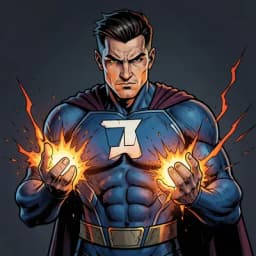
Meet the sample character
Oxygen is finite, but treason is infinite.
Try a scene · No signup
The Void Between
A short sample of this world. Your own version starts with your character.
The alarm is a low, rhythmic thrum in the soles of your boots. Outside the observation deck, the blue-white curve of Earth looks fragile, indifferent to the oxygen levels plummeting inside Aethelgard Station. You can taste the metallic tang of recycled air turning stale as the atmospheric scrubbers stutter and die.

“Don't just stare at the horizon, Vane. Seal the bulkhead before we are all vented into the vacuum.”

Your fingers hover over the manual override. The station schematics map a frantic red pulse toward the reactor core. If you seal the bulkhead, you trap the intruder—and potentially the crew member currently stuck in the maintenance shaft. Every second you hesitate, the air grows thinner, and the hum of the station grows more jagged.
“If I lock this, Halloway, whoever is in the shaft loses their air supply. There has to be another way to stop them.”
The station groans, metal shrieking as gravity-stabilizers buckle. A notification flashes on your wrist-link: the intruder has already bypassed the secondary firewalls and is inches away from the life support kill-switch. You have three seconds before the air becomes unbreathable, and your hands are already beginning to glow with kinetic heat.
The intruder is seconds away from cutting off the station's remaining oxygen. How do you stop them?
Your character. Your next move.
Command the orbit. Save or rule the world.
The station is drifting, and the Earth below is counting on your next move. Will you initiate the shield protocol, or let the systems fail to test your team's resolve? Take control of the satellite array and define your legacy from the edge of space.
Start Your Orbital CommandYour Story, Your Way
Everything is customizable. Pick any genre, setting, or character — the AI builds a world around exactly what you want.
Any Character
Design your appearance, personality, backstory — every detail
Any World
Fantasy kingdoms, sci-fi stations, modern cities — you choose
Branching Paths
No two playthroughs are the same. Your choices reshape everything
Full Immersion
AI images, voice acting, sound effects — a living story
Allocate limited satellite energy to prioritize which city receives shield coverage during meteor strikes.
Interrogate a captured villain while the station is being pulled toward the Earth's atmosphere.
Decide whether to reveal classified mission details to your team or maintain absolute operational secrecy.
Repair critical hull breaches while managing the psychological strain of total isolation.
The hum of the air recyclers is the only thing keeping you sane. Through the reinforced observation glass, the blue marble of Earth looks fragile, a marble held by a child. You are miles above the atmosphere, tracking heat signatures and kinetic energy spikes while your team sleeps. A flicker on the monitor catches your eye—a rogue satellite falling, or perhaps something more intentional. You have seconds to decide whether to trigger the orbital defense grid or wake the rest of the crew. In this interactive story, the silence of the vacuum is your greatest enemy, and every decision you record echoes across the surface below. Your choices define whether this station remains a beacon of hope or becomes a falling tomb.
What is Space Station HQ in Superhero?
An orbital headquarters acts as a strategic hub, providing a vantage point that no terrestrial base can match. It is the ultimate expression of the watchtower trope, where power is measured by how much of the world you can see at once. Think of the Justice League’s Watchtower from DC Comics or the high-tech sanctuary in the Mass Effect series where commanders coordinate the defense of entire sectors. These stations allow heroes to monitor global catastrophes in real-time, but they come at a heavy cost. The isolation of space creates a psychological pressure cooker. When you are trapped in a metallic tube with three other people and the nearest help is thousands of miles away, trust becomes a luxury you cannot afford. Whether it is a secret base built by a billionaire or a government-funded monitor station, the space station HQ forces heroes to act as gods looking down, often forgetting the humanity they are meant to protect.
Why play Space Station HQ as an interactive story?
Playing from a space station changes the nature of every crisis. You are not just punching a villain in an alleyway; you are deciding which city to save when two disasters happen simultaneously. You deal with the mechanical failure of the station itself while trying to negotiate a ceasefire between super-powered factions. The tension comes from the disconnect between your god-like perspective and your physical vulnerability. If the life support fails, your powers might not save you from oxygen deprivation. You will face dilemmas like choosing between the mission and a crewmate’s life when a containment breach occurs, forcing you to prioritize your own survival against the mandate of the hero.
What makes Space Station HQ work: the worldbuilding
The space station setting thrives on the contrast between high-tech surveillance and claustrophobic terror. Works like The Expanse capture the fragility of life in space—the way a single hull breach changes everything. In the superhero genre, this setting forces a shift from physical combat to resource management and moral triage. The most effective stories here use the god's-eye view to highlight the cold reality of power. If you can see everything, you are responsible for everything. This creates a specific brand of burnout. Characters like those in Moonfall or the classic bridge crews of Star Trek deal with the weight of command, but add superpowers, and you get the internal conflict of someone who could fix the problem with their hands but is stuck behind a console. The sensory details are key: the persistent vibration of the engine, the blinking red lights of a system alert, and the terrifying silence of space. The best stories in this setting treat the station itself as a character—one that can turn on its occupants at any moment. Your role as commander is to stay ahead of the technical, personal, and cosmic failures that threaten your mission.
FAQ
What is the main challenge of playing a hero on a space station?
The primary challenge is isolation. Unlike heroes on the ground, you are cut off from immediate reinforcements and must manage the station's life support systems alongside your hero duties.
How does the perspective change the gameplay?
It shifts the focus from physical combat to strategic triage. You act as a commander, choosing which crises to address and how to deploy limited resources to save the most lives.
Can I play as a villain in this setting?
Yes. You can use the station's orbital weaponry to enforce your own agenda from above, choosing to rule the planet rather than protect it.
Does the station have its own defenses?
Yes, players must manage automated defense turrets and orbital shields, which are often the only line of defense against incoming orbital threats.
Explore more Superhero stories like Origin Story, Secret Identity Crisis, Sidekick Rising.
More Superhero Stories
Origin Story
The accident, the experiment, the cosmic event that changes everything — your origin story begins now. Make the choices that define what kind of hero you become when extraordinary power lands in ordinary hands.
TropeSecret Identity Crisis
The mask protects the people you love, but it is destroying the life you live. Juggle a double existence where every close call threatens to expose who you really are beneath the costume.
TropeSidekick Rising
You have been the sidekick long enough. When your mentor falls, the city turns to you — the one everyone underestimated. Prove that the student has surpassed the teacher in this rise-to-greatness superhero story.
TropeVillain Redemption Arc
You were the villain, but a crisis forces you to fight alongside the heroes you once terrorized. Earn redemption through impossible choices where every good deed is met with suspicion and your dark past keeps pulling you back.
TropeTeam Assembly
A threat too massive for any single hero requires assembling a team of extraordinary individuals who can barely stand each other. Recruit, negotiate, and unite a dysfunctional squad before the world ends.
TropePower Loss
Your powers vanish at the worst possible moment, leaving you terrifyingly human in a world that still needs saving. Discover what kind of hero you are when the superpowers are stripped away and all you have left is your will.