
Superhero · Interactive story
Hang Up the Cape or Fight One Last Time
The world moved on, but the threat you fought still remembers your name.
Start as a guest. Choose your character before the story begins.
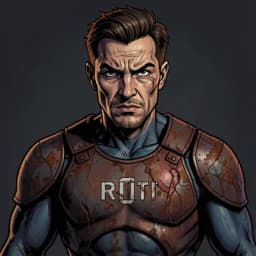
Meet the sample character
Sometimes the silence is louder than the blast.
Try a scene · No signup
The Last Frequency
A short sample of this world. Your own version starts with your character.
You stare at the grease stains on your workbench, the rhythm of rain against the corrugated metal roof serving as your only company. It has been a decade since you walked away from the armor. Then, the police scanner crackles. A specific, high-pitched whine cuts through the static—the signature hum of a grav-core weapon. You haven't heard that sound since the Spire collapsed.

“I can handle this myself! I am the one they chose, not some relic who abandoned the city when things got difficult!”

The boy is shaking, his stolen gauntlet glowing with an unstable violet hue. He has no idea that the resonance frequency he has set will level three city blocks, not just disable the vault. The air tastes like copper and impending disaster. You look down at your calloused hands; the cybernetic port under your skin burns, aching to sync with the network just one more time.
“Kid, you are holding a tombstone, not a weapon. Put it down before you turn this entire neighborhood into a crater.”
Leo hesitates, his eyes wide and unfocused, but his finger tightens on the trigger. He thinks he is a savior, unaware he is seconds away from a catastrophe. Sirens wail in the distance, a cacophony of approaching authority. You must move now, or watch the horizon ignite.
The gauntlet is humming louder, the metal warping under the pressure. How do you intervene?
Your character. Your next move.
The city is burning, and your uniform is waiting.
The world has changed, but the threat hasn't. Will you answer the call one last time, or watch from the sidelines as everything you built is torn down? Your choices define the end of your story.
Return to the FightYour Story, Your Way
Everything is customizable. Pick any genre, setting, or character — the AI builds a world around exactly what you want.
Any Character
Design your appearance, personality, backstory — every detail
Any World
Fantasy kingdoms, sci-fi stations, modern cities — you choose
Branching Paths
No two playthroughs are the same. Your choices reshape everything
Full Immersion
AI images, voice acting, sound effects — a living story
Decide whether to mentor a reckless successor or reclaim your mantle by force.
Manage your physical stamina and dwindling power reserves during high-stakes combat encounters.
Influence public opinion through strategic media appearances or remain a shadow in the night.
Confront former allies who now view your return as a threat to current stability.
The suit sat in a cedar chest for fifteen years, smelling of mothballs and ozone. You traded the weight of a city’s safety for the silence of a suburban cul-de-sac. Then the news broke—a flicker of blue energy in the skyline, a signature you haven't seen since the final collapse of the Citadel. The phone on your nightstand vibrates, a burner device you swore never to touch again. You are a retired hero in a choose your own adventure where your past decisions dictate your current strength. Do you step back into the light, even if your joints ache and your powers feel like rusted gears? Every choice alters how the citizens perceive your return—as a savior, a relic, or a dangerous liability. You decide whether to reclaim your legacy or let the next generation face the fire alone.
What is Hero Retirement in Superhero?
The hero retirement trope captures the tension between the peace of domestic life and the inescapable duty of an extraordinary individual. It asks a fundamental question: does a hero ever truly retire, or do they simply wait for the world to need them again? In Frank Miller's The Dark Knight Returns, Bruce Wayne’s return to Gotham isn't a triumphant comeback but a brutal confrontation with his own obsolescence. The city has become a darker, more cynical place, and his presence acts as a lightning rod for chaos. This trope thrives on the contrast between the hero’s fading physical vitality and the relentless, evolving nature of the threats they once neutralized. It isn't just about fighting bad guys; it's about the internal cost of holding onto a mantle that has already been passed down or forgotten. Whether it's a retired vigilante forced to mentor an arrogant successor or a powerhouse returning to a world that fears their influence, the narrative hinges on the struggle to stay relevant. It is a study of legacy, mortality, and the burden of power that never truly fades.
Why play Hero Retirement as an interactive story?
Playing as a retired hero forces you to balance physical limitations against the muscle memory of a lifetime spent in combat. You aren't starting from scratch; you are managing a legacy. Your primary challenge is navigating a world that has replaced you with cheaper, more compliant alternatives. Do you crush the new generation of heroes, or do you guide them toward the truth about the current catastrophe? Your choices determine whether your return is welcomed with cheers or met with the suspicion of a government that prefers you stayed buried. You will decide if your old powers still function at full capacity or if you need to rely on the tactical expertise you gained over decades of service. The tension lies in the risk: every fight could be your last, and every public appearance is a gamble with your hard-won peace.
Famous examples of Hero Retirement in books, film, and games
The retirement trope serves as a lens to examine the shelf life of power. In the film Logan, James Howlett is a broken man, his healing factor failing, forced into a final, bloody mission to protect a legacy he wasn't sure he wanted. It contrasts sharply with the classic golden age heroics, showing the grim reality of a life spent in constant conflict. Contrast this with the anime Tiger & Bunny, where the aging Kotetsu Kaburagi struggles with his waning popularity and declining physical performance in a corporate-run superhero industry. He represents the old guard trying to find meaning when the world has commodified heroism. Similarly, in the game The Last of Us, though not traditional superheroes, the characters embody the 'retired warrior' archetype, forced to pick up arms when the safety they built is shattered by a threat they thought was long dead. These stories endure because they mirror the human experience of aging and the fear of being left behind. They force the character to justify their existence not through their past deeds, but through their present willingness to suffer for the right cause, proving that the fire of a hero never truly extinguishes.
FAQ
How does my past affect my current abilities?
Your history in the game determines your baseline power. Years of inactivity mean your reflexes are slower and your stamina is taxed, but you retain the tactical knowledge and experience that younger heroes lack.
Can I refuse to return to action?
You can attempt to stay retired, but the narrative will present events that force your hand, testing your resolve as the world you once protected begins to crumble around you.
Are there different ways to be a hero?
Yes, you can choose to be a mentor, a brutal enforcer, or a strategic leader who works behind the scenes. Your method changes how the public and other heroes treat you.
What happens if I fail a mission?
Failure carries permanent consequences, including public loss of faith, physical injury, or the death of those you are trying to protect. Your failures are as permanent as your victories.
Explore more Superhero stories like Origin Story, Secret Identity Crisis, Sidekick Rising.
More Superhero Stories
Origin Story
The accident, the experiment, the cosmic event that changes everything — your origin story begins now. Make the choices that define what kind of hero you become when extraordinary power lands in ordinary hands.
TropeSecret Identity Crisis
The mask protects the people you love, but it is destroying the life you live. Juggle a double existence where every close call threatens to expose who you really are beneath the costume.
TropeSidekick Rising
You have been the sidekick long enough. When your mentor falls, the city turns to you — the one everyone underestimated. Prove that the student has surpassed the teacher in this rise-to-greatness superhero story.
TropeVillain Redemption Arc
You were the villain, but a crisis forces you to fight alongside the heroes you once terrorized. Earn redemption through impossible choices where every good deed is met with suspicion and your dark past keeps pulling you back.
TropeTeam Assembly
A threat too massive for any single hero requires assembling a team of extraordinary individuals who can barely stand each other. Recruit, negotiate, and unite a dysfunctional squad before the world ends.
TropePower Loss
Your powers vanish at the worst possible moment, leaving you terrifyingly human in a world that still needs saving. Discover what kind of hero you are when the superpowers are stripped away and all you have left is your will.