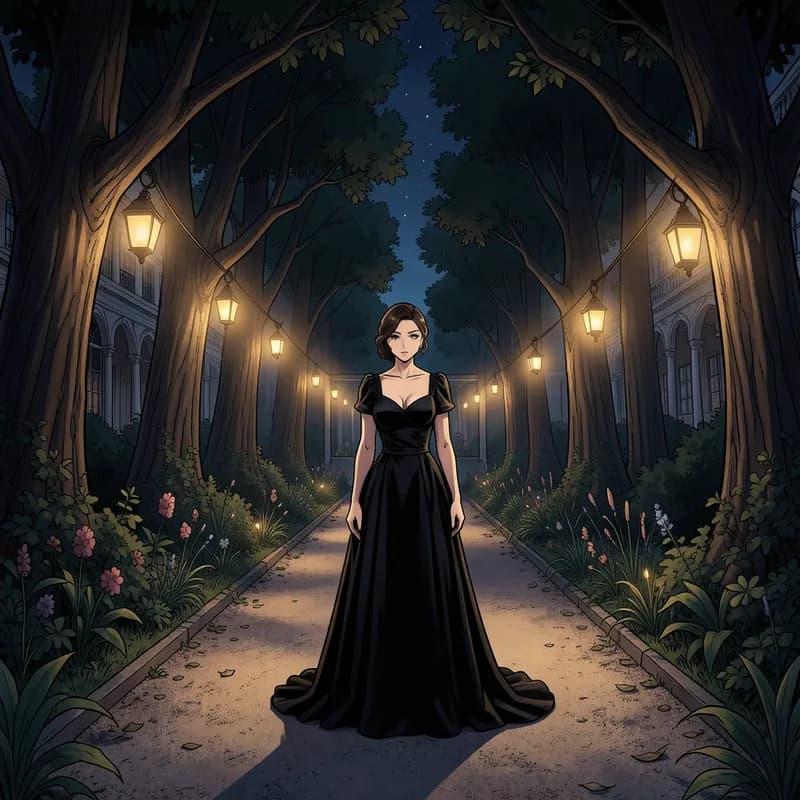
Regency Romance · Interactive story
The Widow: Fortune, Scandal, and the Rules of the Ton
Your husband is in the ground, and your freedom has just begun. What happens next?
Start as a guest. Choose your character before the story begins.

Meet the sample character
The price of independence is often paid in scandal.
Try a scene · No signup
A Widow's Retribution at Vauxhall
A short sample of this world. Your own version starts with your character.
You adjust your black gloves, the silk cool against your skin. The orchestra’s melody drifts from the rotunda, but the music cannot drown out the rustle of petticoats and the low hum of gossip following your arrival. You are a widow in your second season of independence, and every matron in the garden is counting the moments until your inevitable ruin.
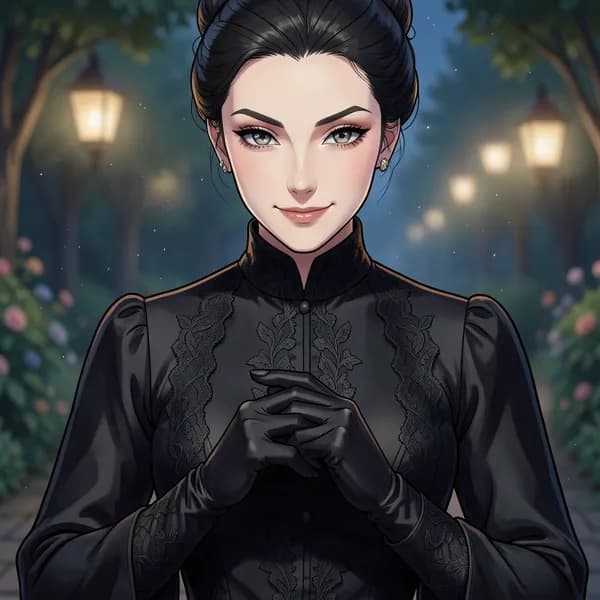
“Still seeking solace in the shadows, Beatrice, or are you merely waiting for someone bold enough to ask for a dance?”

The heat of his gaze is as stifling as the midsummer air. You remember the last time he spoke to you—the day you walked out of your late husband’s townhouse with nothing but your jewelry and a cold, hard resolve. His smirk suggests he knows exactly how precarious your current financial standing remains.
“I find the shadows far more honest than the ballroom, Julian. Should you wish to join me, I suggest you leave your arrogance at the gate.”
He steps closer, his hand hovering near the lace of your fan. If you turn away, he will spread the rumor that you are desperate for an invitation. If you accept his offer, you enter a dance with a man who knows your secrets better than your own solicitor. The choice is yours.
Your reputation hangs by a thread, and Julian holds the shears. How do you silence his leverage?
Your character. Your next move.
Will you remarry, or will you rule?
The Ton is watching, and your next move could cement your legacy or end your social standing forever. Step into the shoes of a woman with nothing left to lose and everything to gain. Choose your path, manage your fortune, and decide who earns your hand—if anyone at all.
Begin Your Regency StoryYour Story, Your Way
Everything is customizable. Pick any genre, setting, or character — the AI builds a world around exactly what you want.
Any Character
Design your appearance, personality, backstory — every detail
Any World
Fantasy kingdoms, sci-fi stations, modern cities — you choose
Branching Paths
No two playthroughs are the same. Your choices reshape everything
Full Immersion
AI images, voice acting, sound effects — a living story
Reject a titled suitor during a public ball, causing a stir among the elite.
Manage your late husband’s estate to secure your financial independence from his greedy heirs.
Host a secret salon where you gather intelligence on the most powerful men in London.
Choose to maintain your mourning period or cast off the veil to shock high society.
The scent of lilies lingers in the drawing room, a cloying reminder of the funeral just passed. You sit by the hearth, the heavy mourning veil resting beside your tea, feeling the first true breath of air you have drawn in years. Outside these walls, the Ton whispers. They expect you to retire to the country, to weep in solitude, or perhaps to marry a dull cousin to preserve the estate. They do not know that you have already memorized the ledgers and secured the deeds. In this interactive story, your reputation is a fragile currency, and every word spoken in the ballroom carries the weight of your future. Whether you choose to court a scandal to protect your secrets or play the part of the grieving ingénue to manipulate your enemies, the path forward is yours to command. The marriage market has never seen a player quite like you, and the dukes and marquesses are only beginning to realize that you are no longer a piece on their board.
What is The Widow in Regency Romance?
The Widow is one of the most compelling archetypes in historical fiction, representing the transition from property to power. In the rigid hierarchy of Regency England, women were often transferred from the protection of a father to that of a husband. The widow, however, occupies a singular space: she is a woman of means who has survived the system. She possesses the legal status to own property and the social experience to recognize a liar. Think of characters like Lady Danbury in 'Bridgerton' or the sharp-witted widows found in the works of Georgette Heyer; these women possess an autonomy that debutantes can only dream of. They have already learned the rules, which means they are uniquely qualified to break them. Unlike a young lady making her debut, a widow understands the cost of a bad marriage and the value of a well-placed secret. She is not waiting for her life to begin; she is actively curating it, using her position to influence the Ton, protect her friends, or pursue desires that society deems inappropriate for a woman in mourning.
Why play The Widow as an interactive story?
Playing as a widow grants you a level of agency rarely seen in historical romance. You are not a pawn waiting for a gentleman to offer you a dance; you are the one deciding which suitors are worth your time and which are merely distractions. The tension lies in the balance between your public face and your private ambitions. You will face moments where a single wrong word could lead to social ruin, yet the reward for a well-timed gamble is absolute freedom. You might find yourself locked in a battle of wits with a persistent suitor who believes your fortune is his for the taking, or perhaps you are orchestrating a match for a younger sibling while hiding an illicit affair of your own. Every choice you make—from the tone of your letters to the guests you invite to your salon—shifts the way the Ton perceives you. Do you leverage your wealth to gain entry into the most exclusive circles, or do you use it to quietly sabotage the men who once looked down on you? The narrative adapts to your temperament, whether you choose to be the icy, untouchable queen of the ballroom or the cunning puppet master of the season.
The psychology of The Widow: why readers fall for this character
The appeal of the widow archetype is rooted in the fantasy of liberation. Readers are drawn to this character because she represents the triumph of experience over innocence. While the debutante story is often about the anxiety of being chosen, the widow’s story is about the power of choosing. She embodies the desire to reclaim one's self after a period of limitation. This is why characters like the lead in the film 'The Duchess' or the complex widows in 'The Wicked Marquess' by Barbara Cartland resonate so deeply; they are women who have seen the dark side of the marriage market and have emerged with a clear-eyed understanding of their own worth. Psychologically, the widow allows for a more nuanced exploration of desire. She is not bound by the same performative modesty as a young girl, allowing for a slower, more intense burn in romantic subplots. She knows what she likes, and she knows how to demand it. This archetype also activates a specific kind of satisfaction: the 'competence' fantasy. Watching a woman navigate the treacherous waters of Regency politics—outmaneuvering a cruel mother-in-law, securing a favorable contract, or silencing a gossipmonger with a single arched brow—is profoundly satisfying. She is the master of her own narrative. By allowing the player to step into these shoes, the story becomes a reflection of the player's own agency. It is not just about finding love; it is about finding love on one's own terms, without sacrificing the freedom that was so hard-won. Whether she chooses a second marriage of equals or decides to remain a formidable, independent force, the widow reminds us that the most important relationship a woman can have is the one she maintains with her own autonomy.
FAQ
Can I choose to remain unmarried as a widow?
Absolutely. Your status as a widow provides the financial independence to reject any suitor you wish. You may choose to focus on your social influence, your estate, or other personal goals rather than seeking a second husband.
How does my reputation affect the story?
Your reputation acts as a dynamic score. High standing grants you access to exclusive events and influential allies, while a scandalous reputation might close doors but open up opportunities for secret, high-stakes interactions with unconventional characters.
Are there specific historical constraints I have to follow?
The story reflects the period's social pressures, such as mourning etiquette and property laws. However, how you interact with these constraints is entirely up to you. You can follow the rules to stay safe or exploit them to your advantage.
Is this game suitable for fans of slow-burn romance?
Yes. The widow archetype is tailor-made for slow-burning, mannered tension. Because you are already established in society, the romantic progression focuses on deepening connections, intellectual sparring, and the careful negotiation of intimacy.
Explore more Regency Romance stories like Society Debut, Arranged Marriage Regency, Dance Card Intrigue.
More Regency Romance Stories
Society Debut
Step into the glittering whirlwind of your first London Season, where every introduction could make or ruin you. Navigate the treacherous waters of high society as you decide which alliances to forge and which suitors to encourage.
TropeArranged Marriage Regency
Your family has promised your hand to a stranger of rank and fortune. Decide whether to submit gracefully, rebel scandalously, or slowly discover that your betrothed may be exactly what you never knew you wanted.
TropeDance Card Intrigue
Every name on your dance card is a calculated move in the ballroom's silent war of courtship. Choose your partners wisely, for a single waltz can spark a scandal or seal a match that changes your life forever.
TropeLove Letters
A secret correspondence ignites a passion too dangerous to speak aloud. Craft your replies carefully, because one intercepted letter could destroy your reputation or deliver you into the arms of your anonymous admirer.
TropeScandalous Reputation
Your name is on every gossip's lips and your reputation hangs by a thread. Decide whether to fight the rumors, embrace the infamy, or use the scandal as a weapon to seize what you truly desire.
TropeWallflower Transformation
Overlooked and underestimated, you've spent seasons blending into the wallpaper. This year everything changes — your choices determine whether you blossom into the season's most unexpected diamond.