Psychological Thriller · Interactive story
Where Every Secret Stays Buried
The neighbors are too friendly, and the morning coffee tastes like copper.
Start as a guest. Choose your character before the story begins.

Meet the sample character
Some secrets don't stay buried; they just change shape.
Try a scene · No signup
The White Picket Silence
A short sample of this world. Your own version starts with your character.
The diner smells of burnt coffee and industrial pine cleaner. Mrs. Gable slides your plate across the counter, her movements precise, almost rhythmic. She hasn't blinked in thirty seconds. Outside, the midday sun beats down on the pristine streets, but inside, the fluorescent lights flicker with an erratic, insect-like hum that vibrates against your teeth.

“Eat up, Jonas. You look like you haven't slept since the harvest festival, and we wouldn't want the neighbors whispering about your health, would we?”

You look at the plate. The eggs are perfectly circular, untouched by the grease of the skillet. You notice a small, dark stain on her apron that wasn't there when you walked in. It matches the color of the ink your father used to label his files before he disappeared. Her eyes catch your gaze, wide and expectant.
“I appreciate the concern, Mrs. Gable, but I’m more interested in why you’re wearing my father’s ink on your apron.”
Her smile stiffens, turning into something brittle that might shatter at the slightest pressure. She leans closer, the smell of pine cleaner suddenly overwhelming, masking something metallic. She places a hand on yours, her grip cold, and leans into your ear. You have a choice: maintain the facade, or shatter the town's delicate stillness once and for all.
The silence in the diner is growing heavy, suffocating. How do you respond to Mrs. Gable's unspoken threat?
Your character. Your next move.
How long can you survive the silence?
The town council is meeting tonight, and they know you have been asking questions about the missing records. Do you attend the meeting and try to blend in, or do you sneak into the archives while everyone is distracted? The truth is waiting, but it might destroy you to find it. Choose your path now.
Start Your InvestigationYour Story, Your Way
Everything is customizable. Pick any genre, setting, or character — the AI builds a world around exactly what you want.
Any Character
Design your appearance, personality, backstory — every detail
Any World
Fantasy kingdoms, sci-fi stations, modern cities — you choose
Branching Paths
No two playthroughs are the same. Your choices reshape everything
Full Immersion
AI images, voice acting, sound effects — a living story
Analyze inconsistencies in witness testimony to catch neighbors in blatant, dangerous lies.
Manage your reputation within the town to gain access to restricted, private records.
Decide whether to trust your own senses or the contradictory accounts of your peers.
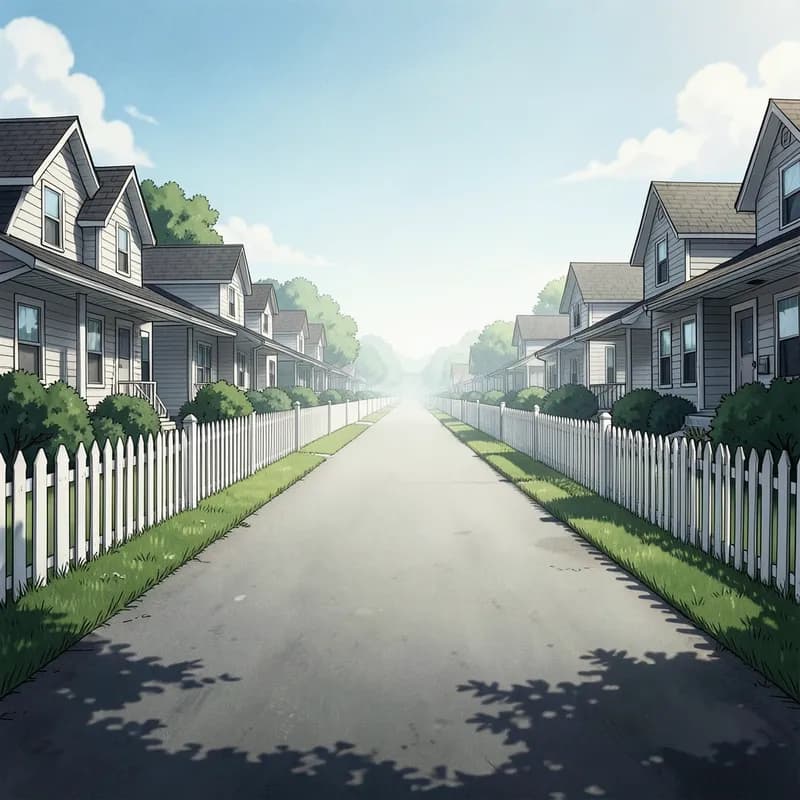
The white picket fences in Oakhaven are painted every spring. You moved here for the quiet, the lack of sirens, and the predictability of a town where the grocery store clerk knows your middle name. But the silence is heavy. Last night, you saw the sheriff burning a stack of polaroids in his backyard at 3:00 AM. When you asked him about it over the morning paper, he did not blink or stammer—he simply handed you a cup of coffee that smelled faintly of almonds. In this interactive story, your perception is the only tool you have. Every conversation is a minefield, and every polite refusal is an invitation for someone to keep you quiet. You must decide who to trust, even when your own memory starts flickering like a dying bulb. Your choices dictate whether you expose the rot beneath the surface or become another quiet resident who never says a word.
What is Small Town Facade in Psychological Thriller?
Small Town Facade is a storytelling trope where the idyllic surface of a community masks deep-seated corruption or horror. Think of the suburban malaise in David Lynch’s Blue Velvet or the claustrophobic dread of Sharp Objects by Gillian Flynn. It works because the setting acts as a character itself—a smothering, watchful presence that demands conformity. In stories like these, the lack of anonymity is the primary antagonist. If you disappear, someone will notice, but they will likely just replace your name on the guest list for the annual Founders' Day BBQ. The horror is not found in a monster under the bed; it is found in the realization that the monster is the person who brings you a casserole every time you catch a cold. It is about the complicity of the crowd. When everyone is in on the secret, the outsider is the only one who can see the cracks in the paint. By utilizing this setting, narratives create a unique tension where the mundane becomes a source of extreme anxiety.
Why play Small Town Facade as an interactive story?
Playing this setting forces you to weigh the cost of curiosity against the comfort of safety. You are not just reading a plot; you are navigating a social landscape where one wrong word can mark you as a liability. You will face choices that test your intuition: Do you confront the neighbor who lied about their whereabouts, or do you play along to stay safe? Will you trust the frantic notes left on your doorstep, or are they planted to make you look unstable? The tension comes from the constant surveillance. Every interaction is a test of your ability to read subtext and detect deception. You might choose to infiltrate the local town council meeting or break into an abandoned farmhouse, but each action alerts the community to your presence. The story tracks your paranoia, and the town reacts accordingly. You are not just solving a mystery; you are fighting to keep your grip on reality while the town does its best to gaslight you into silence.
What makes Small Town Facade work: the worldbuilding
The effectiveness of a small town setting relies on the fishbowl effect. In Twin Peaks, the quirkiness of the characters initially masks the darkness, which makes the eventual reveal of the town's rot more jarring. The best stories of this type, like the game Night in the Woods or the classic film The Stepford Wives, utilize the physical limitations of the space. There is nowhere to run when the entire population knows your license plate number and your grocery habits. The sensory details are key: the smell of damp pine, the sound of a lawnmower at odd hours, the way the streetlights hum in the dark. These details establish a clinical, unsettling atmosphere. The conflict is always between the individual and the collective. The facade is a social contract, and by asking questions, you are breaking that contract. Characters should feel authentic—the overly helpful librarian, the stern town doctor, the teenager who knows too much. They do not need to be villains in a traditional sense; they just need to be fiercely protective of the status quo. The goal is to make the player feel like an alien in their own home, where the mundane becomes a source of extreme anxiety.
FAQ
What is the Small Town Facade trope?
It describes a setting where a quiet, picturesque community hides dark, often criminal secrets. The contrast between the surface normalcy and the underlying reality creates a sense of persistent dread.
How does the interactive element change the experience?
You are forced to make decisions that impact how the town treats you. Being too suspicious might make you a target, while being too passive might keep you in the dark.
Is this setting for me?
If you enjoy slow-burn mysteries, unreliable narrators, and the feeling of being watched, this genre is a perfect fit for your playstyle.
Can I be the villain?
Your choices define your path. You might find yourself protecting the town's secrets to survive, becoming just as complicit as the people you set out to investigate.
Explore more Psychological Thriller stories like Unreliable Narrator, Gaslighting, Missing Memory.
More Psychological Thriller Stories
Unreliable Narrator
Nothing you remember can be trusted. You must piece together reality from contradictory clues while questioning whether your own perceptions are the greatest lie of all.
TropeGaslighting
Someone close to you is rewriting your reality one small lie at a time. You must hold onto what you know is true while the ground shifts beneath your feet and everyone insists you are the problem.
TropeMissing Memory
Hours, days, maybe years are missing from your mind. You must reconstruct what happened during the gaps while discovering that some memories were erased for a very good reason.
TropeStalker
Someone is watching your every move and they know things about you that no stranger should. You must unmask your stalker before their obsession escalates from surveillance to something far worse.
TropeGone Girl Style Disappearance
Someone has vanished and all the evidence points to you. You must prove your innocence while unraveling the elaborate scheme behind a disappearance designed to destroy your life.
TropeLocked Room Psychological
You are trapped in a confined space with people you cannot trust. Paranoia builds with every passing hour as you realize someone in this room is not who they claim to be, and escape requires confronting the darkest truths.