
Monster Hunting · Interactive story
Shadowed Trails: The Art of Forest Monster Hunting
The scent of ozone and rot hangs heavy—the beast is nearby.
Start as a guest. Choose your character before the story begins.

Meet the sample character
The scent of copper cuts through the rot.
Try a scene · No signup
Blood and Bark
A short sample of this world. Your own version starts with your character.
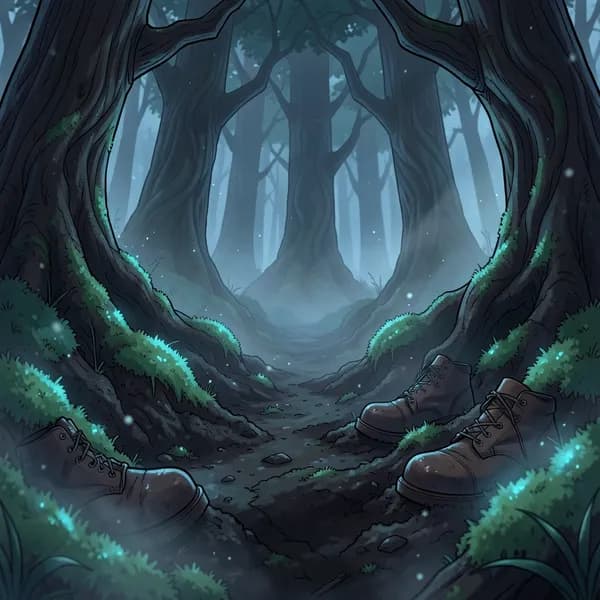
Your boots sink into the spongy, black loam of the Weald. The canopy above is so dense that even at midday, the forest floor remains trapped in a perpetual, suffocating dusk. You track the creature by the broken iron-bark branches and the faint, rhythmic thrumming vibrating through the soles of your feet.
“Keep your blade sheathed, scout. The thing hears heartbeats, not steel. If it catches your pulse, we are both dead before we draw breath.”

You stop, pressing your back against a gnarled trunk. You check your wrist-mounted tracking pins, watching the needle twitch violently. The creature is close, shifting through the shadows with a predatory grace that defies the weight of its size.
“My heartbeat is steady enough, Varka. But your hands are shaking, and that tremor is going to draw it right to us.”
A sickening crack of splintering wood echoes from the dark ahead. A massive shape shifts in the periphery, blocking your only path back to the trail. You have seconds before it spots your heat signature, and the heavy, wet sound of its breathing is suddenly right behind your ear.
The beast is shifting in the shadows behind you. How do you respond to the immediate threat?
Your character. Your next move.
The forest is waiting. Will you survive the night?
Your torch is flickering, and something is moving in the brush to your left. Do you drop your gear to make a run for the clearing, or do you stand your ground and wait for the beast to show its face? The choice is yours, and the woods are hungry.
Begin the huntYour Story, Your Way
Everything is customizable. Pick any genre, setting, or character — the AI builds a world around exactly what you want.
Any Character
Design your appearance, personality, backstory — every detail
Any World
Fantasy kingdoms, sci-fi stations, modern cities — you choose
Branching Paths
No two playthroughs are the same. Your choices reshape everything
Full Immersion
AI images, voice acting, sound effects — a living story
Choose how to mask your scent against the wind to remain undetected by predators.
Analyze blood patterns on tree bark to identify the specific creature’s current level of injury.
Decide whether to light a torch, gaining visibility while marking yourself as a target.
Navigate through dense thickets using only the faint sound of snapping branches to guide you.
The mud beneath your boots is still warm, pressed into the earth by a cloven hoof the size of a dinner plate. You adjust the tension on your crossbow, the string humming faintly against your damp leather glove. High above, the interlocking branches of the ancient pines choke out the moonlight, leaving you in a world of charcoal greys and pitch-black hollows. Somewhere in this suffocating thicket, a creature is watching you, counting your heartbeats. Every snap of a twig is a potential death sentence, and every decision you make—whether to pursue the trail or double back to the clearing—will determine if you return to the village or become another forgotten carcass in the undergrowth. You choose your path, and the forest responds.
What is Dark Forest Tracking in Monster Hunting?
Dark forest tracking is a subgenre of monster hunting that prioritizes environmental tension and the brutal reality of the chase. It is not about epic stand-up battles in open fields; it is about the agonizing silence between the snap of a branch and the first strike of a predator. Think of the methodical, dread-filled pursuit in The Ritual or the way the forest acts as a malevolent character in The Witcher 3: Wild Hunt. In these stories, the environment is just as lethal as the monster. Tracking requires a keen eye for disturbed moss, broken low-hanging limbs, or the sudden, unnatural stillness of birds. You are not just looking for footprints; you are reading the forest’s history of violence. It is a slow, rhythmic dance of preparation and observation where the hunter’s primary weapon is patience. If you rush, you lose the trail. If you hesitate too long, the predator circles behind you, turning the hunt into an ambush.
Why play Dark Forest Tracking as an interactive story?
Playing a tracking story puts the weight of preparation squarely on your shoulders. You are not just choosing to attack or flee; you are deciding whether to mask your scent with pine resin, risk a flare to illuminate the canopy, or set a trap and wait for the creature to walk into your crosshairs. The tension stems from the limited visibility; when you can only see ten feet in front of you, the sound of wind in the leaves becomes a terrifying variable. You might find a cluster of shredded fabric—is it a warning from a previous hunter, or a lure set by the beast? You must manage your gear, checking the tension of your bowstring or the sharpness of your silver-tipped blade while the darkness presses in. Your choices dictate your survival, forcing you to balance the need for speed against the necessity of stealth.
What makes Dark Forest Tracking work: the worldbuilding
The effectiveness of the dark forest setting relies on sensory deprivation. In works like Predator or the forest sequences of Bloodborne, the environment limits the protagonist's perspective, forcing them to rely on intuition and environmental cues. The forest is an equalizer; no matter how well-armed you are, the terrain dictates the engagement. A successful narrative here focuses on the micro-moments: the way the air changes temperature, the specific smell of musk that signals a kill, or the way the shadows seem to shift when you aren't looking. Conflict arises when the hunter's need for the kill clashes with the instinct to survive. Do you chase the wounded beast into a cave, knowing it is a trap, or do you let it go to ensure your own return? The best protagonists here are meticulous, often obsessive, treating the hunt as a scientific endeavor. They carry journals, sample soil, and analyze claw marks. The forest is not just a place to fight; it is a puzzle that requires constant, high-stakes analysis. By grounding the story in the physical reality of the woods, the threat of the supernatural monster feels significantly more tangible and terrifying.
FAQ
How does tracking work in this game?
You interact with environmental prompts—examining tracks, listening for audio cues, and managing your equipment. Each choice affects your stealth rating and the likelihood of a surprise attack.
Is this game purely about combat?
No, the focus is on the hunt. Much of the experience involves investigation, preparation, and the psychological weight of being watched in the dark.
What happens if I get lost?
Getting lost changes the narrative trajectory. You may find yourself forced into a desperate survival scenario with limited resources, forcing you to adapt your strategy on the fly.
Can I hunt different types of monsters?
Yes, the forest holds various creatures, each with distinct behaviors—some are ambush predators, while others are territorial brutes that require different tracking techniques.
Explore more Monster Hunting stories like Bounty on the Beast, Monster Tracker, Silver Bullet Hunt.
More Monster Hunting Stories
Bounty on the Beast
A price has been placed on the head of something that should not exist, and you are the one collecting. You study the creature's habits, prepare your weapons, and ride into territory where the locals have already given up hope and barricaded their doors.
TropeMonster Tracker
You follow claw marks in tree bark, tufts of fur on barbed wire, and prints that no known animal could leave. Tracking this creature is equal parts science and instinct, and the closer you get, the more you realize it may be tracking you in return.
TropeSilver Bullet Hunt
Conventional weapons are useless against this creature and you need something specific to kill it. You scour old texts, consult alchemists, and forge the one weapon that can end the monster, all while it continues to hunt the people you are trying to protect.
TropeMonster Nest Discovery
You stumble upon a nest and the realization hits like a punch: there is not one monster, there are dozens. Eggs, young, and the territorial fury of a parent creature turn a simple hunt into a desperate fight for survival in the heart of the hive.
TropeMonster Breeding Ground
Deep in the wilderness, monsters gather to breed, and their numbers are growing faster than hunters can thin them. You must infiltrate the breeding ground and disrupt the cycle before the next generation overruns the surrounding settlements.
TropeCursed Village Monster
A village lives in terror of a creature that returns every cycle to claim victims. You arrive to break the curse and discover that the monster and the village share a history darker than anyone will admit, and killing the beast may not end the horror.