
Martial Arts · Interactive story
The Way of the Empty Hand: A Pacifist Warrior’s Tale
Can you defeat an army without raising a fist, or will blood stain your hands?
Start as a guest. Choose your character before the story begins.
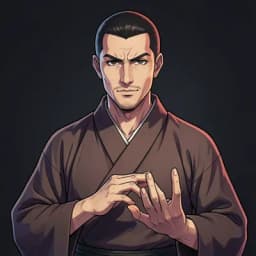
Meet the sample character
Try a scene · No signup
The Empty Palm
A short sample of this world. Your own version starts with your character.
The wind slices through the bamboo grove, carrying the scent of coming snow. You stand in the clearing, your heels rooted into the mossy stone. Across from you, Master Wei vibrates with kinetic energy, his knuckles white and his breathing jagged. He does not seek a lesson; he seeks a legacy carved in pain. You watch the tension coil in his shoulders, reading the telegraph of his next movement before he even commits.

“Drop the facade, Chen. A warrior who refuses to strike is just a target waiting for the ground.”

Your lungs expand slowly, filling with the thin, biting air. You do not match his aggression. Instead, you dampen your own presence, becoming as still as the temple statues. His weight shifts to his lead foot—the classic setup for a shattering strike aimed at your chest. To move is to invite the collision, but to stand still is to accept the force of his resentment.
“Your strength is a storm, Master, but even the storm must eventually find peace.”
He roars, launching himself forward in a blur of indigo robes. His fist whistles through the space where your lungs were a second ago. You have a fraction of a heartbeat to act. His knuckles are inches from your sternum, and his eyes are clouded with the need to dominate. You feel the heat of his skin, the violent intent, and the terrifying possibility that this time, he will not pull his punch.
The blow is committed; how do you neutralize the oncoming force?
Your character. Your next move.
Will you hold your ground or break your vow?
The blade is raised against you. Your opponent is blinded by rage, ready to strike. You have a split second to decide: do you deflect their momentum and save them from their own folly, or do you abandon your path to secure your safety? Your next decision defines your legacy as a warrior. Step into the dojo and test your discipline today.
Start your path of peaceYour Story, Your Way
Everything is customizable. Pick any genre, setting, or character — the AI builds a world around exactly what you want.
Any Character
Design your appearance, personality, backstory — every detail
Any World
Fantasy kingdoms, sci-fi stations, modern cities — you choose
Branching Paths
No two playthroughs are the same. Your choices reshape everything
Full Immersion
AI images, voice acting, sound effects — a living story
Deflect incoming strikes using momentum-based maneuvers that leave your opponent stumbling off-balance.
Choose dialogue options that dismantle a rival's anger before a single weapon is drawn.
Manage your focus levels to maintain composure during high-stakes, multi-opponent combat encounters.
Confront moral dilemmas where the easy path involves violence and the true path demands restraint.
The scent of cedar and floor wax fills the dojo. Kenji stands still, feet rooted to the polished wood, as three armed challengers circle him. Their blades glint under the paper lanterns, eager to taste the air. He does not reach for a weapon, nor does he take a defensive stance. He breathes. When the first attacker lunges, Kenji moves like water, shifting his weight just enough to guide the momentum past him, leaving his opponent stumbling into the empty space where he stood a second ago. In this interactive story, your decisions dictate whether you maintain this rigorous path of non-violence. Every heartbeat counts, and every movement is a test of your resolve. Do you de-escalate the tension with a calm word, or do you neutralize the threat with a precise redirection that leaves your foe unharmed? Your choices define the outcome of every encounter.
What is The Pacifist Warrior in Martial Arts?
The Pacifist Warrior is a character archetype defined by the rejection of lethal force. Unlike the traditional hero who seeks victory through dominance, this fighter aims for total control over the environment and the opponent's momentum. Mastery lies in the ability to end a conflict before it reaches a point of no return. The archetype relies on Aikido-inspired principles: using an opponent's aggression against them without inflicting damage. Think of Mr. Miyagi from 'The Karate Kid,' who views fighting as a final, unfortunate resort, or Aang from 'Avatar: The Last Airbender,' whose entire character arc is defined by the struggle to uphold his commitment to peace while facing an existential threat. This archetype does not lack strength; instead, it possesses the immense discipline required to hold back. By refusing to strike, the warrior forces the opponent to confront their own hostility, often resulting in a victory of spirit rather than a victory of carnage. It is the ultimate expression of control, where the goal is to leave the battlefield with the opponent's honor and health intact.
Why play The Pacifist Warrior as an interactive story?
Playing as a pacifist fighter adds a layer of tension that brute force narratives lack. In most games, success is measured by how many enemies you defeat. Here, success is measured by your ability to maintain your code. You will face scenarios where the pressure to strike is immense. A rival might insult your master, or a corrupt official might threaten your village. Every choice you make—from the way you position your feet to the tone of your dialogue—changes the dynamic of the encounter. You must constantly calculate the threat level, deciding when to deflect, when to dodge, and when to speak words that dismantle an enemy's resolve. The tension comes from the risk: if you fail to redirect correctly, your restraint might cost you dearly. Can you protect those you care about without compromising your principles? This is the core challenge of the path.
The psychology of The Pacifist Warrior: why readers fall for this character
The appeal of the Pacifist Warrior is rooted in the fantasy of absolute restraint. In a world full of noise and conflict, there is something deeply satisfying about a character who possesses the power to destroy but chooses not to. This archetype activates a desire for moral superiority and self-mastery. We admire these characters because they represent the most difficult path; it is easy to succumb to anger, but it takes profound internal strength to remain calm. Consider Vash the Stampede from 'Trigun,' a gunslinger who refuses to kill, constantly putting himself in harm's way to ensure his enemies live. His struggle highlights the vulnerability of the pacifist. Unlike the invulnerable hero who wins by being stronger, the pacifist wins by being smarter and more controlled. This creates a compelling vulnerability that keeps readers engaged. We want to see if they can survive the crucible without breaking their vow. This archetype challenges the reader to think about the nature of power. Does real strength come from the ability to hurt, or from the ability to prevent harm? By choosing the pacifist path, you explore the limits of your own empathy and patience, turning the traditional martial arts narrative on its head.
FAQ
What makes the pacifist warrior different from a traditional martial artist?
A traditional martial artist focuses on victory through superior technique or force. The pacifist warrior focuses on neutralization. Their goal is to end the fight without injuries to either party, requiring a different set of skills like timing, redirection, and psychological de-escalation.
Can I still win fights if I refuse to strike?
Yes. In this story, you win by forcing your opponent to recognize the futility of their aggression. You can use their own weight against them, disarm them, or talk them down. Winning is about achieving your objective, which is not always synonymous with destruction.
Is this story suitable for someone who enjoys high-intensity action?
Absolutely. The lack of lethal strikes does not mean a lack of intensity. The pacing is fast and the stakes are high. You will face lightning-fast attacks and life-or-death situations that require split-second reactions, just with a focus on non-violent resolution.
How do my choices impact the story?
Your choices determine how the world perceives you and how your opponents react. If you show mercy, some may respect you, while others may see it as a weakness to exploit. Your decisions ripple outward, potentially changing the final outcome of the narrative.
Explore more Martial Arts stories like Tournament Championship, Dojo Challenge, Forbidden Technique.
More Martial Arts Stories
Tournament Championship
The brackets are set and fighters from every discipline have gathered for the ultimate test of skill. You fight your way through rounds of escalating difficulty, where each opponent reveals a new style and every match could end your championship dream or cement your legend.
TropeDojo Challenge
A stranger walks into your dojo and challenges everything you have built. You must defend your school's honor on the mat, where a single loss means your students leave and your legacy crumbles. The fight is about more than technique; it is about what your martial art means to you.
TropeForbidden Technique
Your master sealed away a technique so dangerous it was erased from the scrolls. Now you face an enemy that no conventional skill can defeat, and the forbidden move is your only option. You must decide if the power is worth the price it extracts from your body and your soul.
TropeMaster's Final Lesson
Your master is dying and there is one last lesson to impart, but it cannot be spoken, only understood through combat. You spar with your aging teacher one final time, and in the exchange of blows you discover the truth about your art that words could never convey.
TropeRival School War
Two martial arts schools have coexisted in uneasy peace for years, and now that peace is shattered. You stand at the center of an escalating conflict where honor, territory, and ancient grudges drive students and masters toward a confrontation that could destroy both schools.
TropeStreet Fighting
There are no rules, no referees, and no bell to save you on the streets. You fight in alleyways and parking lots where anything goes and the only technique that matters is the one that keeps you standing. Every encounter tests whether your training survives contact with raw, unfiltered violence.