
Martial Arts · Interactive story
Echoes of Steel: The Temple Courtyard
The stone flagstones hold the memory of a thousand strikes. Will yours be one?
Start as a guest. Choose your character before the story begins.
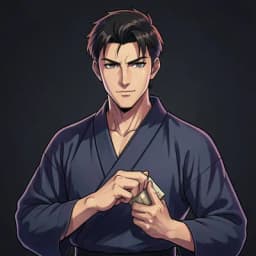
Meet the sample character
Before the strike, silence must become your weapon.
Try a scene · No signup
The Weight of the Falling Leaf
A short sample of this world. Your own version starts with your character.
You stand on the weathered flagstones of the High Temple, your feet calloused and numb from hours of stance training. The scent of sandalwood incense clings to your robes, thick and sweet, masking the smell of your own sweat. Ahead, the stone lions guard the courtyard with sightless eyes, indifferent to the tension coiling in your muscles. You catch the rhythmic, low-frequency chanting from the hall behind you, keeping pace with your own racing pulse.

“Your breath is jagged, Wei. A blade that wobbles in the hand is a blade already broken.”

You squeeze your eyes shut, trying to draw the air into your diaphragm rather than your chest. The gravel beneath your heels shifts, a minute sound that echoes in the stillness of the courtyard. You have spent three years chasing this singular technique, and today is the day the Abbot demands a demonstration of your mastery. If you fail, the life you sacrificed to obtain entry here will be for nothing.
“I seek the stillness, Master, but my heart is heavy with the memories of the debts I left outside these walls.”
Master Jian steps forward, his wooden staff tapping against the stone with the weight of a judge's gavel. He doesn't offer comfort. Instead, he shifts into a stance that invites a strike you aren't sure you can execute. He waits for you to move, leaving you to decide if you will follow the path of the void or lash out in desperation.
The master has left a gap in his guard, but it feels like a snare. How do you respond?
Your character. Your next move.
The master is watching. Will you yield or strike?
The sun is setting over the stone walls. Your opponent has opened a gap in their guard, but your breath is shallow and your legs are heavy. This is your moment to prove your training. Choose your path and see where your discipline leads.
Begin Your TrainingYour Story, Your Way
Everything is customizable. Pick any genre, setting, or character — the AI builds a world around exactly what you want.
Any Character
Design your appearance, personality, backstory — every detail
Any World
Fantasy kingdoms, sci-fi stations, modern cities — you choose
Branching Paths
No two playthroughs are the same. Your choices reshape everything
Full Immersion
AI images, voice acting, sound effects — a living story
Manage your stamina and focus through high-stakes combat choices in real-time.
Navigate complex social hierarchies with monks and rival martial artists.
Master specialized combat techniques through iterative training sequences and difficult decisions.
Defend your reputation in honor-bound duels where one mistake ends the path.
The scent of sandalwood hangs thick in the damp morning air, clinging to the weathered stone lions that guard the gate. You stand in the center of the courtyard, your bare feet pressing against cool, uneven flagstones worn smooth by the calloused heels of masters long dead. Every breath is a rhythmic count, timed to the low, droning chant of the monks echoing from the inner sanctum. A rival fighter stands opposite you, their stance low and predatory, waiting for the slightest flicker of hesitation in your posture. Here, your decisions dictate the flow of the fight. Do you collapse into a defensive shell to conserve energy, or do you commit to a high-risk strike that leaves your flank exposed? The wind carries the sound of wind chimes, marking the heartbeat of a duel where victory relies on precision rather than brute force. Your path is not written; it is forged through the tension of the moment and the clarity of your intent.
What is the Temple Courtyard in Martial Arts?
The temple courtyard serves as the crucible of the warrior’s spirit. It is a space defined by isolation, tradition, and the stripping away of ego. In fiction, this setting functions as a liminal space between the mundane world and the mastery of self. It is where the physical act of combat meets the internal rigor of meditation. You see this archetype clearly in classic films like 'The 36th Chamber of Shaolin,' where the courtyard is not just a place to spar, but a laboratory for refining the body into a weapon. It is a closed system: the walls are high, the exits are few, and the only way out is through the mastery of a discipline. Unlike a battlefield, the courtyard is quiet. It forces the practitioner to confront their own flaws in the silence. Whether it is the serene, snow-dusted grounds of the Southern Air Temple in 'Avatar: The Last Airbender' or the rigid, demanding dojos of historical epics, the temple courtyard represents the transition from student to master. It is a place where every movement is scrutinized, every failure is a lesson, and every success brings you one step closer to an unbreakable center.
Why play Temple Courtyard as an interactive story?
Playing in this setting places the weight of the warrior’s code directly onto your shoulders. Agency is your primary tool. You are not merely watching a fight; you are managing your internal state, deciding when to push and when to yield. The tension arises from the consequences of your technique. If you choose to engage in a reckless flurry of blows, you may tire yourself out before the final, decisive strike. If you remain too passive, your opponent will exploit the opening. You will face moments where your honor is tested—do you accept a duel under unfair conditions to prove your skill, or do you demand the respect due to your lineage? Every choice ripples outward, affecting your reputation among the monks and your standing with the masters of the temple. You might find yourself debating philosophy with a silent guardian, only to be forced into a high-stakes spar seconds later. Your survival depends on your ability to read the rhythm of the encounter.
What makes Temple Courtyard work: the worldbuilding
The effectiveness of the temple courtyard as a narrative setting lies in its inherent constraints. By limiting the scope of the story to a single, sacred space, the conflict becomes deeply personal. The sensory details—the smell of incense, the texture of weathered stone, the sound of wooden training dummies striking—create a claustrophobic yet focused intensity. This is a setting that thrives on minimalism. In 'Ghost of Tsushima,' the shrine and dojo moments provide a necessary respite from the chaos of war, allowing the player to reflect on the cost of their actions. This same principle applies here. The courtyard is a pressure cooker. It forces characters to shed their pretenses. The conflict is rarely about external territory; it is about the internal struggle to maintain composure while someone tries to break your guard. The most compelling stories in this setting utilize the environment as an antagonist. The cold, the hunger, the silence—all these elements conspire against the protagonist. A well-crafted temple story uses these physical stressors to heighten the psychological stakes. When a character is exhausted, starving, and standing on cold stone, a single choice to pivot or strike carries the weight of their entire philosophy. The setting demands that the reader consider the 'why' behind the 'how.' It is not enough to be strong; you must be deliberate. By stripping away the distractions of the outside world, the temple courtyard forces the reader to confront their character's values through the lens of combat.
FAQ
What is the primary challenge in a Temple Courtyard story?
The primary challenge is balancing your internal discipline with external pressure. You must maintain your focus and stamina while navigating combat and social conflicts, ensuring your actions align with the path you have chosen for your character.
Does this game require knowledge of real martial arts?
No prior experience is necessary. The story provides the context and techniques you need. The focus is on the narrative impact of your choices and how you manage your character's combat strategy.
How do my choices change the story?
Your choices determine your reputation, your physical condition, and your standing within the temple. A single reckless decision can lead to defeat, while a display of disciplined restraint might earn you the respect of a master.
Can I play as different types of martial artists?
Yes. You can define your character's background, training history, and combat philosophy. Whether you are a defensive technician or an aggressive striker, your approach will influence how the story unfolds.
Explore more Martial Arts stories like Tournament Championship, Dojo Challenge, Forbidden Technique.
More Martial Arts Stories
Tournament Championship
The brackets are set and fighters from every discipline have gathered for the ultimate test of skill. You fight your way through rounds of escalating difficulty, where each opponent reveals a new style and every match could end your championship dream or cement your legend.
TropeDojo Challenge
A stranger walks into your dojo and challenges everything you have built. You must defend your school's honor on the mat, where a single loss means your students leave and your legacy crumbles. The fight is about more than technique; it is about what your martial art means to you.
TropeForbidden Technique
Your master sealed away a technique so dangerous it was erased from the scrolls. Now you face an enemy that no conventional skill can defeat, and the forbidden move is your only option. You must decide if the power is worth the price it extracts from your body and your soul.
TropeMaster's Final Lesson
Your master is dying and there is one last lesson to impart, but it cannot be spoken, only understood through combat. You spar with your aging teacher one final time, and in the exchange of blows you discover the truth about your art that words could never convey.
TropeRival School War
Two martial arts schools have coexisted in uneasy peace for years, and now that peace is shattered. You stand at the center of an escalating conflict where honor, territory, and ancient grudges drive students and masters toward a confrontation that could destroy both schools.
TropeStreet Fighting
There are no rules, no referees, and no bell to save you on the streets. You fight in alleyways and parking lots where anything goes and the only technique that matters is the one that keeps you standing. Every encounter tests whether your training survives contact with raw, unfiltered violence.