
Martial Arts · Interactive story
Silence Amidst the Blossoms: Your Martial Arts Trial
One breath. One strike. The falling petals judge your form.
Start as a guest. Choose your character before the story begins.
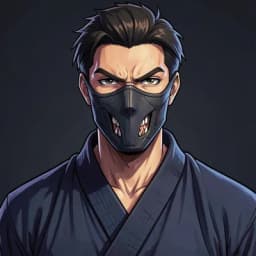
Meet the sample character
The final exhale before the strike.
Try a scene · No signup
Petals Beneath the Blade
A short sample of this world. Your own version starts with your character.
You stand in the center of the courtyard, feet planted firmly in the damp soil. Around you, cherry blossoms drift in slow, hypnotic spirals, landing on the scarred surface of the wooden training dummy. You match your inhalation to the wind, keeping your posture rigid. Your muscles ache, but your focus remains absolute.

“The wind does not apologize for moving the petal, Kenji. Why do you hesitate?”

You adjust your grip on your practice blade, feeling the weight shift as you shift your center of gravity. The petals land on your shoulders, soft as whispers, masking the coiled tension in your forearms. You could end this encounter now, but the strike must be precise enough to leave no room for error.
“I am not waiting for the wind, Master. I am waiting for the weakness in your guard.”
Master Hideo steps forward, his wooden bokken carving a clean, silent arc through the air. You see the opening—a slight flicker of his shoulder—but the timing is razor-thin. If you commit your full weight now, you might shatter his defense, or find yourself countered before your blade even descends.
The opening is closing. How will you exploit this flicker in your master's stance?
Your character. Your next move.
Will you master the blade or lose your way?
The petals are falling, and your master is waiting for your return to the training ground. Every strike you choose to practice changes your path. Will you remain a student of tradition, or will you forge a new, dangerous style? Step into the courtyard and begin your trial now.
Start Your Martial Arts StoryYour Story, Your Way
Everything is customizable. Pick any genre, setting, or character — the AI builds a world around exactly what you want.
Any Character
Design your appearance, personality, backstory — every detail
Any World
Fantasy kingdoms, sci-fi stations, modern cities — you choose
Branching Paths
No two playthroughs are the same. Your choices reshape everything
Full Immersion
AI images, voice acting, sound effects — a living story
Select specific combat forms to practice, directly impacting your character's speed and strength stats.
Engage in philosophical dialogues with the master that dictate your character's moral alignment.
Choose how to handle sudden interruptions, such as rival dojo scouts visiting during meditation.
Manage your focus and breath during high-stakes training drills to prevent fatigue-related errors.
The scent of damp moss mingles with the faint, sweet perfume of crushed petals under your calloused feet. You stand at the center of the courtyard, the wooden training dummy before you scarred by years of relentless strikes. Overhead, the ancient cherry trees shudder in a sudden breeze, releasing a flurry of pink that dances through the air like falling snow. In this place, silence is a weapon as lethal as any blade. Every movement you make is a choice: will you prioritize the fluid grace of your ancestors or the raw, crushing force of a new style? Your hands ache, your lungs burn, and the master watches from the shade of the veranda. This is a story defined by the precision of your choices. Whether you seek the path of the honorable guardian or the ruthless efficiency of a rogue, your decisions determine if you leave this courtyard as a master or a broken student.
What is Cherry Blossom Training Ground in Martial Arts?
The Cherry Blossom Training Ground is a classic archetype in martial arts fiction, representing the intersection of aesthetic beauty and lethal discipline. It contrasts the delicate, ephemeral nature of nature with the rigid, often violent demands of combat training. In stories like 'Crouching Tiger, Hidden Dragon,' these settings serve as more than a backdrop; they act as a mirror for the practitioner's internal state. When the environment is serene, the fighter's lack of focus becomes painfully obvious. This setting forces a meditative intensity upon the narrative. It is where the protagonist spends years repeating the same form until the movement becomes an extension of their own anatomy. Unlike the grit of a dark alley fight or the scale of a battlefield, the training ground focuses on the individual's relationship with their craft. It is the place where one learns that a strike is not just a physical act, but a manifestation of intent. Whether you are inspired by the cinematic duels of Akira Kurosawa or the atmospheric design in games like 'Ghost of Tsushima,' the dojo beneath the trees remains the ultimate crucible for testing one's spirit against the inevitable decay of all things.
Why play Cherry Blossom Training Ground as an interactive story?
Playing through this setting shifts the focus from winning a fight to mastering the self. You are not simply pressing buttons to trigger animations; you are deciding how to interpret the teachings of your lineage. When the master demands a strike that requires you to ignore your own pain, do you comply, or do you find a way to adapt the technique to your own physical limits? The tension here arises from the consequences of your discipline. If you grow impatient, your technique falters, and the petals continue to fall, indifferent to your frustration. You will face moments where a rival fighter arrives at the gate, challenging your philosophy. The choice to engage with honor, or to utilize a hidden, forbidden technique, changes how the dojo responds to you. You are the architect of your own martial legacy, and every choice ripples through your training sessions, affecting your stamina, your reputation, and your connection to the master.
What makes Cherry Blossom Training Ground work: the worldbuilding
The effectiveness of this setting lies in its inherent contradiction. By placing the most violent acts—shattering wood, breaking ribs, perfecting killing blows—within a space of profound natural beauty, the narrative highlights the cost of the warrior's life. The cherry blossom, or sakura, traditionally symbolizes the transience of life, making it the perfect thematic frame for a martial artist who knows their time is finite. Works such as 'Lone Wolf and Cub' use these stark visual contrasts to emphasize the isolation of the protagonist. Similarly, 'Sekiro: Shadows Die Twice' utilizes the environment to ground the player in a world where beauty is often a mask for decay. To build a compelling story here, you must focus on sensory details: the sound of a wooden sword hitting a post, the texture of the rough stone, the way the light changes as the sun dips below the temple roof. These details ground the player, making the weight of their choices feel tangible. Conflict in this setting should never be purely physical. It should be a clash of ideals. Does the student follow the tradition that has kept the dojo alive for centuries, or do they innovate, risking the wrath of their peers? The setting demands that the protagonist confront their mortality and their purpose. When you write or play in this space, remember that the most intense battles are often the ones fought in silence, under the falling petals, without a single word spoken.
FAQ
How does the training system affect my character's progression?
Your choices during training sessions directly influence your character's proficiency. Focusing on repetitive, traditional forms increases your discipline, while experimenting with new strikes might boost your versatility but lower your standing with traditionalist masters.
Can I choose to abandon the traditional path?
Yes. The narrative allows you to deviate from the teachings of your dojo. However, choosing your own path often leads to confrontations with rival students or the master themselves, changing the trajectory of your story.
What is the role of the master in this story?
The master acts as a gatekeeper and a moral compass. Their feedback on your training choices provides clues about your character's standing and reveals the potential consequences of your path before you commit to a major decision.
Is this story only about fighting?
Not at all. While martial arts are the framework, the story explores themes of legacy, patience, and the conflict between tradition and personal evolution. Much of the experience involves meditation, social interaction, and making difficult ethical choices.
Explore more Martial Arts stories like Tournament Championship, Dojo Challenge, Forbidden Technique.
More Martial Arts Stories
Tournament Championship
The brackets are set and fighters from every discipline have gathered for the ultimate test of skill. You fight your way through rounds of escalating difficulty, where each opponent reveals a new style and every match could end your championship dream or cement your legend.
TropeDojo Challenge
A stranger walks into your dojo and challenges everything you have built. You must defend your school's honor on the mat, where a single loss means your students leave and your legacy crumbles. The fight is about more than technique; it is about what your martial art means to you.
TropeForbidden Technique
Your master sealed away a technique so dangerous it was erased from the scrolls. Now you face an enemy that no conventional skill can defeat, and the forbidden move is your only option. You must decide if the power is worth the price it extracts from your body and your soul.
TropeMaster's Final Lesson
Your master is dying and there is one last lesson to impart, but it cannot be spoken, only understood through combat. You spar with your aging teacher one final time, and in the exchange of blows you discover the truth about your art that words could never convey.
TropeRival School War
Two martial arts schools have coexisted in uneasy peace for years, and now that peace is shattered. You stand at the center of an escalating conflict where honor, territory, and ancient grudges drive students and masters toward a confrontation that could destroy both schools.
TropeStreet Fighting
There are no rules, no referees, and no bell to save you on the streets. You fight in alleyways and parking lots where anything goes and the only technique that matters is the one that keeps you standing. Every encounter tests whether your training survives contact with raw, unfiltered violence.