Magical Realism · Interactive story
The Magic Remembers Your Name
You thought you escaped the impossible. The town knows you never really left.
Start as a guest. Choose your character before the story begins.

Meet the sample character
The tide never forgets a name.
Try a scene · No signup
The Salt-Stained Threshold
A short sample of this world. Your own version starts with your character.
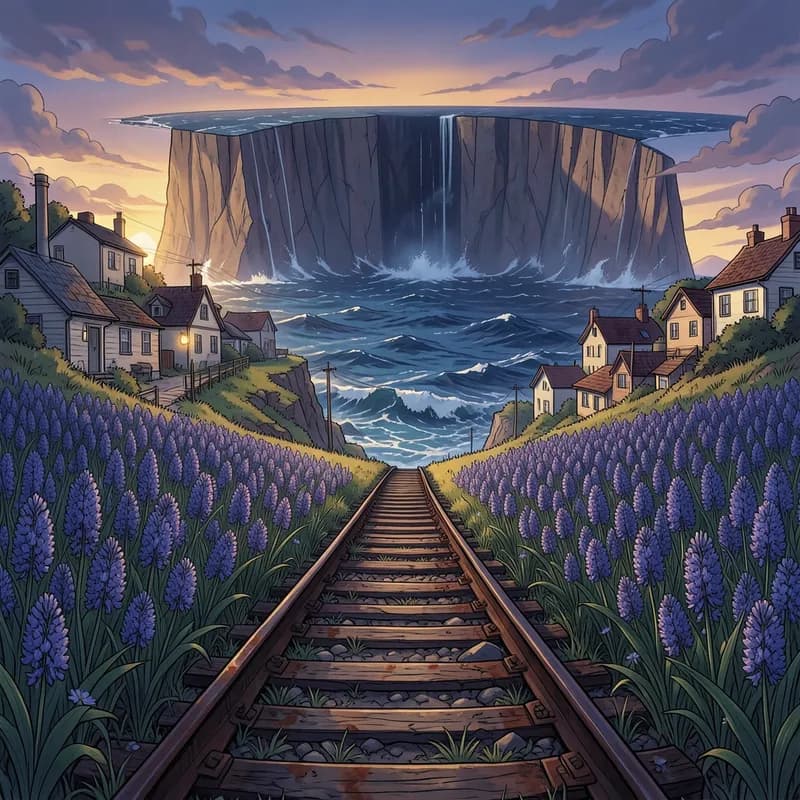
Returning to Oakhaven feels like stepping into a half-forgotten dream. The train tracks terminate abruptly in a field of blue larkspur, the iron rails twisting upward like reaching fingers. I step onto the gravel, and the air is thick with the scent of ozone and drying kelp. My city suit feels brittle, like a costume I haven't quite outgrown.
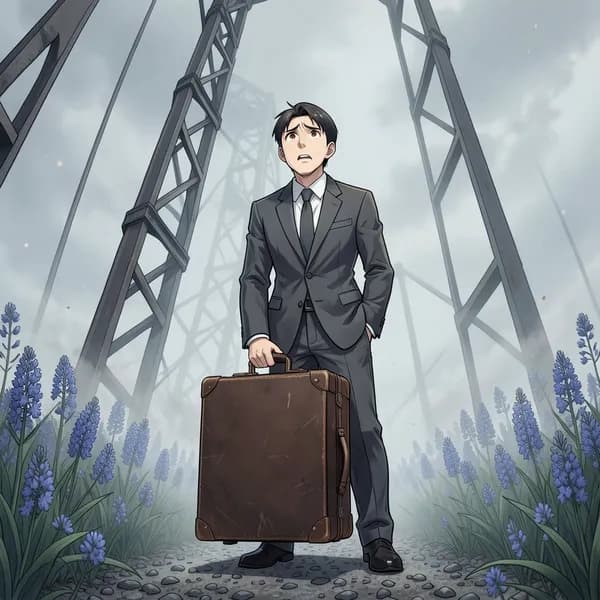
“You’re late, Jeroen. The tide has already claimed your luggage, though I imagine you’ll find it waiting in the kitchen by tea time.”

She hasn't aged a day since I left, her skin still translucent enough to see the golden hum of her veins. I want to argue that luggage doesn't travel through seawater, but my tongue feels heavy. The silence of the village is not empty; it is waiting for me to acknowledge its impossible geometry.
“I didn't come back for the luggage, Aunt Maude. I came because the shadows in my apartment started looking like the trees here.”
She brushes a stray petal from my shoulder, her fingers cold as winter stone. Behind her, the horizon seems to fold inward, the sea rising in a vertical wall against the sky. I have to decide how to proceed before the gravity shifts completely and pulls us both into the clouds.
The horizon is curling overhead, threatening to spill the ocean onto the village. How do you anchor yourself?
Your character. Your next move.
The town is waiting for its prodigal child.
The hedges are shifting, and the station clock is ticking backward. Your return was inevitable, and the secrets buried in the soil are ready to be unearthed. Will you accept the strange reality of your home, or fight to keep your sanity intact?
Step Back Into The StrangeYour Story, Your Way
Everything is customizable. Pick any genre, setting, or character — the AI builds a world around exactly what you want.
Any Character
Design your appearance, personality, backstory — every detail
Any World
Fantasy kingdoms, sci-fi stations, modern cities — you choose
Branching Paths
No two playthroughs are the same. Your choices reshape everything
Full Immersion
AI images, voice acting, sound effects — a living story
Confront neighbors who remember your secrets despite your long years of absence.
Choose between suppressing the town’s strange occurrences or leaning into the local folklore.
Manage your sanity levels as the line between logical reality and memory blurs.
The train station smells of ozone and crushed lavender, just as it did the day you boarded the bus for the city. You spent years convincing yourself that the floating tea sets and the shadows that whispered your secrets were merely childhood fever dreams. But as you step onto the platform, the station clock begins to run backward, and the streetlights blink in a rhythmic code only you recognize. This interactive story allows you to decide whether to embrace the forgotten rhythm of your birthplace or run back to the safety of the mundane. The town has been waiting for you, and the doors are already swinging open. Every choice you make alters how the environment responds to your presence, forcing you to reconcile the person you became with the person the town demands you to be.
What is The Returning Exile in Magical Realism?
In literature, the returning exile is a figure who occupies the fragile space between two realities. They are the skeptic who has seen the world beyond, only to find that their home operates on rules that defy physics. Unlike a traditional hero returning from war, the magical exile returns to a place that feels alive, almost sentient. Consider Gabriel García Márquez’s One Hundred Years of Solitude, where the passage of time is fluid and the return to Macondo signifies a re-entry into a cycle of inescapable destiny. Or look to Hayao Miyazaki’s Spirited Away, where Chihiro must reconcile her mundane identity with the demands of a spirit world that recognizes her even when she tries to hide. This archetype functions as a bridge. The character is usually someone who tried to bury their past, only to realize that their identity is permanently tethered to a location where the laws of nature are suggestions rather than mandates. The town keeps records of your history that you have long forgotten, and as an exile, you find that the architecture and the inhabitants react to your mood, your secrets, and your reluctance to believe.
Why play The Returning Exile as an interactive story?
Playing as the returning exile places the burden of belief directly on your shoulders. You are not a passive observer; your choices dictate the friction between your past and your present. When the local baker asks why you have finally returned, do you admit you saw the sky turn violet at noon, or do you lie to protect your sanity? You will face moments where your refusal to believe causes the magic to lash out, or where your acceptance allows you to bend the town’s environment to your will. Agency matters here because the town is a character that responds to your skepticism. If you treat the magic as a nuisance, the town might turn your own home against you. If you lean into the folklore, you might uncover why you were chosen to leave and why you were ultimately drawn back to this peculiar place.
The psychology of The Returning Exile: why readers fall for this character
The appeal of the returning exile lies in the desire for a world that knows us better than we know ourselves. It is a subversion of the notion that one cannot go home again. In magical realism, home is not just a place; it is a living entity that holds the exile accountable. Take the works of Isabel Allende, such as The House of the Spirits, where the architecture itself reacts to the emotional state of the inhabitants. The exile represents the tension between the modern desire for order and the human need for something inexplicable. We fear the mundane because it is predictable, yet we fear the magical because it demands our surrender. When an exile returns, they are forced to confront the version of themselves they left behind. They are not returning to a house; they are returning to a mirror. Whether it is the protagonist in The Ocean at the End of the Lane by Neil Gaiman, who finds that the memories of childhood are literal, physical threats, the returning exile is always fighting for agency. They want to be the author of their own life, but the town insists on being the narrator. This dynamic creates a powerful push-pull effect, as the player constantly tries to balance their modern, logical identity with the supernatural pull of their roots.
FAQ
What makes this different from standard fantasy?
Magical realism treats the impossible as mundane. There are no grand quests or epic battles here; instead, you deal with ghosts attending dinner or gardens that grow overnight, and the characters treat these events with the same casual annoyance as a rainy day.
Can I choose to reject the magic?
Yes, you can attempt to live a strictly ordinary life. However, the town often resists these attempts, and your choices will determine if your skepticism protects you or alienates you from the local history.
Is this story right for me?
If you enjoy slow-burn mysteries, psychological tension, and stories where the setting acts as a character, you will find this archetype compelling. It is ideal for those who prefer atmosphere and internal conflict over traditional action.
How does the town remember me?
The town functions as a collective memory. As you interact with NPCs and explore locations, you trigger flashbacks and environmental reactions that show how your past actions shaped the town, even while you were away.
Explore more Magical Realism stories like Impossible Garden, Time-Touched Family, Prophetic Dreams.
More Magical Realism Stories
Impossible Garden
Flowers bloom in impossible colors, vines grow in the shape of memories, and the garden responds to your emotions. Tend a living miracle that reveals the deepest truths about your family with every petal that opens.
TropeTime-Touched Family
Your family does not experience time the way others do. Grandmothers age backwards, twins live decades apart, and the family tree branches through centuries that overlap in the same house. Navigate the beautiful chaos of a bloodline time cannot contain.
TropeProphetic Dreams
Every night your dreams show you fragments of a future that has not happened yet. The visions are never complete, always cryptic, and the more you try to change what you see, the more inevitable it becomes.
TropeGhost at the Dinner Table
The dead do not leave your family. They sit in their usual chairs, comment on the cooking, and refuse to move on until their unfinished business is resolved. Living with ghosts is ordinary here, but what they want from you is anything but.
TropeMagical Inheritance
When the matriarch dies, she leaves you something that cannot be put in a will: a gift that skips generations, a curse that passes through the blood, or a secret that rewrites everything you thought you knew about your family.
TropeEnchanted Everyday Object
A teacup that shows the drinker's true feelings. A mirror that reflects yesterday instead of today. An ordinary object in your home holds extraordinary power, and using it will quietly unravel the fabric of your carefully maintained normal life.