
LitRPG / GameLit · Interactive story
Sky Bazaar: Where Legends Gear Up
Gold burns holes in pockets, but the right gear keeps your heart beating.
Start as a guest. Choose your character before the story begins.
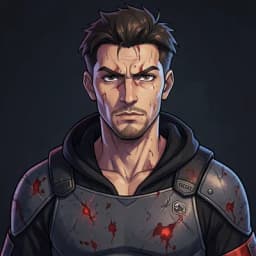
Meet the sample character
Trade your soul for a Legendary-tier stat boost.
Try a scene · No signup
Aether-Dock Debt
A short sample of this world. Your own version starts with your character.
Your HUD pulses a violent, rhythmic red. The corruption debuff is eating your health pool at 4 HP per second. You stand on the edge of Aether-Dock 9, gripping the railing as a nearby merchant’s shop hums with the static of high-level gear.

“Your stats are bleeding out, Vane. That debuff is going to reach your core long before the raid even starts.”

Vesper gestures to a jagged obsidian blade floating in a flickering stasis field behind her. The price tag glows with an ominous golden aura: 'Soul-Bound.' You know the weapon can purge your debuff, but it requires a permanent sacrifice of your highest agility stat.
“I didn't come here for medical advice. Just tell me what it takes to bypass the soul-binding lock.”
The wind howls as a server-wide notification blares: 'Raid Entrance Closing in 180 Seconds.' Vesper stares at your fading health bar, her eyes calculating the worth of your remaining gear if you die right here. You have to move now, or watch your character profile delete itself.
The stasis field sparks, demanding a final input. How will you secure the blade?
Your character. Your next move.
Secure your gear before the market resets.
The raid portal is opening, and the best items are disappearing from the stalls. Will you buy the enchanted blade to ensure your victory, or save your gold for the armor upgrade? Your inventory is waiting, and the clouds are moving fast. Make your move.
Enter the Sky BazaarYour Story, Your Way
Everything is customizable. Pick any genre, setting, or character — the AI builds a world around exactly what you want.
Any Character
Design your appearance, personality, backstory — every detail
Any World
Fantasy kingdoms, sci-fi stations, modern cities — you choose
Branching Paths
No two playthroughs are the same. Your choices reshape everything
Full Immersion
AI images, voice acting, sound effects — a living story
Manage your limited inventory weight while choosing between rare gear and essential consumables.
Negotiate prices with AI vendors whose attitudes shift based on your charisma and reputation stats.
Decide whether to invest in forbidden skill books that permanently alter your character's class path.
Track your gold reserves carefully to ensure you can afford repairs before the next raid.
The wind howls at ten thousand feet, carrying the scent of ozone and scorched leather. You stand on the edge of Platform 42, staring across a flickering bridge of hard-light at the merchant’s stall. He holds a tier-three frost dagger, the kind that shreds armor-plated mobs in seconds, but his price is steeper than the drop below. Your inventory is nearly full, your health bar is flickering yellow, and the raid timer is counting down. Every decision here shifts your build. Do you drain your remaining credits for the blade, or do you play it safe with a stack of restorative potions? Your choices determine whether you become a legendary raider or another ghost falling into the clouds below.
What is Floating Marketplace in LitRPG / GameLit?
In the context of LitRPG, the floating marketplace acts as the central hub of civilization. These are suspended arenas—platforms tethered by magic or gravity-defying tech—where players congregate to trade, upgrade, and prepare for the next dungeon crawl. Think of it as the high-altitude equivalent of the bustling bazaars seen in Sword Art Online or the airship docks in Final Fantasy. These markets are not just passive background elements; they are the gears that keep the economy of the story turning. In a world where loot dictates survival, the marketplace is where you convert your hard-earned gold into the stats that keep you alive. It is a place of high pressure. You aren't just browsing; you are managing your inventory against a ticking clock, deciding which skills to prioritize and which gear sets offer the best synergy for your specific class. Whether you are playing as a rogue looking for stealth-boosting rings or a tank seeking heavy-duty plate armor, the floating marketplace is the bottleneck where your character's potential is either realized or wasted.
Why play Floating Marketplace as an interactive story?
Playing through a floating marketplace setting forces you to treat your narrative like a tactical loadout screen. You aren't just reading about a shop; you are interacting with a system that reacts to your reputation, your current level, and your bankroll. You will face distinct moments of tension: a vendor might offer you a cursed item that provides a massive stat boost at the cost of your max HP. Do you take the risk? Or perhaps you encounter a rival player who tries to haggle over the last legendary scroll in stock. You must decide whether to negotiate, intimidate, or walk away. The agency you possess here directly impacts the difficulty of your next mission. By choosing to invest in agility over raw power, you might find new paths through the upcoming raid that others can't access. The game remembers your gear, your trades, and your reputation, turning every transaction into a strategic pivot point that ripples through your entire run.
What makes Floating Marketplace work: the worldbuilding
The floating marketplace works because it creates a natural bottleneck for conflict. By placing the narrative in a vertical, high-altitude setting, the stakes are constantly amplified. One wrong step or one bad deal doesn't just mean a loss of coins—it can mean literal exile. This setting thrives on the contrast between the danger of the abyss below and the opulent, cluttered safety of the market platforms. Good worldbuilding in this space requires a focus on the 'mechanics of trade.' In Brandon Sanderson's Skyward, the focus on flight and altitude creates a constant sense of vertigo that is perfect for this setting. Similarly, the social hub aspects of Ready Player One show how a digital bazaar can become a microcosm of the entire game world, where status symbols are literal tools of survival. To make this setting work, you need to highlight the sensory details: the hum of anti-gravity engines, the shimmer of translucent bridges, and the frantic pace of players rushing to secure the best items before the market resets. Conflicts arise naturally from scarcity. When there is only one rare item available in the entire sector, the marketplace transforms from a shopping center into a pressure cooker. Characters belonging here are usually opportunists, master crafters, or high-level players looking for an edge. By grounding the narrative in these specific game mechanics, you create a setting that feels tactile, dangerous, and rewarding. The goal is to make the reader feel the weight of their inventory and the cold wind of the sky, reminding them that in this world, if you aren't upgrading, you're already behind.
FAQ
How does the inventory system affect my story choices?
Your inventory is limited by weight and rarity slots. If you choose to carry heavy armor, you lose the ability to pick up lightweight loot during your raids. This forces you to make strategic decisions in the marketplace about what gear is essential for your current build versus what is merely luxury.
Can I trade with other characters in the marketplace?
Yes. You will encounter various NPCs and rival players. Your interactions—whether you choose to be friendly or aggressive—will dictate the prices you are offered and the availability of rare, hidden items that aren't sold to just anyone.
Is the floating marketplace dangerous?
Absolutely. While it is a hub for trade, it is also a place where you can be swindled, robbed, or challenged to a duel. Your reputation score matters; if you are known as a high-roller, you may attract unwanted attention from other players looking to loot your gear.
What happens if I run out of gold?
Running out of gold forces you to choose between selling your current equipment to afford basic supplies or venturing into higher-risk areas of the market to find quick, dangerous work. Every choice has a consequence on your long-term progression.
Explore more LitRPG / GameLit stories like Level Up System, Stat Screen Awakening, Dungeon Dive.
More LitRPG / GameLit Stories
Level Up System
Every monster slain and quest completed fills your experience bar, pushing you toward the next breakthrough. You feel the rush of leveling up as new abilities unlock and the world's challenges scale to match your growing power.
TropeStat Screen Awakening
A glowing blue screen appears in your vision displaying your stats, skills, and a health bar you desperately hope stays full. You've awakened to a game-like system overlaid on reality, and the tutorial is already over.
TropeDungeon Dive
You descend into a procedurally shifting labyrinth where every floor holds deadlier monsters and richer loot. The dungeon tests your build, your party, and your nerve as you push deeper than anyone has survived.
TropeBoss Fight
The health bar fills the top of your vision and the boss music kicks in. You face a titanic enemy with attack patterns to memorize and a single devastating ability you absolutely cannot afford to tank.
TropeClass Selection
The system presents you with a choice that will define everything — warrior, mage, rogue, or something far more exotic. Your class shapes your abilities, your role in the party, and the very way the world responds to you.
TropeSkill Tree Unlock
A branching constellation of abilities stretches before you, each node representing a new power waiting to be claimed. You invest your hard-earned skill points and watch your character evolve in directions no one predicted.