
LitRPG / GameLit · Interactive story
The Enchanted Forge: Forge or Shatter
Feed the blue flames, sacrifice your rarest loot, and pray the system registers a masterwork.
Start as a guest. Choose your character before the story begins.
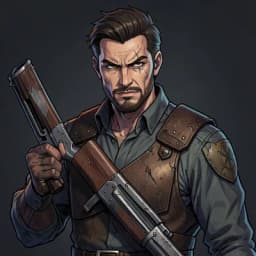
Meet the sample character
Burn your materials or lose your edge.
Try a scene · No signup
The Volatile Tempering
A short sample of this world. Your own version starts with your character.
You stare into the throat of the forge. Blue flame licks the ceiling, casting flickering shadows against the stone walls. Your inventory screen glows with the weight of the last Star-Iron Shard you possess. The heat is drying out your retinas, but you cannot look away from the smelting basin. If the RNG gods smile, your blade reaches +10. If they do not, you are holding a pile of useless scrap.

“Drop the shard, smith. The fire is hungry and the system is not waiting for your hesitation.”

The interface flickers. Your Luck stat is pathetically low, currently sitting at a flat two. You sweat, your fingers hovering over the glowing input slot. A single mistake here erases weeks of grinding in the Iron Depths. You feel the vibration of the ground beneath your boots, the forge demanding its tribute.
“I need a guarantee. What is the success rate if I push the internal heat to threshold?”
The Keeper grins, his teeth appearing like jagged metal shards. He taps a command into the air, causing your screen to flash red: 'Overload Warning'. You can force the forge, but it risks shattering your weapon entirely. The blue flames roar, waiting for your final confirmation to seal your fate.
The forge is peaking. Do you gamble on the output or attempt to manipulate the system?
Your character. Your next move.
Will your blade shatter or ascend?
The forge is burning, and the system is waiting for your input. Will you risk your last shard of Void-Crystal for a chance at a legendary strike, or will you play it safe? Your build is only as good as your gear. Take control of the anvil and forge your own path.
Begin Your ForgeYour Story, Your Way
Everything is customizable. Pick any genre, setting, or character — the AI builds a world around exactly what you want.
Any Character
Design your appearance, personality, backstory — every detail
Any World
Fantasy kingdoms, sci-fi stations, modern cities — you choose
Branching Paths
No two playthroughs are the same. Your choices reshape everything
Full Immersion
AI images, voice acting, sound effects — a living story
Sacrifice health or mana to force higher success rates on rare weapon upgrades.
Choose between repairing your current gear or gambling on a complete stat reroll.
Navigate system prompts that force you to choose between greed and long-term safety.
Unlock unique elemental imbuements that permanently change your character's combat skill set.
The air in the forge smells of ozone and molten iron. Before you, the anvil glows with a pulsating, unnatural blue light—a signature of the system’s volatile magic. You hold a jagged shard of Void-Crystal in one hand and a rusted iron longsword in the other. Sweat beads on your forehead as the interface flickers into view, demanding a confirmation: Sacrifice 15% of your current HP to boost success chance by 5%? Every choice here is a gamble against the code. You aren't just crafting; you are betting your progression on a single, high-stakes roll of the dice. Your decisions dictate whether this forge produces a weapon that can cut through dragon hide or a pile of useless slag. Step up to the anvil and define your build with every strike.
What is Enchanted Forge in LitRPG / GameLit?
In LitRPG, the Enchanted Forge acts as the ultimate gatekeeper of power. It represents the intersection of brute-force grinding and strategic risk. Unlike standard crafting tables, these forges often require rare materials or specific player sacrifices to unlock high-tier stats. Think of the intense crafting scenes in Sword Art Online where Lisbeth crafts Kirito’s Dark Repulser, or the high-stakes equipment upgrades in games like Path of Exile. The Forge isn't just a place to polish gear—it’s a dynamic, often sentient system that tests your commitment to your build. You need to decide: do you play it safe with low-level upgrades, or do you burn your rarest resources for a shot at a god-tier weapon that could change your entire playstyle? This setting turns every equipment upgrade into a pivotal narrative moment where you decide exactly how much you are willing to lose to gain the edge you need.
Why play Enchanted Forge as an interactive story?
Playing an Enchanted Forge story puts the RNG in your hands. You aren't watching a cutscene; you are the one deciding how much risk to take. Will you offer your own Mana pool to stabilize the flames, or will you force the forge to accept unstable materials? You might encounter a moment where the system warns of a 40% failure rate, forcing you to choose between backing down or pushing forward to secure a critical stat bonus. The tension comes from the permanence of your choices. If the item shatters, the resources are gone forever, and your build might be set back by days of grinding. You will have to analyze item descriptions, weigh the cost of reagents, and decide when to quit while you’re ahead. Every decision affects your character's combat effectiveness and your standing in the world.
What makes Enchanted Forge work: the worldbuilding
The Enchanted Forge functions as a narrative engine that drives character growth through conflict. In stories like The Wandering Inn or games like Monster Hunter, the gear you carry tells the story of your survival. The Forge creates inherent tension because it forces the player to value their inventory. The sensory details—the hum of the blue fire, the vibration of the hammer, the cold, calculating text of the success-rate display—ground the player in a world where math governs reality. To make this setting work, you must emphasize the cost of progression. Characters shouldn't just walk in and out with better gear; they should emerge with singed eyebrows, diminished stats, or newfound power that changes how they interact with the world. The Forge is a character in its own right, indifferent to your success but hungry for your resources. It thrives on the contrast between the player’s desperate ambition and the machine's cold, algorithmic judgment. Whether you are playing as a nimble rogue seeking a dagger with life-steal properties or a tank looking to imbue your shield with fire-reflect, the Forge ensures that your growth is never given—it is earned through calculated risk.
FAQ
Can I lose my items in the forge?
Yes, failure carries real risks. If the forge calculation fails, the materials and the base weapon can be destroyed, forcing you to adapt your strategy.
Does the forge affect my character stats?
Absolutely. The gear you produce often provides passive bonuses or active skills that directly influence your class build and combat capabilities.
What is the difference between a standard anvil and an Enchanted Forge?
A standard anvil repairs gear. An Enchanted Forge manipulates the code of the item, allowing for stat rerolls, socket additions, and elemental imbues that aren't possible through normal gameplay.
Is it better to save materials or use them early?
Strategy is key. Saving materials for higher-level forges often yields better base stats, but using them early can give you the power boost needed to reach those higher levels in the first place.
Explore more LitRPG / GameLit stories like Level Up System, Stat Screen Awakening, Dungeon Dive.
More LitRPG / GameLit Stories
Level Up System
Every monster slain and quest completed fills your experience bar, pushing you toward the next breakthrough. You feel the rush of leveling up as new abilities unlock and the world's challenges scale to match your growing power.
TropeStat Screen Awakening
A glowing blue screen appears in your vision displaying your stats, skills, and a health bar you desperately hope stays full. You've awakened to a game-like system overlaid on reality, and the tutorial is already over.
TropeDungeon Dive
You descend into a procedurally shifting labyrinth where every floor holds deadlier monsters and richer loot. The dungeon tests your build, your party, and your nerve as you push deeper than anyone has survived.
TropeBoss Fight
The health bar fills the top of your vision and the boss music kicks in. You face a titanic enemy with attack patterns to memorize and a single devastating ability you absolutely cannot afford to tank.
TropeClass Selection
The system presents you with a choice that will define everything — warrior, mage, rogue, or something far more exotic. Your class shapes your abilities, your role in the party, and the very way the world responds to you.
TropeSkill Tree Unlock
A branching constellation of abilities stretches before you, each node representing a new power waiting to be claimed. You invest your hard-earned skill points and watch your character evolve in directions no one predicted.