Horror / Thriller · Interactive story
Shadows of the Forgotten Shrine
The bells are ringing, but no one is left to pray.
Start as a guest. Choose your character before the story begins.

Meet the sample character
The mountain does not return what it has claimed.
Try a scene · No signup
Whispers from the Okuribi
A short sample of this world. Your own version starts with your character.
Rain lashes against the moss-slicked stone of the torii. You stand before the threshold, the wood rotting into a jagged, tooth-like archway. The scent of stagnant pond water and ancient ash clings to your skin. Every instinct you possess screams that you have crossed into a space where the laws of nature no longer hold sway.

“The mountain is hungry, boy. It recognizes the stolen charm in your pocket.”

You press your hand against the pocket where the stolen omamori weighs like a leaden stone. The priest’s eyes are empty, milky cataracts staring past you at something lurking in the shadows of the cedar trees. You feel a sudden, sharp drop in temperature, and your own breath begins to cloud in the damp air.
“I only need to find my sister, then I will leave this place behind.”
A low, rhythmic thumping echoes from the main hall—a sound like a damp sack of meat striking the floor. Then, the bell tolls, a single, discordant note that vibrates the marrow in your bones. Behind you, the path has vanished, replaced by an impenetrable wall of shifting, black mist.
The bell stops, and the thumping moves closer to the veranda. How do you respond to the unseen presence?
Your character. Your next move.
Will you survive the shrine's curse?
The forest is growing dark and the shrine bells are tolling for you. Every choice—from the path you take to the items you disturb—brings you closer to either salvation or a permanent place in the folklore. Do you have the resolve to face what waits behind the torii gate?
Begin Your Horror StoryYour Story, Your Way
Everything is customizable. Pick any genre, setting, or character — the AI builds a world around exactly what you want.
Any Character
Design your appearance, personality, backstory — every detail
Any World
Fantasy kingdoms, sci-fi stations, modern cities — you choose
Branching Paths
No two playthroughs are the same. Your choices reshape everything
Full Immersion
AI images, voice acting, sound effects — a living story
Choose whether to perform traditional cleansing rituals or risk angering the resident spirits.
Decide if you will trust the unreliable accounts left behind in the shrine's logs.
Navigate sudden, high-stakes encounters where a single wrong movement triggers a lethal spirit.
Collect fragments of an ancient curse to piece together how to survive the night.
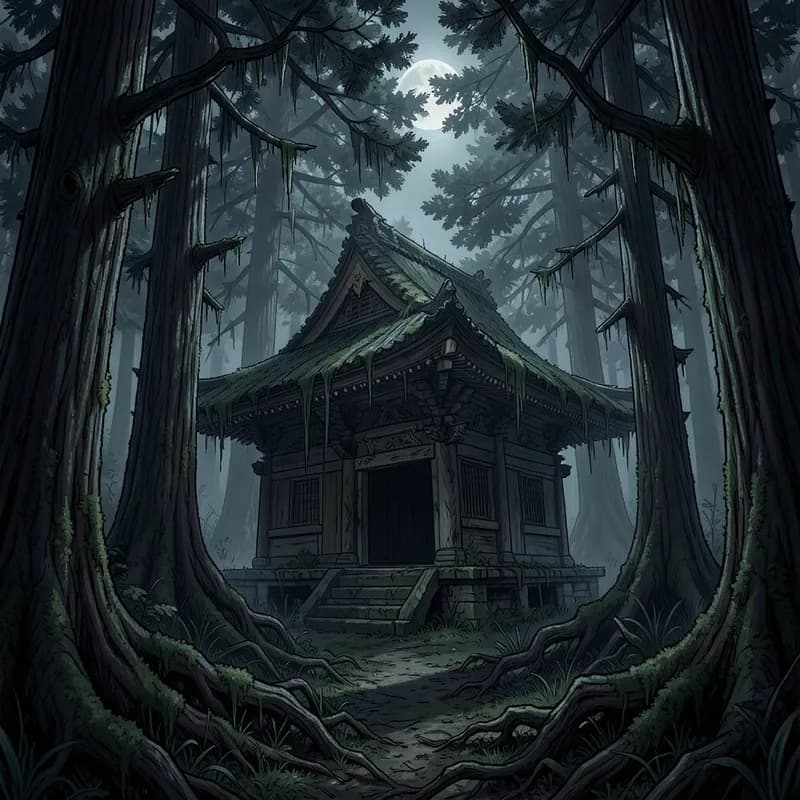
The scent of rotting cedar and stagnant water hangs heavy in the mountain air. You stand before the vermilion torii gate, its paint peeling like dead skin. Beyond it, the path to the shrine is choked by overgrown moss and twisted roots. You shouldn't have come here, but the rumors of the missing hikers were too persistent to ignore. A single, rhythmic thud echoes from the main hall—the sound of a wooden mallet striking a prayer bell. There is no one else on this mountain. As you step across the threshold, the air turns frigid, biting at your skin. Every choice you make from this point forward ripples through the stillness. Do you offer a coin, or do you turn and run back into the darkness? This is a Japanese horror interactive story where your intuition is the only thing keeping your heart beating. The spirits here do not forgive, and they certainly do not forget.
What is Japanese Haunted Shrine in Horror / Thriller?
The Japanese haunted shrine setting draws deeply from folklore, focusing on the boundary between the living and the dead. In this tradition, shrines are places of immense spiritual power, often guarded by deities or tied to the lingering regret of the deceased. When a shrine falls into ruin, the rules of reality begin to fray. Unlike Western horror, which often focuses on physical threats or jump scares, this subgenre relies on atmosphere, psychological decay, and the inevitability of a curse. You see this mastery of dread in films like 'Noroi: The Curse,' where the investigation of ancient rituals leads to a slow, methodical unraveling of the protagonists' lives. Similarly, the 'Fatal Frame' game series perfectly captures the claustrophobia of a sacred space turned into a prison. The environment itself becomes the antagonist. The architecture—the narrow corridors, the sliding shoji doors, the flickering lanterns—creates a sense of being trapped in a space that was designed for worship but now harbors something ancient and hungry. It is a setting defined by silence, the weight of history, and the terrifying realization that some doors are locked for a reason.
Why play Japanese Haunted Shrine as an interactive story?
Agency is the most dangerous element in a J-horror choose your own adventure. In a passive story, you watch a character make a fatal mistake. Here, you are the one deciding whether to enter the burial chamber or investigate the strange weeping sound near the well. The tension stems from the weight of tradition. If you fail to perform a ritual correctly, or if you show disrespect to a sacred relic, the consequences are immediate and often lethal. You will face moments where the logic of the modern world fails you entirely. Will you trust the warning of a local villager who refuses to look you in the eye? Will you burn the charms you found in the offering box? Each decision changes the spirit’s behavior, making the encounter personal. The game tracks your interactions, meaning the ghost chasing you through the forest knows exactly what you have taken and what you have broken. Your survival depends on your ability to read the environment and act before the shadows close in.
What makes Japanese Haunted Shrine work: the worldbuilding
The effectiveness of a haunted shrine story relies on the tension between the sacred and the profane. A shrine is supposed to be a place of protection. When that protection is inverted, the horror is amplified. The most successful stories in this genre, such as the classic tales found in Lafcadio Hearn’s 'Kwaidan' or the haunting atmosphere of 'Ringu,' focus on the concept of 'yurei'—spirits bound to the world by unfinished business or intense resentment. In your story, the forest is not just a backdrop; it is a character. It is oppressive, swallowing light and sound. The sensory details are paramount: the sharp, metallic tang of blood on a stone lantern, the unnatural cold that precedes an apparition, and the sound of footsteps that stop exactly when you do. Conflict arises naturally from the clash between modern logic and ancient superstition. Your protagonist, perhaps someone like Kenji, a skeptical urban photographer, is forced to confront the validity of these old legends as they manifest in physical, terrifying ways. The environment demands respect. It punishes arrogance. The worldbuilding succeeds when the player feels that the shrine is watching them. The architecture—the way light filters through the cedar trees, the heavy, stifling presence of the torii gates—creates a rhythm of tension and release. By using historical accuracy regarding Shinto practices, the horror feels grounded and inevitable. When you realize that the deity you are praying to has been replaced by something much older and more malevolent, the dread shifts from a vague feeling to a tactical problem. You must use the environment to hide, to misdirect, and to survive. Every detail, from the way a prayer tablet is inscribed to the specific color of a spirit's robes, adds a layer of authenticity that makes the terror feel real. This is not just a game about ghosts; it is a game about the fragility of human understanding when faced with the infinite malice of the forgotten dead.
FAQ
What makes this different from a standard slasher game?
Standard slashers rely on physical chases and gore. This setting focuses on psychological dread, atmosphere, and the consequences of violating sacred laws. You aren't just running from a killer; you are navigating a curse.
How does the AI handle my choices?
The AI tracks your interactions with the environment and the spirits. If you perform disrespectful actions or ignore warnings, the entities within the shrine become more aggressive and hunt you more efficiently.
Is this experience suitable for fans of J-horror films?
Absolutely. It replicates the slow-burn tension, the focus on cursed objects, and the feeling of being trapped by forces you cannot fully comprehend, much like classic films in the genre.
Can I survive without using violence?
Yes. Survival often depends on your ability to solve the mystery of the shrine, appease the spirits, or escape the forest before the sun sets. Violence is rarely the answer against a vengeful ghost.
Explore more Horror / Thriller stories like Haunted House, Survival Horror, Psychological Thriller.
More Horror / Thriller Stories
Haunted House
The house has been waiting for you. Explore rooms that should not exist, hear voices that should not speak, and decide whether to flee or uncover the truth.
TropeSurvival Horror
Resources are scarce and something is hunting you. Every bullet, every hiding spot, every ally could mean the difference between survival and a gruesome end.
TropePsychological Thriller
Trust no one, not even yourself. Reality bends and paranoia mounts as you navigate a story where the greatest threat might be inside your own mind.
TropeFinal Girl
Friends are dropping one by one and you might be next. Outsmart the killer, make impossible choices, and fight to be the last one standing.
TropeEldritch Horror
Some knowledge was never meant for mortal minds. Encounter cosmic horrors beyond comprehension and decide how much sanity you are willing to sacrifice for the truth.
TropeDemonic Possession
Something ancient and malevolent has taken hold of someone you care about. You must decide whether to fight the demon, bargain with it, or risk losing everything to save a soul.