
Horror / Thriller · Interactive story
The Foggy Moor: Where the Mist Hides Your End
The ground beneath your feet is soft, hungry, and waiting for you to stumble.
Start as a guest. Choose your character before the story begins.
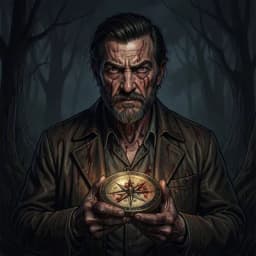
Meet the sample character
Try a scene · No signup
The Breath of the Heath
A short sample of this world. Your own version starts with your character.
You stumble over a hidden tussock, face-first into the freezing, peaty mud. The moor is a suffocating blanket of gray. You gasp, but the air tastes of stagnant water and cold earth. Somewhere behind you, the rhythmic, wet slap of footsteps stops. Not a deer. Not the wind. Something bipedal is tracking you through the gloom.

“Don't turn around, boy. The fog doesn't like to be looked at.”

The voice sounds like grinding stones. You freeze, mud caked on your cheek. The temperature drops, making your breath bloom in front of you like a phantom. The silence is heavy, pressing against your eardrums until they ache. You have a heavy iron lantern in your hand, its wick flickering against the damp.
“Who is there? I can hear you breathing, and I have a blade.”
The figure emerges from the gray—ragged, skin like translucent parchment, eyes milky and unseeing. He reaches out, a finger pointing toward the abyss behind you where the ground drops into the Blackwood Sink. The creature behind you lets out a low, wet gurgle, shifting its weight. You have seconds before the entity closes the gap.
The mist roils, masking the threat that hunts you. How do you survive the next ten seconds?
Your character. Your next move.
The mist is closing in. Choose your path.
The sun has set, and the temperature is dropping. You hear a low, guttural sound behind you, and the path ahead is obscured by thick, gray vapor. Will you stand your ground and fight, or run into the dark and hope you don't stumble into the bog? The next move is yours.
Enter the FogYour Story, Your Way
Everything is customizable. Pick any genre, setting, or character — the AI builds a world around exactly what you want.
Any Character
Design your appearance, personality, backstory — every detail
Any World
Fantasy kingdoms, sci-fi stations, modern cities — you choose
Branching Paths
No two playthroughs are the same. Your choices reshape everything
Full Immersion
AI images, voice acting, sound effects — a living story
Choose whether to follow the flickering lights or stay put in the freezing dark.
Decide how to manage your limited stamina while running through uneven, boggy terrain.
Interact with mysterious items found in the mist that might be traps or tools.
Attempt to outsmart an unseen entity stalking you through the dense, heavy fog.
Static gray air clings to your coat. You cannot see five feet in front of you. The sound of wet, rhythmic slapping follows your path—not your own footsteps. It is a heavy, dragging sound moving through the heather. Every choice you make, from whether to hide in the sodden brush or run blindly into the void, dictates whether you survive the night. The moor is a living trap, and it is starving. Will you trust the flickering lantern light in the distance or the voice calling your name from the blackness of the bog? Your survival depends on your instinct and your willingness to abandon caution when the fog begins to swallow your senses.
What is Foggy Moor in Horror / Thriller?
The foggy moor is a classic archetype of gothic horror, defined by isolation, sensory deprivation, and the constant threat of the unknown. It is a landscape that strips away modern comforts, leaving characters vulnerable to both the elements and the entities that dwell within the mist. Unlike a haunted house, where walls provide a boundary, the moor offers no shelter. You are exposed, constantly aware that something is watching from the periphery of your vision. Literature and film have long used this setting to amplify dread. In Arthur Conan Doyle’s 'The Hound of the Baskervilles,' the moor functions as a character in its own right—a treacherous expanse of peat and fog that obscures the truth and hides a killer. Similarly, Susan Hill’s 'The Woman in Black' utilizes the suffocating atmosphere of the marsh to trap the protagonist, making escape feel impossible. These stories succeed because they force the reader to confront the reality that nature is not neutral; in horror, it is a predator.
Why play Foggy Moor as an interactive story?
Playing through a moorland setting requires you to make split-second decisions when your senses are failing. In this format, you are not a passive observer; you are the one deciding whether to keep moving when your legs are burning or to stop and listen to the growls echoing through the gorse. The tension comes from the ambiguity of the environment. If you decide to call out for help, you might alert a rescue party, or you might invite a monster to your location. Every action ripples forward, changing the environment and the threats you face. You will find yourself debating whether to burn your last matches to see a path forward or save them for a signal, knowing that the dark is closing in and whatever stalks the bog is getting closer.
What makes Foggy Moor work: the worldbuilding
The effectiveness of the foggy moor relies on the psychological impact of sensory deprivation. When sight is limited, human hearing becomes hyper-sensitive, turning every rustle of dry heather into a potential threat. This creates a natural tension that narrative designers can exploit by forcing players to prioritize speed over accuracy. The setting inherently generates conflict: the struggle against the environment, the struggle against the encroaching cold, and the struggle against the paranoia of being hunted. To build a compelling moorland story, you must focus on the sensory details. Describe the taste of wet iron in the air, the smell of decaying peat, and the sensation of mud pulling at your boots. These details ground the horror in reality, making the supernatural elements feel more intrusive. Works like Dan Simmons’ 'The Terror' demonstrate how a harsh, unforgiving environment can break a person’s resolve, while the film 'Annihilation' shows how an environment can become alien and hostile. By using these elements, you can create a narrative where the moor is not just a backdrop, but a persistent antagonist. Character types that thrive here are those with high stakes—someone lost, a fugitive hiding from the law, or a researcher uncovering things that should have stayed buried. Their desperation makes every choice feel heavy, and their vulnerability makes the threat of the moor feel absolute.
FAQ
What makes the foggy moor setting so scary?
It combines total isolation with sensory deprivation. Because you cannot see what is lurking in the fog, your brain fills the silence with fear, making the threat feel much larger than it actually is.
How do my choices impact the story?
Every decision you make, from how you navigate the terrain to how you react to sounds in the dark, changes your survival odds. A wrong move could lead you into a deep bog, while a clever choice might help you find a temporary refuge.
Can I hide from the monsters in this setting?
Yes, but finding a hiding spot in a barren landscape is difficult. You must weigh the risk of staying still against the danger of continuing your movement through the fog.
Is this setting suitable for psychological horror?
Absolutely. The isolation and the constant threat of the unknown provide the perfect environment for characters to lose their grip on reality as they struggle to survive the night.
Explore more Horror / Thriller stories like Haunted House, Survival Horror, Psychological Thriller.
More Horror / Thriller Stories
Haunted House
The house has been waiting for you. Explore rooms that should not exist, hear voices that should not speak, and decide whether to flee or uncover the truth.
TropeSurvival Horror
Resources are scarce and something is hunting you. Every bullet, every hiding spot, every ally could mean the difference between survival and a gruesome end.
TropePsychological Thriller
Trust no one, not even yourself. Reality bends and paranoia mounts as you navigate a story where the greatest threat might be inside your own mind.
TropeFinal Girl
Friends are dropping one by one and you might be next. Outsmart the killer, make impossible choices, and fight to be the last one standing.
TropeEldritch Horror
Some knowledge was never meant for mortal minds. Encounter cosmic horrors beyond comprehension and decide how much sanity you are willing to sacrifice for the truth.
TropeDemonic Possession
Something ancient and malevolent has taken hold of someone you care about. You must decide whether to fight the demon, bargain with it, or risk losing everything to save a soul.