
Horror / Thriller · Interactive story
Echoes in the Rust: Survive the Abandoned Theme Park
The Ferris wheel is still turning, but the power was cut twenty years ago.
Start as a guest. Choose your character before the story begins.
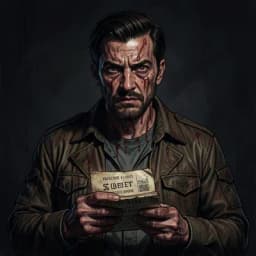
Meet the sample character
The rides stopped, but the park is still hungry.
Try a scene · No signup
Static Grin
A short sample of this world. Your own version starts with your character.
You push through the waist-high weeds of the midway. The smell of rot clings to the air, thick and metallic. Above, the Ferris wheel groans in the wind, a skeletal structure swaying against the moon. You didn't come here for photos. You came because the last image your brother sent was stamped with this park's faded logo.

“Jonas, stop. Listen. That carousel music isn't coming from the speakers, and it's getting louder.”

The silence snaps. A discordant tune begins to chime from the plaza, rhythmic and wrong. Your pulse hammers against your throat. You look down at your shaking hands, gripping your flashlight so hard your knuckles turn white. The beam flickers, catching a glimpse of a mascot suit slumped against a concession stand—then the suit moves.
“We aren't alone, Milo. Keep your eyes on the shadows, not the lights.”
The suit stands, limbs jerking like a marionette with tangled strings. It isn't wearing a costume; the fur is fused to the muscle. It turns its oversized, button-eyed head toward your hiding spot. The carousel music swells, drowning out the sound of your own panicked breathing. The creature takes a jagged step forward, its head tilting at an impossible angle.
The mascot is closing the distance, its movements stuttering with mechanical malice. What do you do?
Your character. Your next move.
The gates are closing. Make your move.
The park is waking up, and it hasn't had a visitor in decades. Do you have the nerve to reach the exit, or will you become the next permanent attraction? Your choices determine your fate in the dark.
Enter the park nowYour Story, Your Way
Everything is customizable. Pick any genre, setting, or character — the AI builds a world around exactly what you want.
Any Character
Design your appearance, personality, backstory — every detail
Any World
Fantasy kingdoms, sci-fi stations, modern cities — you choose
Branching Paths
No two playthroughs are the same. Your choices reshape everything
Full Immersion
AI images, voice acting, sound effects — a living story
Decide whether to scavenge for tools in the gift shop or press forward.
Manage your flashlight battery to avoid being left in absolute, suffocating darkness.
Choose to confront the source of the mechanical laughter or flee the area.
Navigate the collapsing roller coaster tracks while being hunted by unseen entities.
The smell of ozone and rot clings to the air. Ahead, a carousel horse hangs by a single rusted hinge, its painted eyes peeling away to reveal jagged metal underneath. You stand at the main gate, the ticket booth glass long shattered, crunching under your boots like teeth. Somewhere in the dark, a distorted calliope melody begins to play—a tinny, weeping sound that has no business existing in a place abandoned to the weeds. You are here for answers, but the park has its own agenda. Every shadow hides a choice. Do you investigate the flickering lights of the funhouse, or do you sprint toward the perimeter fence before the gates lock behind you? In this interactive story, your survival hinges on split-second decisions. One wrong turn leads to a dead end, and in this decaying labyrinth, a dead end is often a tomb. The mascots are watching from the billboards, their grins widening as the sun dips below the horizon.
What is Abandoned Theme Park in Horror / Thriller?
An abandoned theme park acts as a stage for subverted innocence. These settings leverage the uncanny valley—the feeling that something meant to be joyful is now fundamentally wrong. When you take a space built for childhood wonder and allow nature to reclaim it, you create a potent psychological pressure cooker. The contrast between bright, primary-colored architecture and the encroaching decay of rust, vines, and shadows heightens the sense of dread. Famous examples like the Lakeside Amusement Park in Silent Hill 3 or the unsettling funhouse scenes in the 1981 film The Funhouse demonstrate why this setting works: it exploits the claustrophobia of a contained, artificial environment. Unlike an open forest, a theme park has boundaries, turnstiles, and locked gates. You are trapped in a playground that has turned predatory. The horror comes from the realization that the infrastructure itself is hostile. Rollercoasters become ribcages of steel, and ticket booths become claustrophobic traps. It is a setting that demands hyper-vigilance, as every corner of the park is designed to distract, misdirect, and eventually consume the unwary visitor.
Why play Abandoned Theme Park as an interactive story?
Agency is the only weapon you have against the shadows. In a passive story, you watch a character walk into the dark funhouse and scream at the screen; here, you are the one deciding to step inside. The tension rises because you know the consequences of a poor choice. If you choose to follow the sound of the calliope music, you might find a hidden map, or you might find yourself cornered in a room with no exit. You will face binary decisions that shift the trajectory of your survival: do you climb the maintenance ladder to get a vantage point, risking a fall from the rusted structure, or do you stay low and risk being spotted by whatever stalks the midway? The AI tracks your choices, adapting the environment to your actions. If you show cowardice, the park becomes more aggressive. If you show audacity, the park tests your limits with even more complex puzzles. You are not just reading about fear; you are managing your adrenaline, your dwindling flashlight battery, and your sanity as you navigate the decaying midway.
What makes Abandoned Theme Park work: the worldbuilding
The effectiveness of this setting relies on the distortion of familiar iconography. A theme park is designed to be safe, controlled, and predictable. When that control fails, the familiarity becomes a weapon. In works like the game Bioshock, the decay of a once-utopian environment serves as a constant reminder of what was lost. Similarly, the abandoned park trope works because the setting acts as a character. It has a history, a tragedy, and a lingering hunger. Sensory details are vital here: the sound of wind whistling through the hollow metal of a roller coaster, the sensation of walking over ground that feels soft and unstable, and the sight of faded, grinning mascots that seem to track your movement from the corners of your vision. Conflicts are generated by the park’s own structural failures—a bridge that collapses under your weight, or a power generator that requires a specific, dangerous sequence of actions to restart. Character archetypes thrive here, particularly the skeptical investigator or the desperate survivor who has a personal connection to the park’s closure. The key to successful worldbuilding in this setting is consistency in the decay. If the park has been empty for twenty years, the rot must be pervasive. The silence should be heavy, broken only by the groaning of metal under stress. By grounding the narrative in the physical reality of the park’s decline, you create a space where the supernatural feels inevitable rather than forced. When the roller coaster cars start moving on their own, it feels like a violation of the laws of physics, making the terror that much more immediate.
FAQ
What makes an abandoned theme park different from a haunted house setting?
A haunted house is usually confined to a single building, focusing on domestic fears. An abandoned theme park is an outdoor, sprawling labyrinth that combines architectural horror with the terror of being exposed. It offers more verticality and environmental hazards, like roller coasters or water rides, which aren't present in traditional haunted house stories.
Can I survive the park without fighting?
Yes. Stealth and puzzle-solving are often more effective than direct confrontation. The environment is designed to reward observation. By choosing to hide or bypass dangerous areas, you can uncover the history of the park and find a way out without ever drawing blood.
Is this setting suitable for psychological horror?
Absolutely. The primary focus is often on the mental state of the protagonist. The park uses your past and your insecurities against you, turning memories into hallucinations that manifest as twisted carnival attractions.
How does the AI affect the difficulty of the story?
The AI monitors your decisions and adjusts the intensity of the threats. If you make reckless choices, the park becomes more dangerous, with more frequent encounters and fewer resources. If you play cautiously, the environment remains tense but gives you more time to breathe and plan.
Explore more Horror / Thriller stories like Haunted House, Survival Horror, Psychological Thriller.
More Horror / Thriller Stories
Haunted House
The house has been waiting for you. Explore rooms that should not exist, hear voices that should not speak, and decide whether to flee or uncover the truth.
TropeSurvival Horror
Resources are scarce and something is hunting you. Every bullet, every hiding spot, every ally could mean the difference between survival and a gruesome end.
TropePsychological Thriller
Trust no one, not even yourself. Reality bends and paranoia mounts as you navigate a story where the greatest threat might be inside your own mind.
TropeFinal Girl
Friends are dropping one by one and you might be next. Outsmart the killer, make impossible choices, and fight to be the last one standing.
TropeEldritch Horror
Some knowledge was never meant for mortal minds. Encounter cosmic horrors beyond comprehension and decide how much sanity you are willing to sacrifice for the truth.
TropeDemonic Possession
Something ancient and malevolent has taken hold of someone you care about. You must decide whether to fight the demon, bargain with it, or risk losing everything to save a soul.