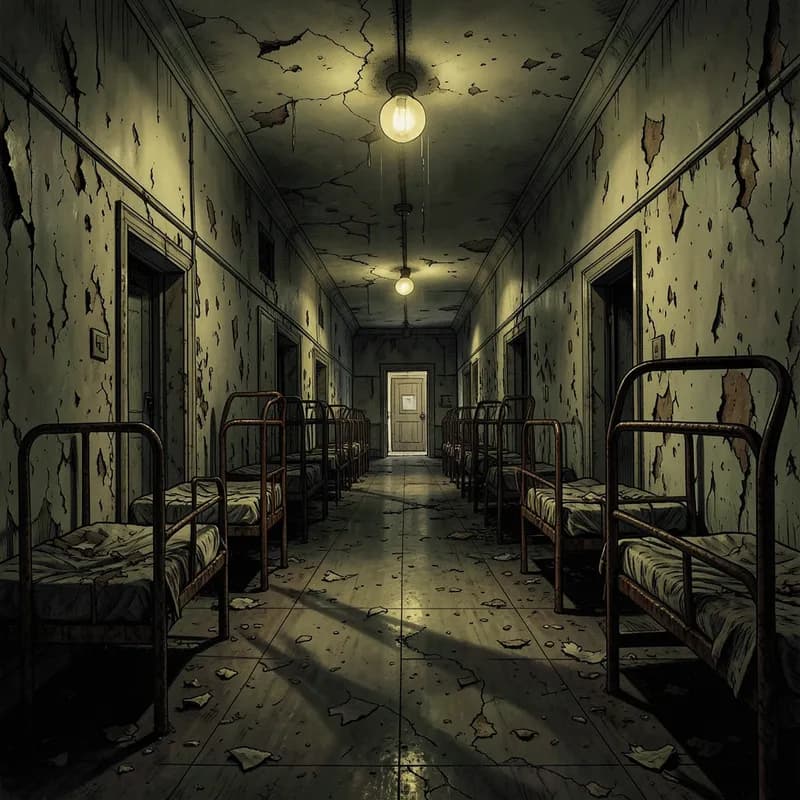
Horror / Thriller · Interactive story
The Halls of St. Jude’s Are Calling
Silence is a luxury you can no longer afford behind these rusted iron gates.
Start as a guest. Choose your character before the story begins.

Meet the sample character
Some patients never checked out.
Try a scene · No signup
The Ledger of St. Jude
A short sample of this world. Your own version starts with your character.
Your flashlight beam cuts through the stagnant dark of the ward. Dust motes dance in the light, thick as snow. Beneath your boots, the linoleum crunches, the sound echoing down the long, lightless corridor like a gunshot. You stop, your heart hammering against your ribs, when a low, wet sound drags itself from behind the heavy steel door labeled 'Isolation 4-B'.
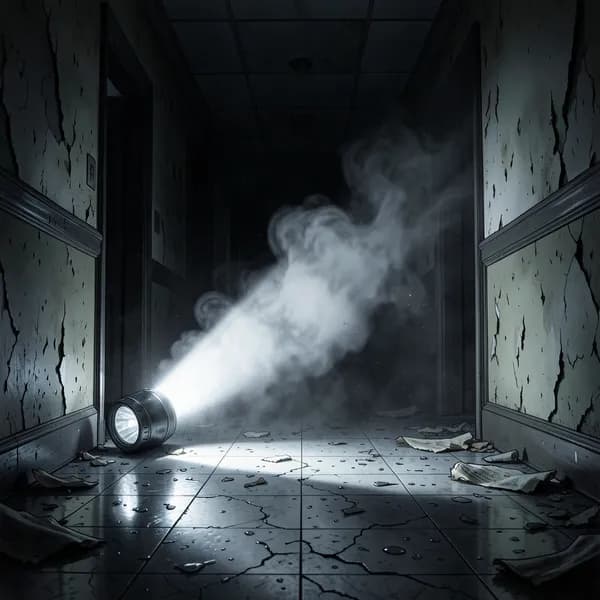
“Silas, stop moving. It’s not wind. It’s breathing.”
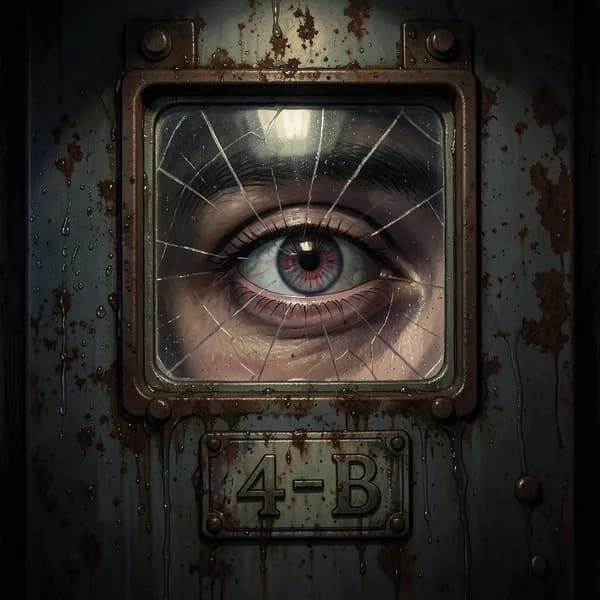
You freeze. The air temperature plummets, turning your breath into a jagged cloud. Your grip on your camera tightens until your knuckles turn white. Through the reinforced glass of the door, a smudge of gray shifts, something too large and too jagged to be a shadow. The lock on the door rattles, the rusted metal groaning under the pressure of something trying to push outward.
“I didn't come this far to turn back because of a locked door, Mina. If he’s in there, we have to know.”
The rattling stops abruptly. A singular, pale eye presses against the small, scratched window, staring directly at you with an intelligence that shouldn't exist in a place abandoned for thirty years. The door hinge begins to scream as it pivots open, inch by agonizing inch. You realize with sickening clarity that the lock didn't fail—it was unlatched from the inside.
The door is swinging wide, revealing a sliver of the darkness within. What do you do?
Your character. Your next move.
Will you make it out before sunrise?
The heavy oak doors have locked behind you, and the flashlight is dying. You hear breathing just behind your left shoulder. Will you run toward the exit or search for the truth hidden in the head doctor's office? Every heartbeat counts.
Start Your EscapeYour Story, Your Way
Everything is customizable. Pick any genre, setting, or character — the AI builds a world around exactly what you want.
Any Character
Design your appearance, personality, backstory — every detail
Any World
Fantasy kingdoms, sci-fi stations, modern cities — you choose
Branching Paths
No two playthroughs are the same. Your choices reshape everything
Full Immersion
AI images, voice acting, sound effects — a living story
Decide whether to hide or confront the entity stalking the psychiatric ward corridors.
Analyze patient files to uncover the hidden truth behind the hospital's sudden closure.
Manage your dwindling flashlight battery while navigating pitch-black, labyrinthine medical wings.
Choose which locked rooms to force open, potentially triggering unforeseen psychological hazards.
Rust flakes from the ceiling, dusting your shoulders like grey snow. The air tastes of copper and wet concrete. You hold a flickering flashlight, its beam dancing over overturned gurneys and patient records scattered like confetti. Somewhere down the hall, a rhythmic metallic tapping begins—slow, deliberate, and getting closer. You are not alone, though the hospital has been condemned for forty years. Your breath hitches as you reach a fork in the corridor: left toward the morgue, or right toward the administrative wing. The story reacts to your movements, and your next choice dictates your survival. Every decision carries the weight of potential death as you navigate the decaying remnants of a place that never wanted you to leave.
What is Abandoned Asylum in Horror / Thriller?
An abandoned asylum setting acts as a pressure cooker for the human psyche. It is a space where the thin veil between reality and delusion tears apart. From the claustrophobic dread found in the film Session 9 to the relentless, shifting architecture in the game Silent Hill, this setting forces characters to confront the remnants of past trauma. It is not just about jump scares; it is about the lingering weight of institutional failure and the ghosts of those forgotten by society. The decay is a character in itself—the peeling paint, the stench of stagnant water, and the flickering lights that refuse to die. When you step into this setting, you are entering a space that was once designed to contain madness, and now, it feels as though the building itself has absorbed that instability. It is a classic trope for a reason: the isolation of the location, combined with the sterile, cold medical equipment, creates a sense of wrongness that is hard to shake.
Why play Abandoned Asylum as an interactive story?
You are not just watching a protagonist walk into a trap; you are the one deciding how to respond when the lock clicks shut behind you. Do you hide in a supply closet, or do you stand your ground with a rusted scalpel? The tension spikes when your resources are limited. If you choose to investigate the basement, you might find a vital key, but you risk being cornered in the dark. Every decision alters the flow of the narrative, forcing you to balance curiosity with self-preservation. Will you prioritize uncovering the hospital's dark history, or focus entirely on finding the exit before your flashlight battery dies? The agency adds a layer of anxiety that static media cannot replicate. When a creak in the floorboards sounds, you have to decide instantly how to react, and the consequences of those reactions ripple through the rest of your story.
What makes Abandoned Asylum work: the worldbuilding
The effectiveness of an asylum setting lies in its inherent contradiction: it was built to heal but designed to contain. This juxtaposition creates a natural conflict between the need for safety and the reality of confinement. In the game Outlast, the environment dictates the pace of the player’s survival, turning every room into a potential tomb. The asylum is a maze. It is a playground for sensory horror—the hum of old electrical wiring, the smell of formaldehyde, the sound of a distant, impossible piano. To write for this setting, one must focus on the 'institutional' feeling. Everything is cold, sterile, and rigid, even in its ruin. Use character types like the skeptical journalist, the desperate survivor, or the former employee with a hidden agenda. The key is sensory detail: the way a shadow stretches across a tiled floor, or the specific, chilling silence after a loud crash. The architecture of the building should feel like an antagonist. Long hallways, locked doors, and windows that don't open all serve to trap the reader in a cycle of dread. By emphasizing the cold, clinical history of the location, you create a backdrop that makes the supernatural elements feel even more intrusive and terrifying.
FAQ
What makes the abandoned asylum setting so terrifying?
It taps into our fear of helplessness and the uncanny nature of places meant for healing that became sites of suffering. The environment itself feels like an antagonist.
How do my choices impact the story?
Your decisions determine which areas you explore and whether you uncover the hospital's dark past or succumb to the entities within. One wrong turn can lead to a dead end.
Is this appropriate for fans of psychological horror?
Yes, the setting prioritizes atmosphere and dread over cheap thrills, focusing on the psychological toll of being trapped in a decaying, institutional space.
Can I play as different character types?
Each story allows you to step into the role of a character with unique motives, ranging from investigative journalists to urban explorers looking for a thrill.
Explore more Horror / Thriller stories like Haunted House, Survival Horror, Psychological Thriller.
More Horror / Thriller Stories
Haunted House
The house has been waiting for you. Explore rooms that should not exist, hear voices that should not speak, and decide whether to flee or uncover the truth.
TropeSurvival Horror
Resources are scarce and something is hunting you. Every bullet, every hiding spot, every ally could mean the difference between survival and a gruesome end.
TropePsychological Thriller
Trust no one, not even yourself. Reality bends and paranoia mounts as you navigate a story where the greatest threat might be inside your own mind.
TropeFinal Girl
Friends are dropping one by one and you might be next. Outsmart the killer, make impossible choices, and fight to be the last one standing.
TropeEldritch Horror
Some knowledge was never meant for mortal minds. Encounter cosmic horrors beyond comprehension and decide how much sanity you are willing to sacrifice for the truth.
TropeDemonic Possession
Something ancient and malevolent has taken hold of someone you care about. You must decide whether to fight the demon, bargain with it, or risk losing everything to save a soul.