
Historical Fiction · Interactive story
The Strategist’s Burden: Command the Warring States
A single brilliant move can topple a dynasty. Will you be the one to strike?
Start as a guest. Choose your character before the story begins.
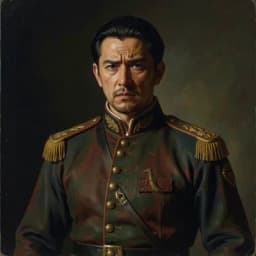
Meet the sample character
Command is a heavy burden when the ink is still wet on the scrolls.
Try a scene · No signup
The Shadow of the Strategist
A short sample of this world. Your own version starts with your character.
You stand before the low table, your fingers trembling slightly against the rough bamboo mat. Sunlight filters through the tent flap, illuminating the dust motes dancing over the master's discarded brushes. Sun Tzu sits cross-legged across from you, his gaze fixed on the map of the valley, his expression as unreadable as a frozen pond.

“The enemy counts our exhaustion as their greatest ally; tell me, Lieutenant, what does your own heart count as your most dangerous weakness?”

The weight of the lost scroll presses against your ribs, a sharp reminder of your incompetence. You feel the cold sweat prickling at your hairline, knowing that if he finds out the supply routes are unmapped, your life will end before the sunset. The silence in the tent grows suffocating.
“My weakness is the fear of moving when the path is not yet clear, Master. I seek your wisdom to see through the fog of the valley.”
Sun Tzu leans forward, the fabric of his robes whispering against the floor. He picks up a single black stone and places it directly upon the river crossing on the map. He looks up at you, his eyes piercing. He knows something is amiss, and you have exactly one chance to steer his suspicion away from your failure.
How do you respond to his silent, piercing scrutiny?
Your character. Your next move.
Master the Art of War. Your legacy depends on the next move.
The enemy is at the gates, and your council is divided. Do you strike now while the river is high, or retreat to bait them into the valley? Your choices define the outcome of this campaign. Step into the role of the strategist and see if your mind can outmatch the greatest commanders of history.
Begin Your CampaignYour Story, Your Way
Everything is customizable. Pick any genre, setting, or character — the AI builds a world around exactly what you want.
Any Character
Design your appearance, personality, backstory — every detail
Any World
Fantasy kingdoms, sci-fi stations, modern cities — you choose
Branching Paths
No two playthroughs are the same. Your choices reshape everything
Full Immersion
AI images, voice acting, sound effects — a living story
Decide whether to burn the supply bridge to force your soldiers to fight harder.
Analyze enemy movement patterns to choose the perfect moment for a surprise flank attack.
Navigate treacherous court politics while leading a campaign deep into hostile, unfamiliar mountain terrain.
The mud of the Chu border clings to your boots. Ahead, the enemy general’s banners snap in the biting wind, his cavalry waiting for a signal that hasn’t come. You stand on the ridge, a wooden scroll tucked into your sash—the draft of a philosophy that will eventually define military genius for millennia. Your advisors argue for a frontal assault, their voices frantic and loud against the silence of the valley. You look at the terrain, the river snaking through the pass, and the thinning line of your own center. Victory is not merely about iron and blood; it is about the deception you plant in the enemy’s mind before the first arrow flies. Every command you issue here ripples through the ranks, altering the fate of the empire. Your choices determine whether your name is carved into history or lost to the dust of the valley.
What is Sun Tzu in Historical Fiction?
Sun Tzu is the legendary Chinese general and philosopher credited with writing The Art of War. Far from a dusty relic, this text is a foundational guide to conflict, psychology, and leadership. It is less about the mechanics of a sword swing and more about the architecture of victory—winning without fighting, utilizing terrain, and breaking the enemy’s resistance through intelligence rather than exhaustion. You might recognize his influence in films like Hero (2002), where the weight of political maneuvering matches the intensity of the combat, or in the strategic adaptations within the Total War series, which demand that players think several steps ahead of their opponents. Engaging with Sun Tzu in a historical context means moving away from the heroic tropes of warriors and stepping into the role of the architect. It is the study of chaos and the imposition of order. Whether he was a singular man or a collective of military thinkers, the legacy remains the same: the battlefield is a game of shifting perceptions.
Why play Sun Tzu as an interactive story?
Playing as a strategist forces you to abandon the fantasy of the lone champion. You are not charging into the fray; you are orchestrating it. The tension arises from the scarcity of resources and the volatility of your lieutenants. You will face moments where you must decide whether to feign weakness to draw the enemy into a trap or to hold your ground against overwhelming odds. The choices are rarely binary. Do you execute a disloyal captain to maintain discipline, or do you spare him to secure the loyalty of his clan? Every decision carries the risk of mutiny or the reward of a decisive, bloodless victory. You are constantly balancing the morale of your troops against the cold reality of the supply line. You must treat your army as a precious tool, knowing that one wrong order could leave your flank exposed to a devastating counter-maneuver.
The literary legacy of Sun Tzu
The Art of War, or Sunzi Bingfa, is a collection of thirteen chapters that has influenced everyone from Mao Zedong to modern corporate CEOs. Originating during the Spring and Autumn period, it represents a departure from the ritualized warfare of the time. While contemporaries focused on martial prowess, this work prioritized efficiency and intelligence. The evolution of this character in pop culture is fascinating. In the film Red Cliff (2008), directed by John Woo, we see the application of these strategies during the Battle of Red Cliffs, where overwhelming force is neutralized by timing and environmental exploitation. Similarly, the Romance of the Three Kingdoms novels lean heavily on the principles of Sun Tzu, presenting characters who treat war as a complex board game. The character of the master strategist has become a trope itself, but the historical Sun Tzu remains the archetype. His work endures because it acknowledges the human element—the ego, the fear, and the capacity for deception. It is not just a manual for war; it is a mirror reflecting the nature of conflict in any age. By stripping away the romanticism of the battlefield, the text forces the reader to confront the harsh pragmatism of survival.
FAQ
What is the focus of a Sun Tzu interactive story?
The story focuses on tactical decision-making, resource management, and psychological warfare rather than traditional combat mechanics.
How does the game handle historical accuracy?
The narrative blends the cultural realities of the Warring States period with the strategic principles found in the original text, ensuring a grounded experience.
Can I win without fighting?
Yes, the game rewards players who use deception, diplomacy, and terrain to force an enemy surrender, staying true to the core philosophy of the work.
Is this game suitable for fans of historical strategy?
It is designed specifically for those who appreciate the complexity of ancient warfare and the philosophy of leadership over button-mashing action.
Explore more Historical Fiction stories like Forbidden Historical Affair, Court Intrigue, Wartime Survival.
More Historical Fiction Stories
Forbidden Historical Affair
Love across class lines, enemy nations, or social taboos of the era. Navigate the rigid rules of the past while pursuing a connection that could change your fate.
TropeCourt Intrigue
In royal courts, a smile can be a weapon and a whisper can topple kingdoms. Navigate the lethal politics of power where every alliance is temporary.
TropeWartime Survival
Bombs fall, supplies dwindle, and impossible moral choices arise daily. Experience the human side of history's greatest conflicts through gut-wrenching personal stories.
TropeRevolution
The old order crumbles and a new world demands to be born. Choose your side in a revolution where ideals clash with the brutal realities of upheaval.
TropeVoyage of Discovery
Set sail into uncharted waters where maps end and legends begin. Lead an expedition into the unknown and face the wonders and horrors that await.
TropeAncient Egypt Adventure
Walk among pyramids and temples where gods rule through mortal vessels. Navigate the politics of pharaohs, the secrets of priests, and the mysteries of the Nile in a civilization that defied time itself.