
Historical Fiction · Interactive story
Shadows Within the Stone: Command Your Samurai Castle
Steel against wood, honor against betrayal: will your fortress stand when the shogunate falls?
Start as a guest. Choose your character before the story begins.
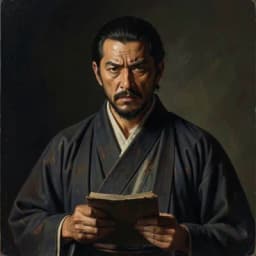
Meet the sample character
Honor is a weight that only the dead can set down.
Try a scene · No signup
The Crimson Keeps of Aizu
A short sample of this world. Your own version starts with your character.
You stand in the courtyard of Takeda Castle, the scent of pine needles sharp against the biting morning frost. Under your sash, the scroll feels like a hot coal against your ribs, its ink sealing the fate of the entire clan. You need to reach the western gate before the bell rings, but the courtyard is already swarming with guards.

“Kenjiro, your shadow lingers too long in places where you are not invited. Speak plainly, or the blade at my hip shall find its answer.”

Hideo’s hand tightens on the lacquered hilt, his eyes tracking the slight tremor in your fingers. You know the history of his family and the debt he owes your own, a leverage that burns as brightly as your guilt. If you draw your sword now, you forfeit any chance of delivering the warning.
“I am merely seeking the silence of the inner shrine, Hideo. Surely a man of your status can grant a humble samurai a moment of prayer before the morning assembly?”
The retainer steps into your path, blocking the gate with the immovable weight of an executioner. He does not believe you, and the heavy iron bell begins its rhythmic toll, signaling the start of the council. Behind him, you see the Lord’s advisors moving toward the chamber where the poisoned tea is already poured.
The bell tolls for the second time; the tea will be served in moments. How do you bypass the steel between you and the inner sanctum?
Your character. Your next move.
Your Clan’s Legacy Starts Within These Walls
The gates are barred, the lanterns are flickering, and your rival is already moving his troops toward your borders. Will you negotiate a peace that costs you your pride, or will you sharpen your blade and prepare for a siege that could end your bloodline? Every decision you make inside the keep will determine whether your name is remembered in legend or buried in the dirt. Step inside the castle and take command of your destiny tonight.
Begin Your Samurai StoryYour Story, Your Way
Everything is customizable. Pick any genre, setting, or character — the AI builds a world around exactly what you want.
Any Character
Design your appearance, personality, backstory — every detail
Any World
Fantasy kingdoms, sci-fi stations, modern cities — you choose
Branching Paths
No two playthroughs are the same. Your choices reshape everything
Full Immersion
AI images, voice acting, sound effects — a living story
Negotiate complex marriage alliances to secure your clan's borders against encroaching rival armies.
Decide whether to execute a captured spy or turn them into a double agent.
Manage limited rice stores during a brutal winter siege to keep your garrison loyal.
Choose between traditional martial honor and pragmatic, underhanded tactics to win a skirmish.
The scent of pine needles mingles with the sharp tang of wet stone as the autumn rain lashes against the keep’s heavy wooden gates. Inside, the daimyo sits in silence, his eyes fixed on the sliding shoji screen, knowing that a single misplaced word could lead to ritual suicide or a blood-soaked coup. You walk these corridors, your hand hovering near the hilt of your katana, fully aware that the clan’s survival rests on your next decision. In this interactive story, you are the architect of your own fate, navigating the lethal currents of 16th-century power dynamics. One moment you are negotiating a fragile alliance with a rival lord, the next you are defending the ramparts against a sudden night assault. Your choices echo through the hollow halls, determining whether your name is written in the annals of history or lost to the ash of a burned-down keep.
What is Samurai Castle in Historical Fiction?
A Samurai Castle is more than a fortification; it is the physical manifestation of a lord's authority and a complex machine designed for both defense and psychological dominance. Unlike European stone castles, these structures—often called shiro—utilize intricate layouts of moats, stone walls, and labyrinthine paths meant to confuse and slaughter invaders. In films like Akira Kurosawa’s Ran, the castle is a central character, representing the fragility of power and the inevitability of decay. These fortresses were the hubs of feudal administration, where the samurai class lived, trained, and plotted. They are defined by the contrast between austere, minimalist interiors and the brutal, often bloody, reality of the Sengoku period. Understanding the layout—from the donjon, or the central keep, to the outer baileys—is essential for anyone aiming to survive the political intrigue of the era. Whether featured in historical novels or strategy games, the setting provides a claustrophobic, high-stakes environment where every room change feels like stepping into a new tactical challenge.
Why play Samurai Castle as an interactive story?
Playing through a Samurai Castle setting requires more than a sharp blade; it demands a sharp mind. You will manage the volatile loyalty of your retainers, decide whether to honor a peace treaty that feels like a trap, or choose to betray a mentor to secure your clan's future. The tension lies in the friction between personal desire and the rigid expectations of bushido. You might find yourself arbitrating a land dispute between feuding peasant villages in the morning, only to face an assassination attempt in the tea room by sunset. Decisions have weight—offending a high-ranking official could lead to immediate exile, while showing mercy might leave your gates vulnerable to a siege. You aren't just reading history; you are grappling with the impossible choices that defined the life of a samurai commander.
What makes Samurai Castle work: the worldbuilding
The effectiveness of a Samurai Castle setting relies on the interplay of isolation and claustrophobia. Even within a sprawling complex, the walls feel like they are closing in, a sentiment captured perfectly in the game Sekiro: Shadows Die Twice, which uses its vertical, multi-layered castle architecture to dictate the flow of combat and stealth. The setting thrives on the contrast between the rigid, aesthetic beauty of tea ceremonies or poetry readings and the sudden, explosive violence of a katana strike. Authors like Eiji Yoshikawa in Musashi illustrate how the environment shapes the warrior; the castle is a place where one’s reputation is constantly scrutinized. To build a compelling narrative here, focus on the sensory details: the sound of heavy boots on wooden floors, the sight of cherry blossoms falling over a blood-stained courtyard, and the weight of silk robes that hide hidden daggers. The core conflict is almost always the tension between the individual and the state. You belong to the clan, but what happens when the clan's leader is incompetent or corrupt? The most gripping stories in this setting force the protagonist to weigh their personal honor against the survival of their household. Realism in these stories comes from acknowledging that the samurai were not just fighters, but bureaucrats, landowners, and masters of etiquette. A successful story honors this by making the player care as much about a diplomatic insult as they do about a clash of steel.
FAQ
Can I choose my own rank within the castle?
Yes, you can navigate the hierarchy from a low-ranking retainer to a powerful daimyo, with each rank offering different narrative options and political responsibilities.
How does honor influence my choices?
High honor may grant you loyalty and respect, but strict adherence to it can leave you vulnerable to clever enemies who do not share your moral code.
Are the sieges historically accurate?
The tactical scenarios are grounded in period-accurate siege warfare, including the use of archers, muskets, and psychological tactics that were common in the Sengoku period.
Can I influence the outcome of the shogunate?
Your actions can lead to massive shifts in regional power, potentially altering the fate of the ruling shogunate and determining which clan rises to rule the nation.
Explore more Historical Fiction stories like Forbidden Historical Affair, Court Intrigue, Wartime Survival.
More Historical Fiction Stories
Forbidden Historical Affair
Love across class lines, enemy nations, or social taboos of the era. Navigate the rigid rules of the past while pursuing a connection that could change your fate.
TropeCourt Intrigue
In royal courts, a smile can be a weapon and a whisper can topple kingdoms. Navigate the lethal politics of power where every alliance is temporary.
TropeWartime Survival
Bombs fall, supplies dwindle, and impossible moral choices arise daily. Experience the human side of history's greatest conflicts through gut-wrenching personal stories.
TropeRevolution
The old order crumbles and a new world demands to be born. Choose your side in a revolution where ideals clash with the brutal realities of upheaval.
TropeVoyage of Discovery
Set sail into uncharted waters where maps end and legends begin. Lead an expedition into the unknown and face the wonders and horrors that await.
TropeAncient Egypt Adventure
Walk among pyramids and temples where gods rule through mortal vessels. Navigate the politics of pharaohs, the secrets of priests, and the mysteries of the Nile in a civilization that defied time itself.