
Historical Fiction · Interactive story
Blood and Sand: Survival in the Roman Colosseum
Fifty thousand voices demand a spectacle. The blade in your hand is the only law.
Start as a guest. Choose your character before the story begins.
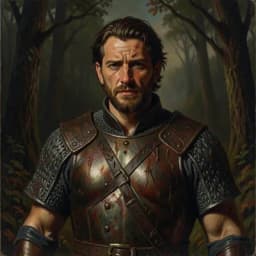
Meet the sample character
The price of favor is written in blood.
Try a scene · No signup
Sand and Iron
A short sample of this world. Your own version starts with your character.
The heat of the Roman sun presses against your shoulders like a physical weight. Dust motes dance in the harsh light, swirling around the heavy wooden gate that separates you from the arena floor. You grip your gladius until your knuckles turn white, listening to the rhythmic thrum of the crowd calling for blood. A shadow passes over you; the overseer is watching.

“Save the prayers for the gods, boy. They aren't watching today—only the Emperor is.”

His sneer is as sharp as his iron-tipped cane. You feel the pulse in your throat, a frantic, ragged rhythm that threatens to betray your nerves. Your lungs burn, filled with the grit of pulverized stone and stale air. Everything hinges on the next sixty seconds, and the memory of the legion you left behind feels like a distant, dying dream.
“I don't need their favor. I need the gate to open so I can finish this.”
With a metallic screech that sets your teeth on edge, the heavy iron bolt slides back. The gate begins to rise, revealing a blinding sliver of the arena floor. A low, guttural growl echoes from the tunnel ahead, and you realize you aren't facing a man this time. The beast is already hungry.
The gate is halfway open; the beast lunges. How do you meet the charge?
Your character. Your next move.
Step into the arena. Will you survive?
The gate is opening. The crowd is screaming for blood, and your opponent is already circling. Do you strike with precision or wait for an opening to earn the crowd’s mercy? Your choices in the heat of the arena define your legacy. The sand is waiting—claim your place in the history of Rome.
Enter the ColosseumYour Story, Your Way
Everything is customizable. Pick any genre, setting, or character — the AI builds a world around exactly what you want.
Any Character
Design your appearance, personality, backstory — every detail
Any World
Fantasy kingdoms, sci-fi stations, modern cities — you choose
Branching Paths
No two playthroughs are the same. Your choices reshape everything
Full Immersion
AI images, voice acting, sound effects — a living story
Decide whether to spare a fallen opponent or finish them to appease the crowd.
Navigate secret meetings with Roman elites looking to manipulate the outcome of the games.
Manage your physical stamina and equipment quality before stepping out into the sun.
Choose your fighting style, from the heavy Scutarius to the agile Retiarius, to counter foes.
The iron gate groans upward, revealing a blinding strip of sunlight. Dust chokes the air, mingling with the metallic tang of dried blood and the suffocating perfume of the wealthy in the front rows. You clutch a gladius, its leather grip slick with your sweat, as the roar of the crowd vibrates through the soles of your sandals. Here, history is not a dusty textbook; it is a brutal, immediate reality where your next breath depends on your reflexes and the cold calculation of your decisions. You are an actor on the world's most dangerous stage, and your choices determine whether you become a legend inscribed in stone or a footnote buried in the dirt.
What is The Roman Colosseum in Historical Fiction?
The Roman Colosseum, or the Flavian Amphitheatre, remains the ultimate symbol of imperial power and human cruelty. It functioned as a microcosm of Rome itself, where social hierarchy was enforced by seating arrangements and the state’s dominance was displayed through the slaughter of exotic beasts and condemned men. Writers and directors have long been obsessed with this setting. Ridley Scott’s film 'Gladiator' captured the visceral weight of the armor and the political maneuvering behind the games, while Conn Iggulden’s 'Emperor' series highlights the brutal reality of Roman life far beyond the arena walls. In fiction, the Colosseum represents the intersection of individual agency and systemic oppression. It is a stage where a slave can become a hero, provided they are willing to shed enough blood to satisfy the fickle whims of the Emperor. Understanding this setting requires moving past the romanticized myths of noble combat to see the grit, the stench, and the calculated violence that defined the Roman games.
Why play The Roman Colosseum as an interactive story?
Playing through the Colosseum requires more than just martial prowess; it demands political acumen. You are not merely a combatant; you are a piece in a larger game of influence. Will you humiliate a rival gladiator to win the favor of a corrupt Senator, or will you fight with honor, risking the crowd’s wrath for the sake of your own integrity? Decisions ripple outward: a moment of mercy might earn you a powerful ally in the shadows, while a display of raw brutality could secure your freedom but turn your fellow combatants against you. Every choice forces you to weigh your survival against the cost of your soul, making the arena a place where your character’s morality is tested as often as their strength.
What makes The Roman Colosseum work: the worldbuilding
The power of the Colosseum as a setting lies in its claustrophobic scale. While the arena is massive, the individual’s perspective is tiny, trapped between the crushing weight of the stone walls and the judgmental eyes of the spectators. Successful depictions, such as the 'Rome' television series or Simon Scarrow’s 'Eagle' novels, emphasize sensory details: the heat radiating from the sand, the sudden silence before a lethal strike, and the pervasive fear of being forgotten. The tension comes from the imbalance of power. A gladiator is a celebrity and a prisoner simultaneously. This duality creates a unique storytelling engine—characters must constantly perform a version of themselves that fits the public expectation while suppressing their true desires to survive. The best stories set here force the protagonist to grapple with the reality that the games were never about fair play. They were about control. By focusing on the internal monologue of a fighter, one can contrast the external chaos of the arena with the internal coldness required to live for another day. The Colosseum is a place where identity is stripped away and reformed by the edge of a blade.
FAQ
What makes the Colosseum a good setting for stories?
It forces characters into high-stakes situations where every decision has immediate, often lethal consequences, creating natural tension between personal ethics and survival.
Can I play as a gladiator in this game?
Yes, you take on the role of a combatant navigating the politics and physical dangers of the arena, where your background and skills influence your path.
Is this historically accurate?
The story incorporates authentic period details, from the types of armor and weapon classifications used to the rigid social dynamics of the Roman Empire.
How do my choices change the story?
Your decisions affect your reputation, your survival, and the political landscape of Rome, potentially altering the fate of the games themselves.
Explore more Historical Fiction stories like Forbidden Historical Affair, Court Intrigue, Wartime Survival.
More Historical Fiction Stories
Forbidden Historical Affair
Love across class lines, enemy nations, or social taboos of the era. Navigate the rigid rules of the past while pursuing a connection that could change your fate.
TropeCourt Intrigue
In royal courts, a smile can be a weapon and a whisper can topple kingdoms. Navigate the lethal politics of power where every alliance is temporary.
TropeWartime Survival
Bombs fall, supplies dwindle, and impossible moral choices arise daily. Experience the human side of history's greatest conflicts through gut-wrenching personal stories.
TropeRevolution
The old order crumbles and a new world demands to be born. Choose your side in a revolution where ideals clash with the brutal realities of upheaval.
TropeVoyage of Discovery
Set sail into uncharted waters where maps end and legends begin. Lead an expedition into the unknown and face the wonders and horrors that await.
TropeAncient Egypt Adventure
Walk among pyramids and temples where gods rule through mortal vessels. Navigate the politics of pharaohs, the secrets of priests, and the mysteries of the Nile in a civilization that defied time itself.